Affiliate disclosure: As an Amazon Associate I earn from qualifying purchases. Learn more
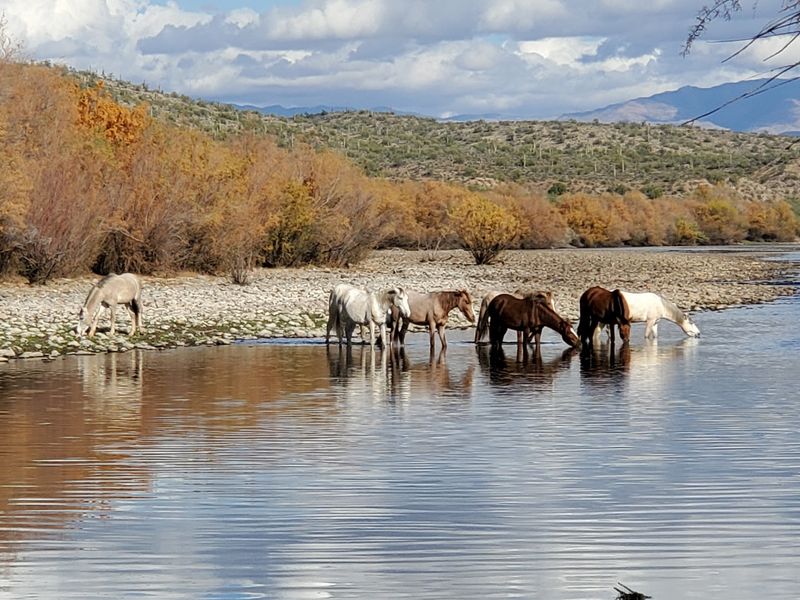
Most people racing toward the Salt River on a summer Saturday have one thing on their minds: tubes, paddles and a spot on the water. Just past the edge of Mesa, though, there is a shady riverbank where wild horses regularly wander down from the desert to drink, graze and wade across the current.
Some afternoons bring a small family band with a days-old foal, and others bring dozens of horses spread across a field on the far bank. The same spot also has easy trails, winter fishing, four ropes dangling from a cliff and night skies made for photography.
Most Arizona drivers never slow down long enough to find it, and the sections ahead explain exactly where it is, when the horses tend to appear and what to bring.
A Riverbank at the End of the Road
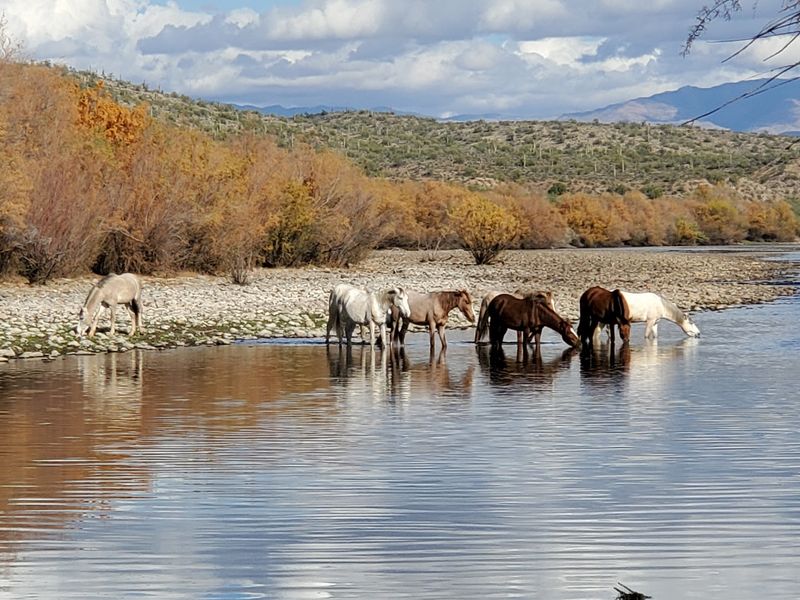
Most maps of the Phoenix area fade into open desert just past the edge of Mesa, and that is exactly where this story begins.
Coon Bluff Recreation Area sits at Coon Bluff Rd, Mesa, AZ 85215, right on the banks of the Lower Salt River in Arizona.
The site is part of the Tonto National Forest, and it sits at the very end of its road. Nobody wanders past it by accident, which may explain why so many locals have never stopped.
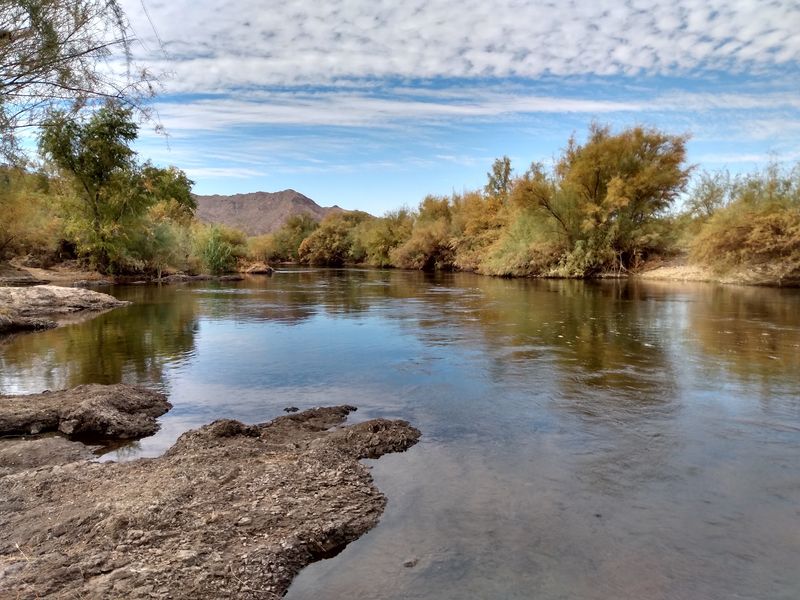
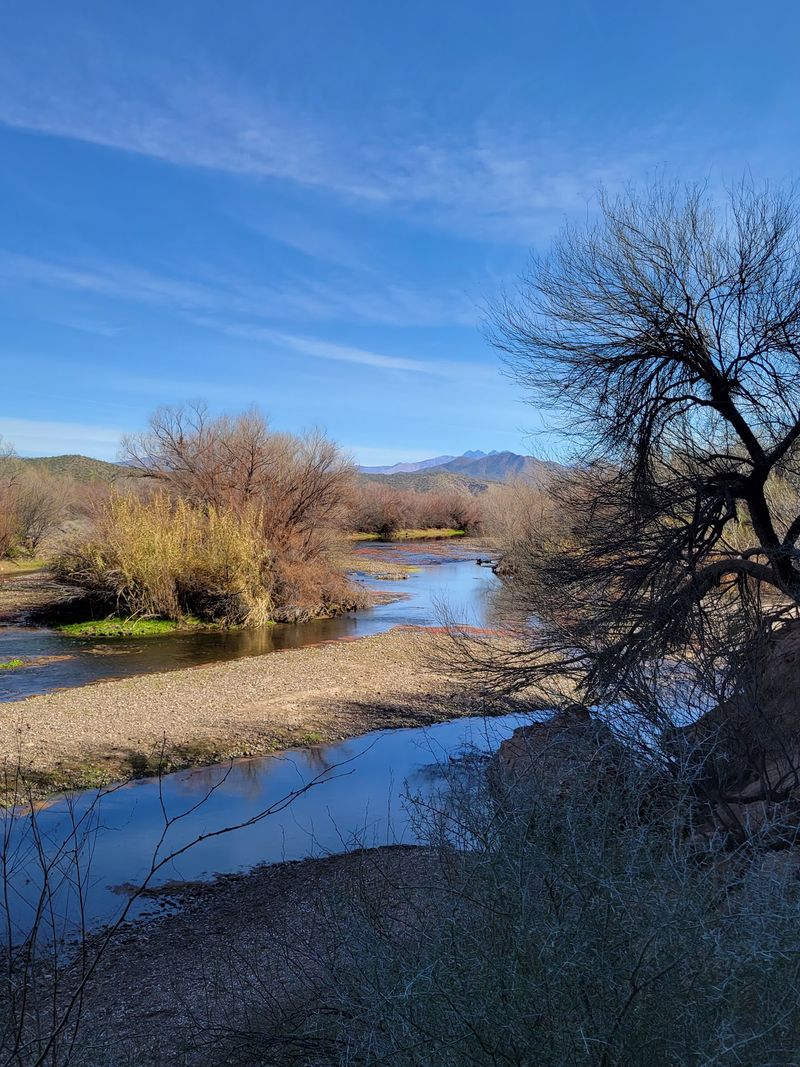
On paper, the setup is simple. It is a relaxed riverfront park shaded by mature mesquite trees, with river access for tubers, room for birdwatching and trails that trace the water.
In practice, it is one of the most talked-about places in the Valley to watch wild horses wade across the Salt.
The park also offers a distant view of Superstition Mountain far downstream, a skyline that longtime Arizonans will recognize right away.
That combination of easy access and wild scenery is the real hook. A short drive from the city ends here, yet the herd, the river and the mesquite groves make it feel far removed from traffic lights and strip malls.
Getting to know the place starts with the animals that made it famous.
The Herd That Steals the Show
Wild horses come up more than anything else when people talk about this stretch of river, and it is not even close.
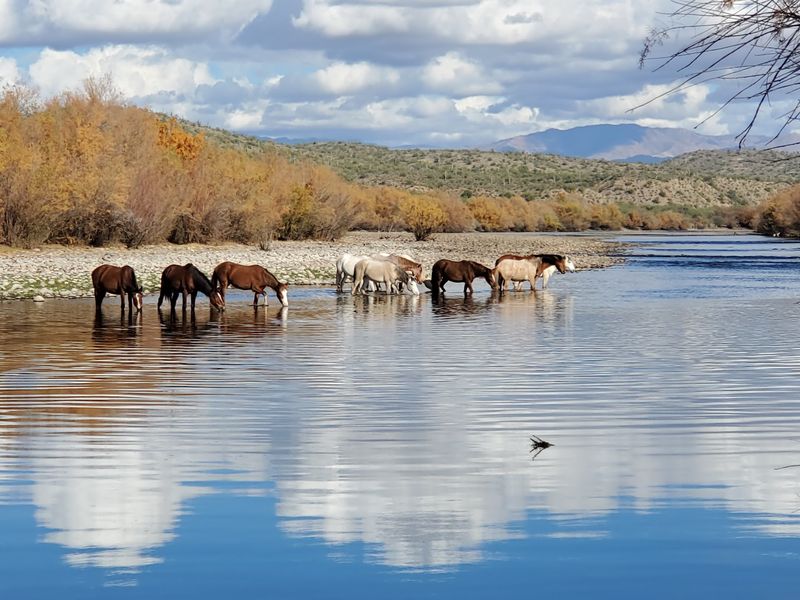
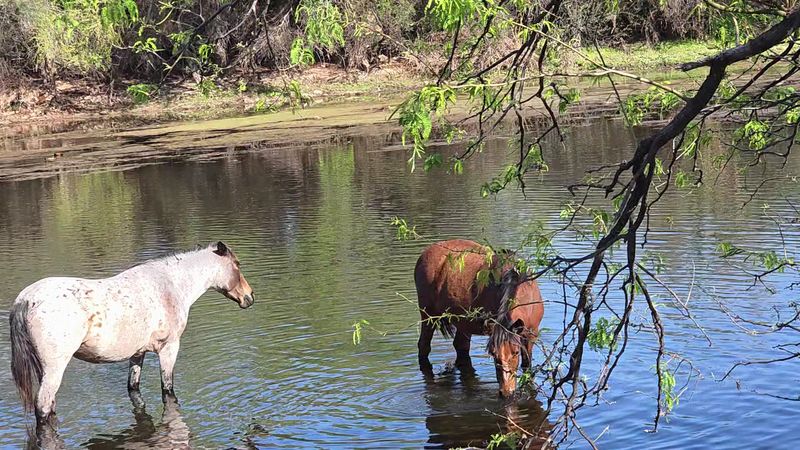
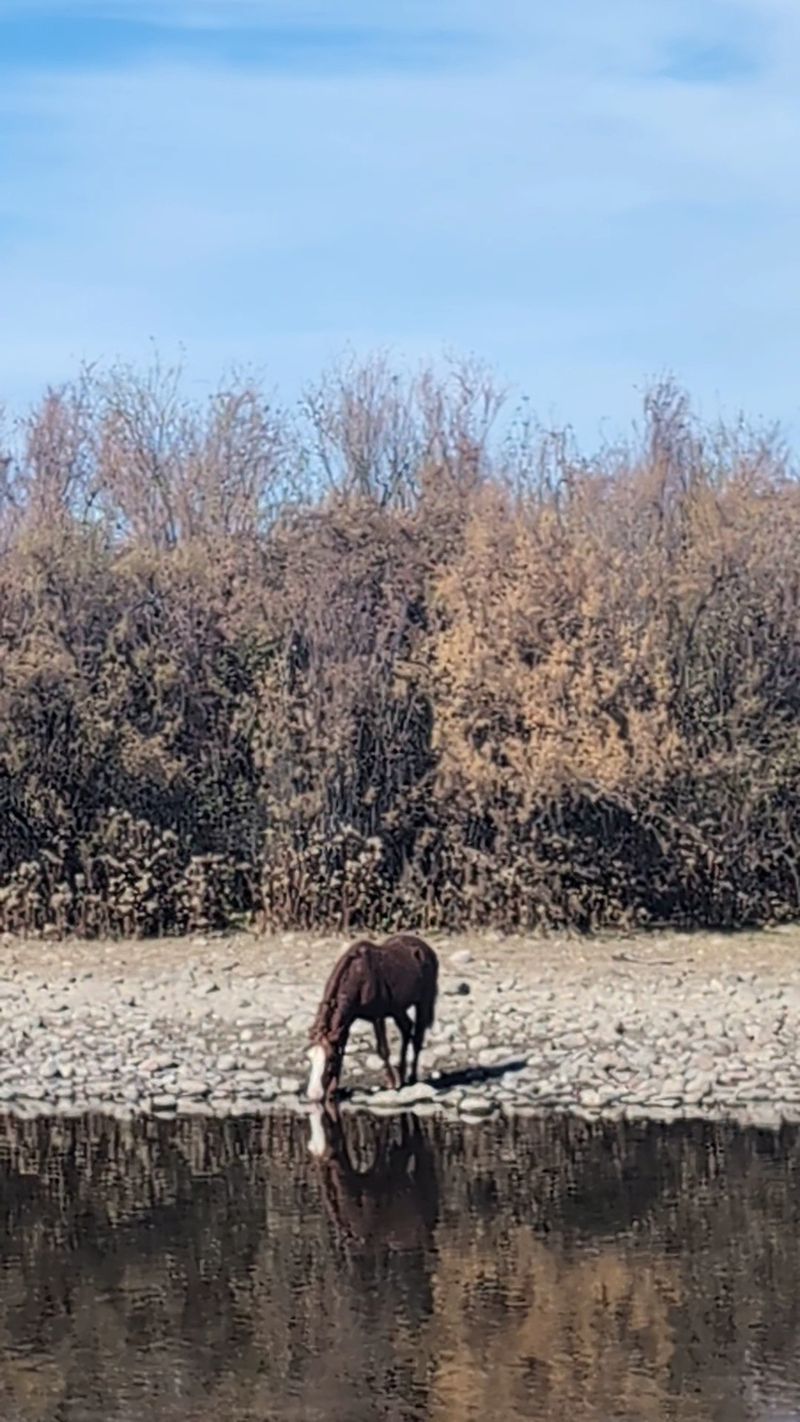
Coon Bluff is one of the spots where the Salt River horses regularly drift down to the water to drink, graze and cross.
Group sizes vary. Some afternoons bring a small band of five or so, while one March afternoon around 4 p.m. saw roughly 30 horses feeding in a big field across the river.
Foals are part of the picture too. A band with a colt only four days old has been spotted moving toward the water, with the adults keeping close watch on the youngster.
Seeing how the horses communicate with each other and shield their young is a highlight for many people who make the trip.
The horses also tend to stay calm around onlookers. Hikers in the area have noted that the mustangs do not spook as easily as expected.
That calm is a privilege, not an invitation. The golden rule here is simple: give the herd plenty of space and never block their path to the water.
A sighting is never guaranteed, since these are wild animals on their own schedule. Still, the odds improve with good timing, and timing is the next piece of the puzzle.
Why Sunset Belongs to the Horses
Clock-watchers have an edge at Coon Bluff.
Horses at this spot have a habit of coming out around sunset, and some regulars say they show up almost without fail at that hour. From the riverbank, it is possible to watch them from a comfortable distance.
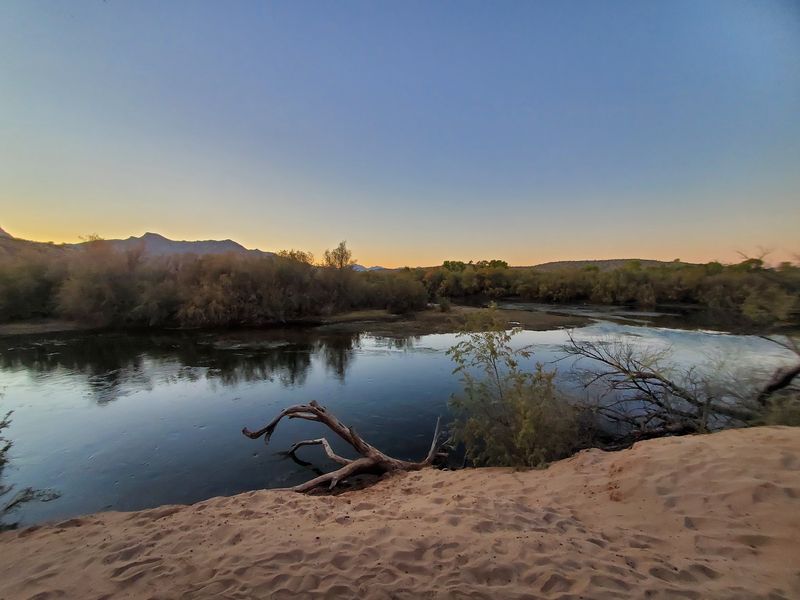
Sunset is a popular draw even without the herd. The riverside setting and the mountains around the park make the evening hours the busiest time for cameras.
That popularity has a flip side. Late in the day, the area can get crowded and congested, with groups arriving for photo sessions, including prom pictures.
A few evenings end without a single horse appearing, which is simply part of the deal with wildlife.
Afternoon trips can pay off too. The March sighting of about 30 horses happened around 4 p.m., well before dark, in the open field across the water.
Arriving in mid to late afternoon and staying through sunset covers both windows and gives the best overall chance.
Patience matters more than luck. Settling onto a shaded patch of sand near the river and waiting quietly tends to work better than racing up and down the banks.
Of course, the horses are not the only locals roaming these parts.
Longhorns, Javelina and Other Surprise Neighbors
Not every trip ends with a horse sighting, but that does not mean the wildlife list stays empty.
Across a couple of outings, one hiking group never saw a single horse yet still crossed paths with a longhorn steer and several javelina.
Cows roam the area as well, and they occasionally turn up alongside the horses near the river.
Birdwatching is another reason to pack binoculars. The mature mesquite trees and riverside habitat make the park a relaxed place for scanning branches and shorelines.
There is a practical side to sharing space with so many animals. Horse manure is common on the trails, so watching every step is part of the experience.
Flies can be plentiful too, especially around the animals, and bug spray earns its place in the daypack.
Respect goes both ways here. Keeping distance, moving slowly and letting animals pass without interference keeps the area wild and the encounters safe.
For many families, spotting a javelina or a longhorn turns a quiet hike into a story worth retelling at the dinner table. It is a good reminder that this corner of Mesa belongs to the animals first.
Finding them, though, usually means lacing up and heading down the trail.
Easy Trails With a Few Surprises
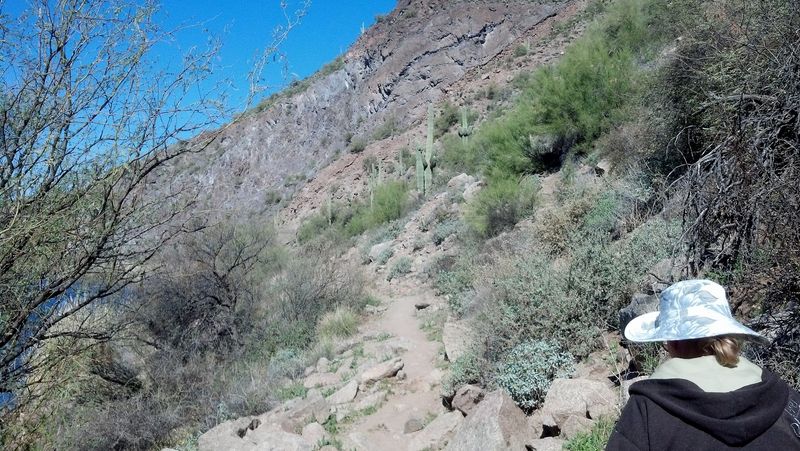
Good news for self-described non-hikers: the main walk here is fairly flat, easy and totally doable.
A path of packed sand runs along the river, and it is manageable for someone using a walker or a cane.
Heading a bit down to the right leads to river access across from the big field where the horses often feed.
More ambitious hikers can climb onto the bluff itself or push deeper into the surrounding desert. Some hikes stretch an hour and a half before ending at a shady sandy spot beside the water.
There is one catch. Signs are scarce, and it is possible to lose track of the route, particularly on longer desert wanders.
Wildlife viewing sometimes takes extra effort, since spotting the horses can mean a longer walk along the banks.
Natural debris covers parts of the terrain, so sturdy shoes make a real difference. Flip-flops might survive the picnic area, but they are a poor choice for the bluff.
Reaching the river is not always simple either. Some hills along the banks make getting down to the water harder in certain places.
With the right footwear, the trail network rewards curiosity, and the river is never far away.
Four Ropes Hanging From the Bluff
Paddlers passing Coon Bluff sometimes notice something unusual on the cliff face above the water.
Four ropes hang down from the bluff, and kayakers use them to tie off and take a break mid-float.
Rappelling also comes up among the activities tied to the bluff, which adds a vertical twist to a mostly horizontal day.
Out on the river, the park is a busy stop for water traffic. Tubers, kayakers and paddleboarders float past regularly, and river access is one of the park’s calling cards.
Paddleboarders tend to stick to the stronger current in the middle, so they rarely get in the way of anyone relaxing near the shore.
That current deserves respect. The water moves fairly quickly, and parents should keep a close eye on small children near the edge.
Water levels shift as well. At times the river looks low, yet people still find plenty of fun in it.
Watching kayaks drift past while a band of horses grazes across the river is a very Arizona kind of afternoon.
Motorcycle riders are fans too, and the ride out to the bluff on two wheels has its own loyal following.
Once the paddlers drift downstream, a different crowd settles in along the banks with rods and tackle.
A Fishing Spot That Peaks in Winter
Summer grabs the headlines, but anglers know the calendar tells a different story.
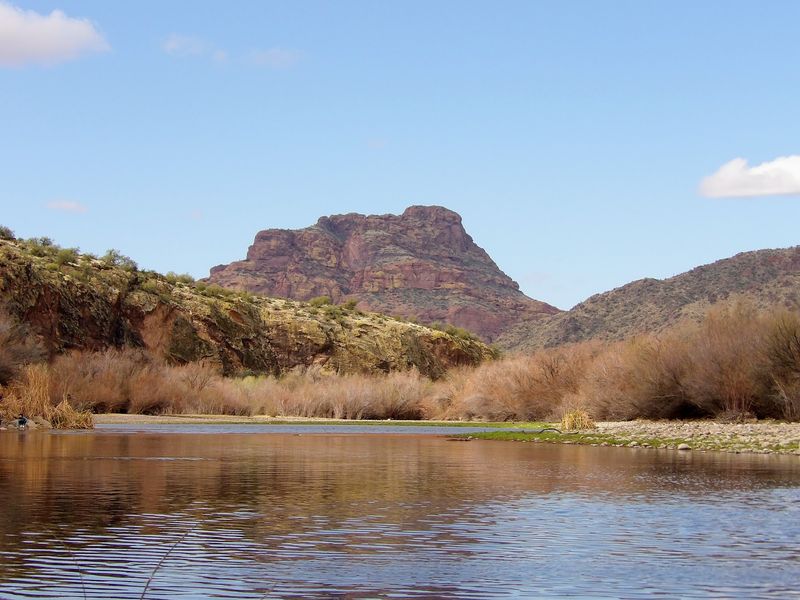
Fishing is one of the most talked-about activities at Coon Bluff, and winter is considered a great season to cast a line here.
The quieter months also mean fewer tubers and paddlers competing for space on the river.
The shaded riverbank gives anglers room to spread out, and the beach areas offer easy places to set up near the water.
Access varies, since some banks are steep and hilly. Scouting a flat approach before hauling gear down pays off.
Summer anglers still show up, though they share the water with far more river traffic.
A winter fishing day comes with a bonus. The cooler months can be excellent for wildlife, as the March sighting of about 30 horses across the river shows.
Pairing a morning of fishing with an afternoon horse watch is an easy way to fill a day without driving anywhere else.
The appeal is refreshingly simple: a river, a shady bank and time to wait for a bite.
When hunger strikes between casts, the picnic area is only a short walk away.
Mesquite Shade and a Place to Unpack Lunch
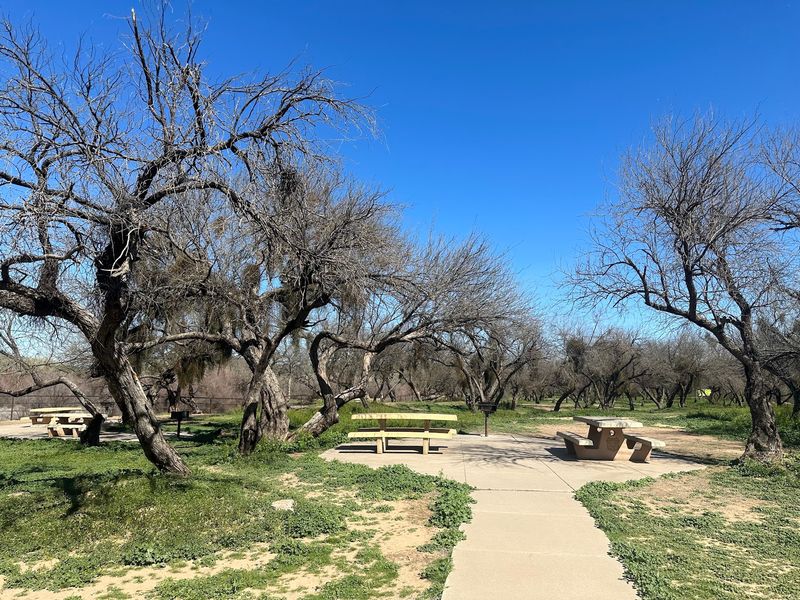
Shade is precious in the Arizona desert, and Coon Bluff has more of it than many riverside spots.
Mature mesquite trees spread across the park, creating a relaxed setting close to the water.
The amenities cover the basics. There are bathrooms, pavilions, picnic tables and beach areas, which makes it easy to plan a full day instead of a quick stop.
Picnic tables rank among the most mentioned features, and families, hikers and horse watchers put them to good use throughout the day.
Groups can claim a pavilion as a home base, then take turns walking the river path to check on the herd.
The beach areas give kids a place to play near the river, though the quick current means adults should stay close.
In the heat of an Arizona August, plenty of people head here specifically to cool off in the river.
A shaded patch of sand in front of the water also makes a satisfying reward after a long hike.
First-timers are often surprised by how comfortable it is. Between the shade and the seating, the park works as an easy base for waiting on the horses without roughing it.
A little planning keeps the day smooth, and that planning starts before the car even leaves town.
The Pass to Grab Before Leaving Town
Few things spoil a river day faster than realizing the parking pass is still sitting on the kitchen counter.
Drivers need a Tonto parks pass to park at Coon Bluff. Passes are sold at Circle K stores, including one on Power Road on the way out of town, and at other retailers listed online.
An America the Beautiful pass also works, which is handy for anyone who already carries one.
Official details are available through the Tonto National Forest page on the U.S. Forest Service website.
Packing smart matters as much as the pass. Bring lots of water and snacks, especially for longer hikes along the banks or into the desert.
Sturdy shoes, bug spray and close attention to where each foot lands will make the trails far more pleasant.
One issue comes up again and again: trash. Some people leave garbage behind, and it takes away from an otherwise beautiful spot.
Packing out every wrapper and bottle helps protect the river, the horses and the next group that pulls in.
With the park at the very end of the road, stocking up in town first is the safer plan.
Once the car is loaded, only one question remains: when to go.
Weekdays, Starlight and a Quiet Verdict
Timing can make or break a trip to Coon Bluff.
Weekdays are the sweet spot. Crowds thin out considerably, leaving plenty of shade and room along the river.
Weekend evenings can bring congestion, especially around sunset when photographers and groups arrive.
Staying after dark has its own reward. The open sky over the river makes the park a fantastic place to photograph the stars at night.
So is it worth the drive? For Arizona locals, the answer leans strongly toward yes.
Wild horses wading the Salt, a shaded riverbank, easy trails and a bluff with ropes for paddlers add up to far more than a pullout by the road.
Even on days when the herd stays hidden, people still leave impressed. The river and mountains are reason enough to make the trip.
It is not a polished resort, and it asks a little of its guests: a parking pass, good shoes and a willingness to carry out trash.
In return, it offers one of the best chances in the Phoenix area to watch wild horses living on their own terms.
Plenty of drivers will keep speeding past on the way somewhere else. The ones who turn off at the end of Coon Bluff Road tend to understand why the horses keep coming back.