
Affiliate disclosure: As an Amazon Associate I earn from qualifying purchases. Learn more
Most Florida swimming holes sit out in the open, under oaks and sky, with a parking lot a few steps away. The one in this story sits underground, at the bottom of a staircase with a ceiling low enough to make tall folks duck, in a small town west of Ocala.
Down there, spring water holds near 72 degrees all year, ancient fossil beds rest on the rocks below, and a single opening overhead lets daylight reach the surface of the pool. Before you book a snorkel slot, there are a few things worth knowing, including strict time limits, crowd caps, a bright blue lagoon, rustic campsites, and the small quirks nobody bothers to mention on social media.
An Underground Swimming Hole in Williston
Florida has hundreds of springs, and most of them are happy to show off in broad daylight. This one prefers to stay out of sight.
Devil’s Den Prehistoric Spring and Campground sits at 5390 NE 180th Ave, Williston, FL 32696, in the rural stretch of north-central Florida west of Ocala. The surrounding area is known as horse country, so the drive in is quiet and decidedly rural.
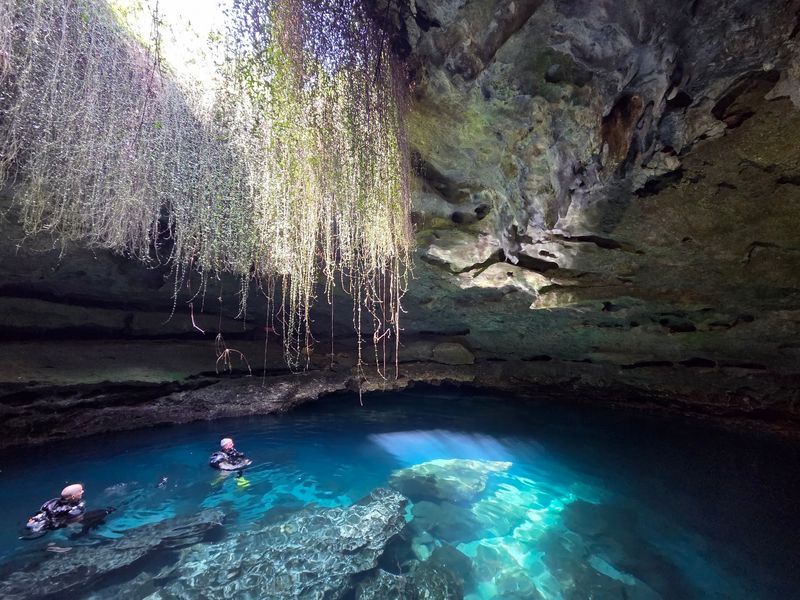
At its heart is a subterranean natural pool tucked inside a cave. Snorkelers and scuba divers share the water with rock formations, stalactites, and fossil beds that give the spring its prehistoric label.
The property is bigger than the cave, though. Above ground, there is a man-made swimming lagoon, shaded picnic areas, cabins, RV sites with hookups, and space for tent camping.
The entrance to the cavern itself is surprisingly easy to miss from the walkway. Some folks stroll right past it on the first try, which is a funny start for the main event.
That low profile explains the title of this article. From the road, nothing announces that a flooded cave waits below, and plenty of people only learn the truth once they reach the top of the stairs.
So what exactly is down there, and how did it get that way? The answer starts with some very old rock.
Limestone, Collapse, and a Window Into the Aquifer
Geology gets the credit here, and it worked slowly.
The Den is a cenote, a natural sinkhole formed when limestone bedrock collapses. What remains is a cavity with clear groundwater at the bottom and an opening above that lets sunlight reach the water through a hole in the ceiling.
In plain terms, it is a window into the underground aquifer. Florida sits on a thick layer of limestone, which is why springs and sinkholes turn up across the middle of the state.
Cenotes are usually linked with Mexico, especially around Cancun and Tulum. Finding a true one in a small Florida town surprises a lot of first-timers, and that surprise is a big part of the appeal.
The prehistoric part of the name points to the fossil beds resting inside the cavern. Those beds, along with the ancient rock formations and stalactites, are what snorkelers and divers come to see.
As for the devilish name, its origin is a story for another day. Guessing would only muddy the water, and this spring deserves to stay clear.
What matters for a day trip is simpler. The water in springs like this one typically holds around 72 degrees year-round, so the temperature barely changes between January and July.
Getting to that water, however, requires a short climb down.
A Staircase With a Low Ceiling
Every trip into the Den begins at the check-in office, not the water. Guests pay their fee, sign waivers, and then head toward the cavern entrance.
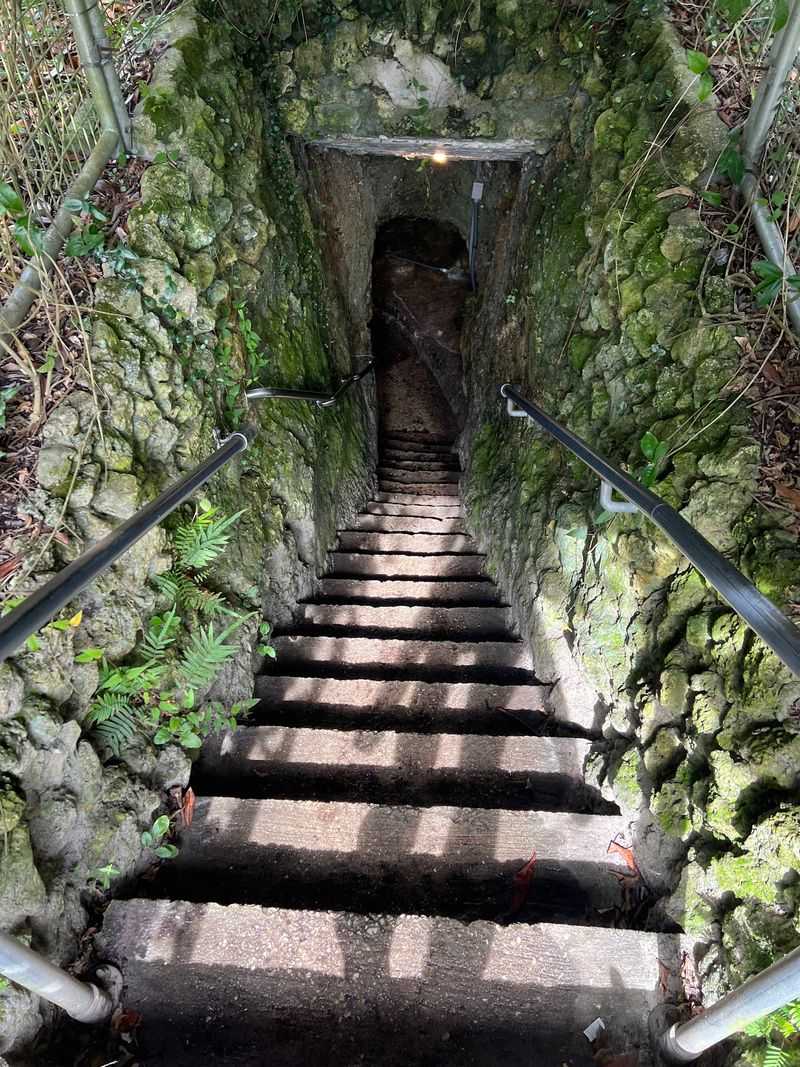
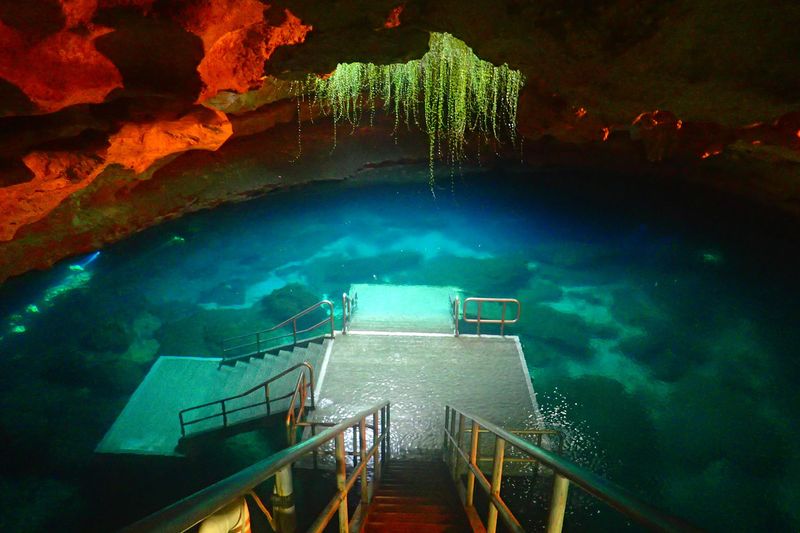
From there, a set of stairs leads downward, and the ceiling along the way is notably low. Tall guests should keep their heads down, literally.
The first landing is a little dark. Nobody needs a flashlight to get through it, but it helps to move slowly and watch each step.
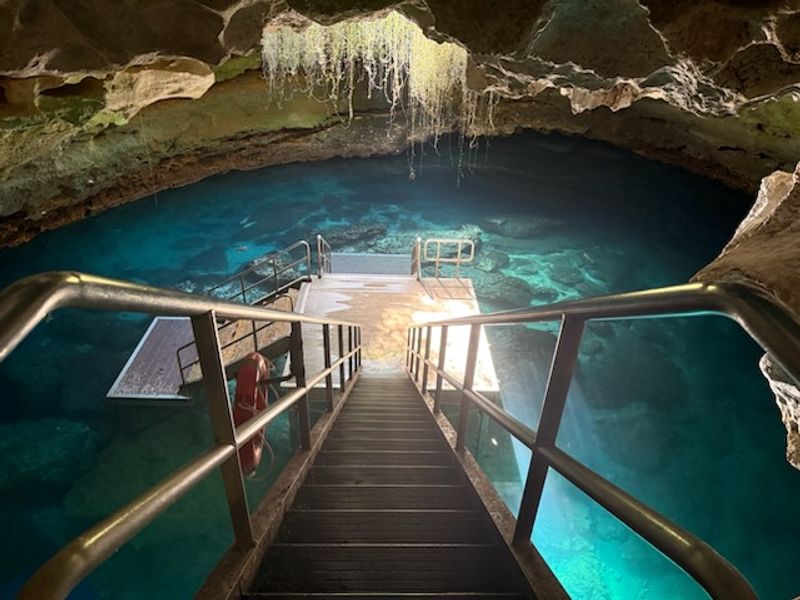
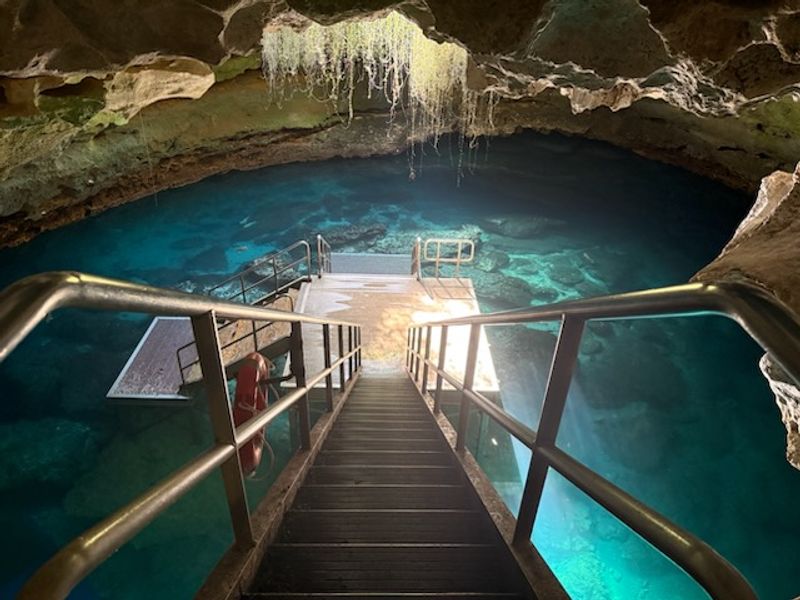
Things change at the large landing by the water. Natural light comes through the cave opening overhead, and the platform has plenty of light for gearing up and climbing in.
That shaft of daylight is the image most people have seen online. It is also why photographers bring cameras, since the setting ranks among the most unusual-looking springs in Florida.
The platform serves as the launch point for both snorkelers and divers. The water is deep enough for scuba, so this is not a spot for wading.
A safety briefing is part of the process, and first-timers tend to find check-in smooth and easy to follow. Staff will also point out rental options for anyone who arrives without gear.
Once everyone is in the water, the real show starts beneath the surface.
Snorkeling Over Fossil Beds
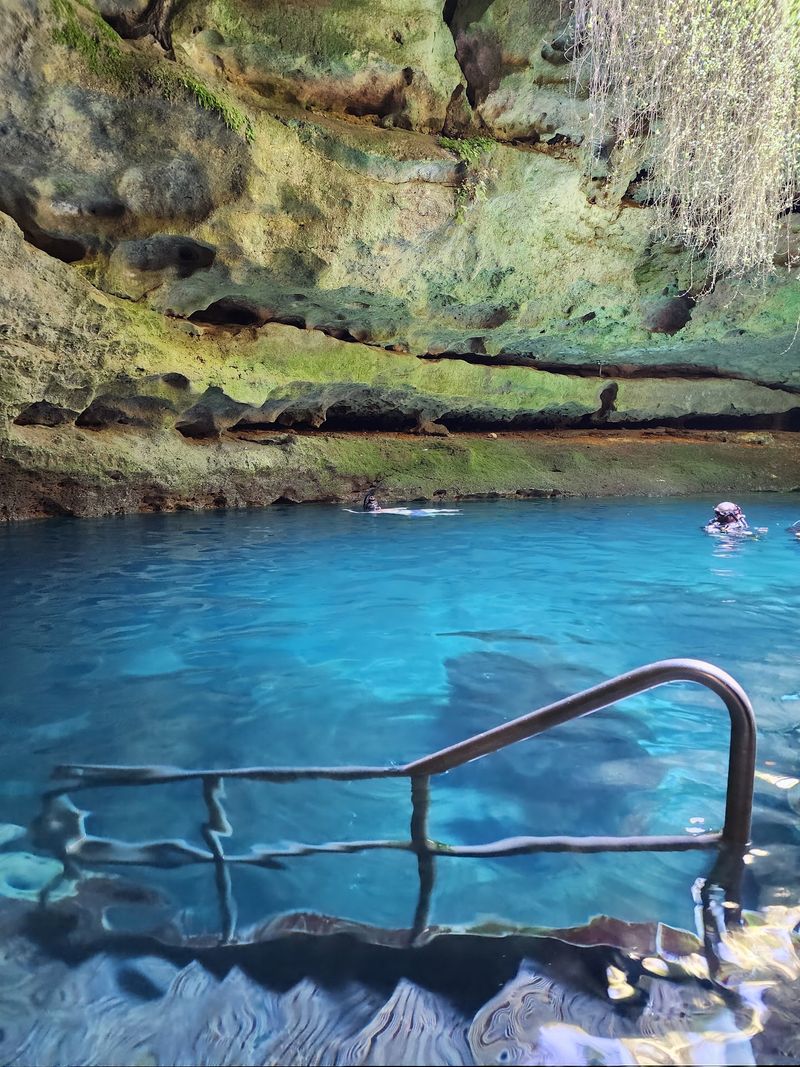
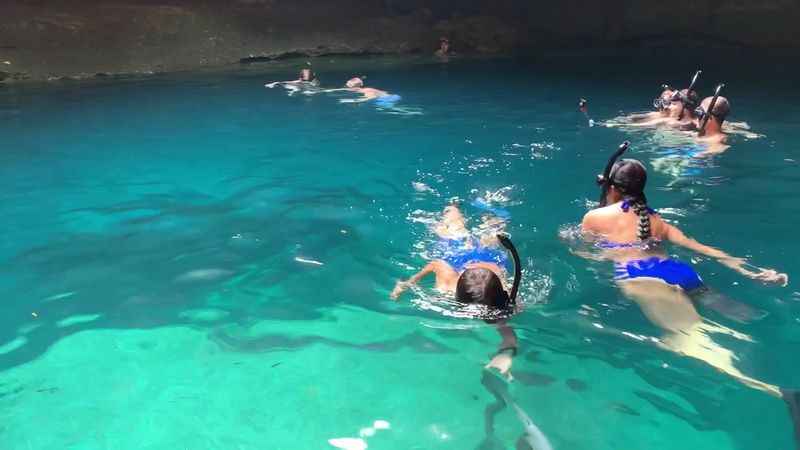
Snorkeling is the most popular way to experience the Den, and it is the reason most people book a slot.
The water stays around 72 degrees all year. That number sounds pleasant on paper, but after a few minutes of floating, many swimmers call it chilly.
Anyone sensitive to cooler water should bring or rent a wetsuit. It can turn a 15-minute swim into a full session.
Visibility is the headline act. On good days it can reach 50 feet or more, which leaves plenty of room to study the rock formations and fossil beds below.
Small fish dart around the rocks, and koi have made appearances too. Wildlife is modest, however, so this is not a reef-style outing packed with marine life.
Expectations matter here. Some swimmers find the underwater scenery thrilling, while others see mostly rocks and leave early.
Snorkelers stay near the surface, so the deepest sections belong to divers. Still, looking down at an ancient cavern floor from above is a rare thing to do in Florida.
A tip for the budget-minded: bringing personal masks and snorkels saves on rental fees. Fins are available to rent, and the on-site gear is kept clean and in good condition.
For those who want to go deeper than a snorkel allows, the Den has another side entirely.
A Cavern That Welcomes Scuba Divers
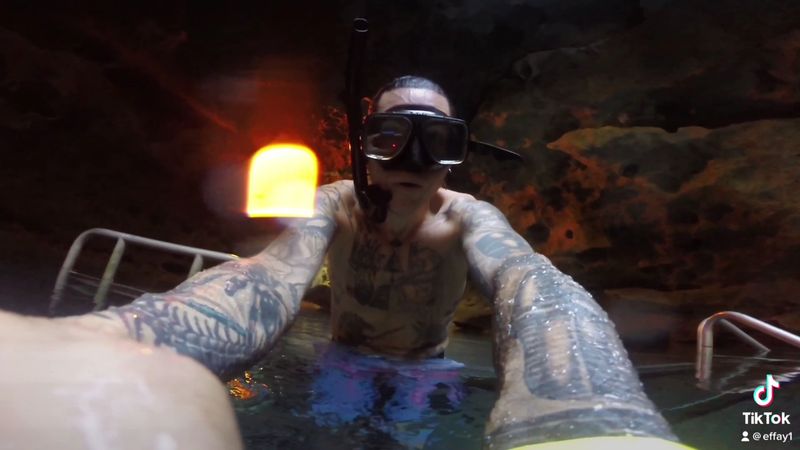
Divers get a slightly different set of rules, and in one way, an easier deal.
Snorkelers must reserve in advance, but scuba diving does not require a reservation. The property has a reputation as very diver friendly, and plenty of divers return for repeat trips.
The water is deep in parts of the cavern, which gives certified divers far more to explore than the surface view offers. More than a few snorkelers admit afterward that scuba gear would have been the better choice.
The Den operates as a scuba tour agency, and rental equipment is available on site. Tanks can be rented, along with dive lights.
A word to the wise about those lights. Renting two can cost almost as much as renting two dive tanks, so packing charged batteries for personal lights is a smart money move.
Cave diving comes up often in conversations about the Den. Divers should know their training limits and follow staff guidance, since parts of the cavern are dark.
The payoff is close contact with the stalactites, rock formations, and fossil beds that make the spring special. For a diver, that means a prehistoric setting to explore without leaving the state.
Once the gear comes off and everyone is back on land, there is still more water to try, and it looks nothing like the cave.
The Oasis, a Very Blue Lagoon
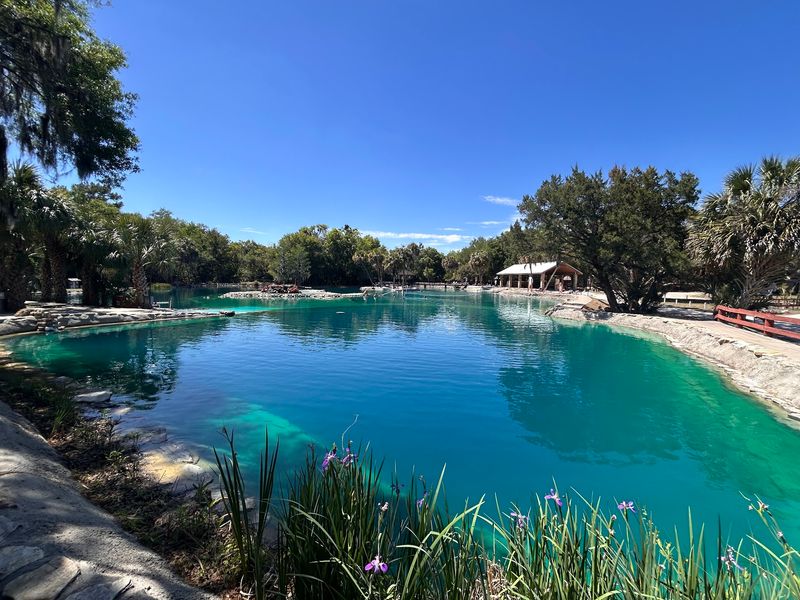
Next to the underground spring sits something newer, and a lot bluer.
The Oasis is a man-made lagoon with a beach area and chairs. Admission includes access, so the fun does not end when a 90-minute cave session does.
The water is dyed blue in the mornings. The color makes for bright photos, but it also makes the bottom hard to see.
That matters because the lagoon floor has uneven rocks, some sharp edges, and slippery patches. Water shoes are a very good idea here.
The center of the lagoon is the nicest part to swim. Getting there takes a little care, so slow steps beat bold ones.
Families often end up spending hours at the Oasis. Late-slot guests have been allowed to keep swimming after the Den closed, which stretches a day trip nicely.
The lagoon water can seem colder than the spring in the cave, which catches people off guard. Some days it looks cloudy, too, though it still works well for a midday swim.
Opinions split on the dyed water. Some love the look, while others prefer to stick with the natural spring below ground.
Either way, the lagoon gives kids and non-snorkelers a second option. And after all that swimming, the picnic tables start calling.
Picnic Tables, Campsites, and a Garden Next Door
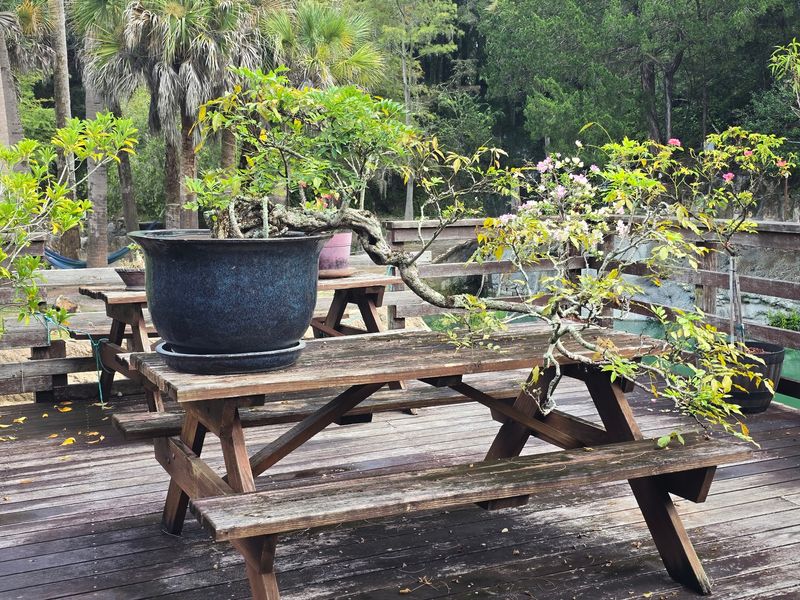
Snacks and shade shape much of the day above ground.
The grounds have plenty of picnic tables and park-style grills, and covered tables sit right beside the cenote entrance. Food trucks and a small food stand usually operate on site, while a souvenir shop covers the take-home part of the day.
The mood leans calm and peaceful. Families have left phones and wallets at their tables while swimming, though keeping valuables close is always smart.
For a bonus stop, Cedar Lakes Woods and Gardens sits right next door. The botanical garden pairs easily with a Williston outing.
Overnight guests have three choices. Cabins run about $140 per night with a two-night minimum, RV sites offer full hookups and shade, and tent camping is available too.
Expect rustic rather than resort. Some cabins and campsites could use a little TLC, bathrooms are basic, and pests were a problem at one point, though management says it was handled.
Divers tend to like the setup, since the spring and lagoon are within walking distance of the RV sites. One catch for campers: signs mark a 5 p.m. closing time for many areas.
The site draws families, photographers, and certified divers alike. It is not huge, so the cave alone will not fill a whole day, but the grounds help stretch things out.
Before packing the car, though, a few booking rules deserve attention.
The Fine Print on Reservations and Time Slots
Spontaneity is not rewarded here, at least for snorkelers.
Reservations are required for snorkeling, and booking online in advance is the way to go, especially on weekends. Divers can skip that step, since scuba does not require a reservation.
Each snorkel booking covers a 90-minute block inside the Den. No more than 45 people are allowed in at a time, which keeps the crowd under control compared to busier springs.
That cap can still feel tight at the start of a session. The first half hour tends to be the busiest, and many people head out after about 30 minutes, so patient swimmers often get more room later.
Money-wise, expect a deposit of $5 per person that is not refundable if someone cancels. One recent booking for three people plus a pair of rented fins came to $86 after deposits, which gives a rough idea of costs.
Wetsuits, fins, masks, tanks, and dive lights are all available to rent. Bringing personal gear keeps the bill lower.
A few safety habits help. Wear shoes around the property, since some boardwalk boards have had nails sticking up, and watch for sharp rocks in the lagoon.
Check current hours and rates on devilsden.com before the drive. Policies can shift, and a quick look saves a wasted trip.
A Florida Spring Worth One Honest Look
So, is the underground swim worth the hype?
For many, the answer is a firm yes. The cave setting, the shaft of daylight, the fossil beds, and the steady 72-degree water add up to one of the most unusual swims in Florida.
Others walk away shrugging. The fish count is small, the tickets are not the cheapest, and the underwater scenery can look like a pile of rocks to anyone expecting a coral reef.
Both reactions make sense. The Den is less about wildlife and more about place, a chance to float inside a real cenote without flying to Mexico.
To get the most out of it, book early, bring a wetsuit if chilly water is a concern, and consider staying for the second half of a time slot when crowds thin. Water shoes and personal snorkel gear help too.
Pair the swim with the Oasis lagoon, a picnic, and a stroll through the garden next door, and the drive to Williston starts to look well spent.
Nobody may warn you that a prehistoric spring hides inside a cave near Ocala. Now, at least, the secret is out, and the stairs are waiting.