
Affiliate disclosure: As an Amazon Associate I earn from qualifying purchases. Learn more
Some people drive past this spot for years and never notice it. It sits inside a quiet neighborhood on the east side of Stockton, and first-timers often think their GPS has made a mistake.
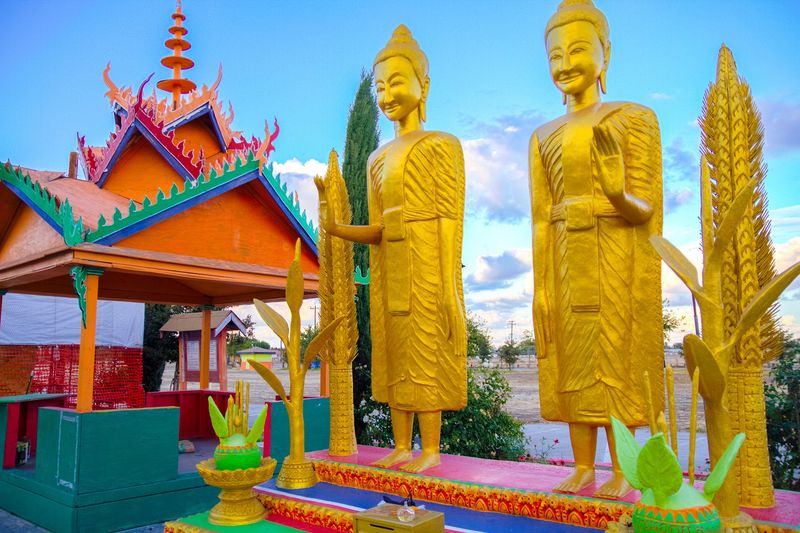
Then a striking wall and gates appear, and behind them waits a sprawling temple complex packed with more than 100 colorful statues. Some are small, and some are big enough to make you tilt your head back.
Entry costs nothing, parking costs nothing, and the grounds are open every day of the week. The place was founded by Cambodian refugees, and it keeps growing thanks to the people who care for it.
Keep reading to learn where it is, what the statues show, when the big celebrations happen, and a few smart tips that make a visit smoother.
A Khmer Temple on Carpenter Road
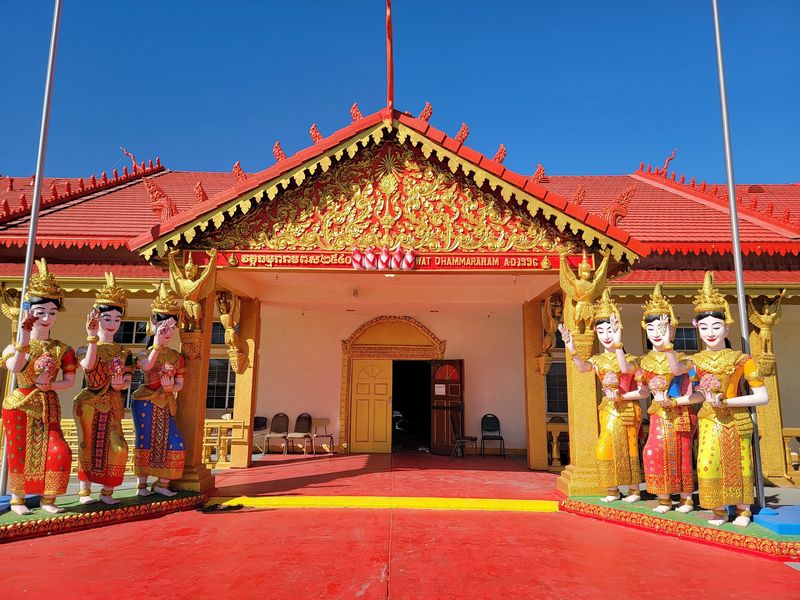
The mystery has an address, and it is refreshingly simple. Wat Dhammararam Buddhist Temple sits at 3732 Carpenter Rd, Stockton, CA 95215, in the Central Valley of California, United States.
It is a Khmer, or Cambodian, Buddhist temple complex. The grounds hold a working temple along with a large outdoor area filled with statues and monuments.
Many people know it simply as a quiet place of worship. Others know it as one of the most unexpected sightseeing stops in Stockton.
Both descriptions fit. Monks live and practice here, community gatherings happen here, and the public is welcome to walk the grounds during regular hours.
The temple is not a museum or a theme park. It is an active religious site that happens to open its gates to curious guests, so a respectful attitude goes a long way.
For travelers heading through the valley, the location is handy. The drive from the Bay Area takes a little over an hour, which makes it a realistic day trip or a detour on a longer road trip.
Once the address is plugged into a map, the next question is how a Cambodian temple ended up here in the first place.
Roots Planted by Cambodian Refugees
Every temple has an origin story, and this one begins with people starting over. Wat Dhammararam was founded by Cambodian refugees who made new lives in Stockton.
They built more than a place to pray. They built a center that holds their faith, their language, and their traditions in one spot.
That purpose shows up everywhere on the grounds. The plaques near the statues are written mostly in Khmer, the Cambodian language, and the community gatherings follow Cambodian customs.
The temple has also kept growing over the years. People who have visited since childhood point out that the complex keeps expanding, with time and money poured into making it more beautiful.
Some of that work is done by hand. Community members take the time to repaint the statues, which helps explain why so many of them stay bright and in good shape.
Small plaques beside many statues list the donors who helped pay for them. So each figure is also a record of a family or person who gave back.
Knowing this backstory changes how the place reads. It stops being just a photo stop and becomes a living project, still being built one statue at a time.
Hidden in Plain Sight
Here is a fun twist. Plenty of lifelong Stockton residents admit they had no idea the temple existed until they finally stumbled onto it.
The reason is its setting. The complex sits right in the middle of a residential area, surrounded by ordinary homes and streets.
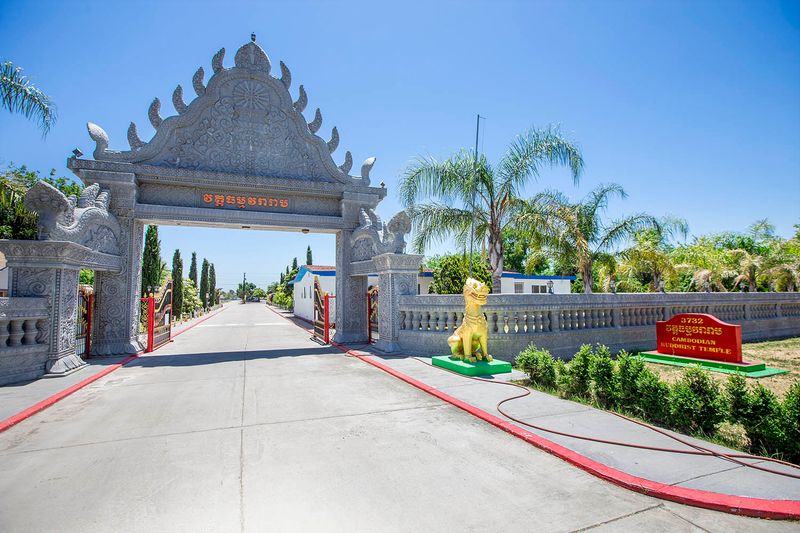
Drivers often feel like they have taken a wrong turn. Then the decorative wall and gates come into view, and the confusion turns into surprise.
The GPS does get you to the right place, mostly. It sometimes leads to a different entrance than the one in use, so watch for signs that point toward the correct gate, which is very close by.
On some days the main entrance may be blocked. When that happens, another door is typically open a little way down the road.
Once inside, many guests say the scene feels less like California and more like a corner of Asia. The contrast between the quiet suburb outside and the ornate grounds inside is part of the charm.
So keep your eyes open on the approach. The best-kept secret in east Stockton is only hidden until you reach the gate.
More Than 100 Statues and Counting
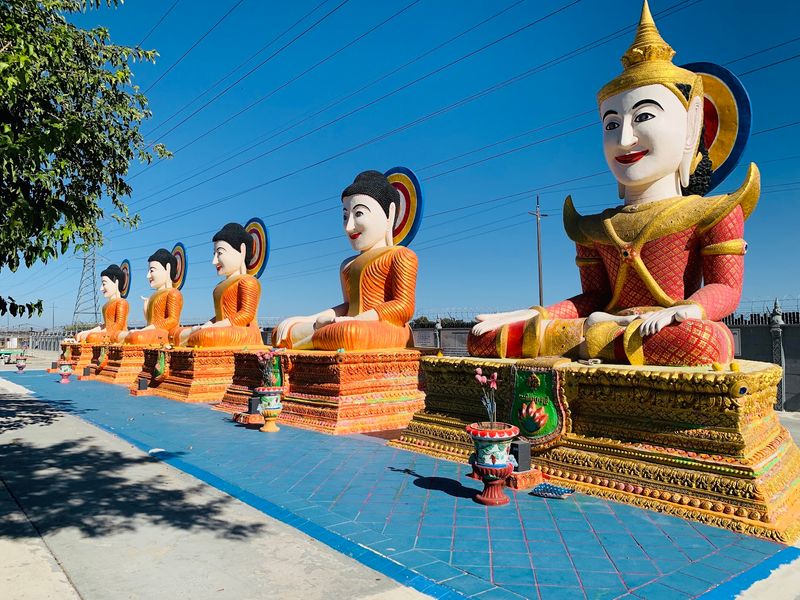
Numbers tell part of the story. The grounds hold over 100 statues, and the collection keeps growing.
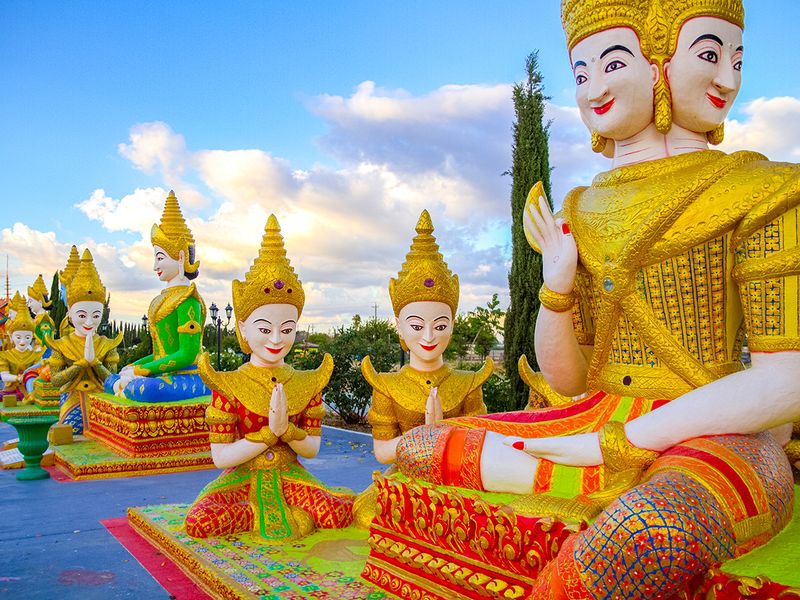
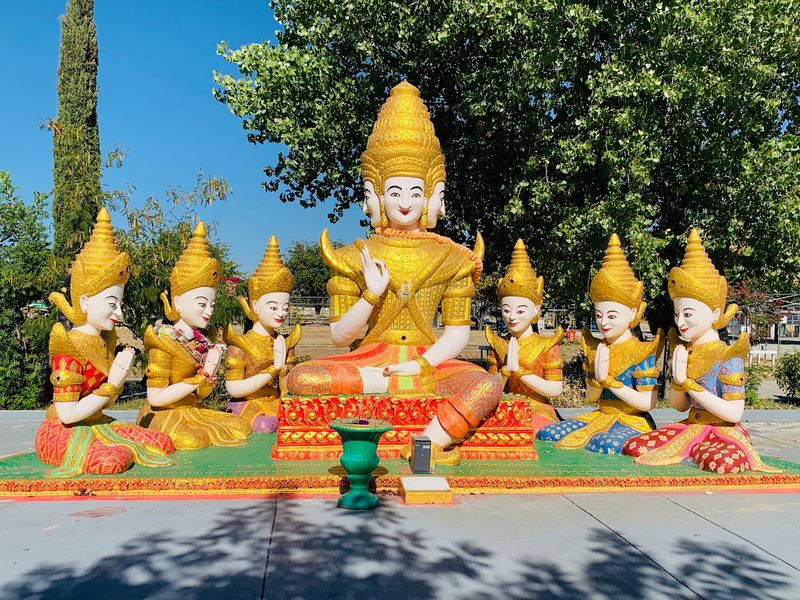
They line the sidewalks throughout the property. Some are modest in size, while others are huge monuments that are impressive to see up close.
Color is the main headline. The statues come in gold, red, yellow, green, and more, with intricate detailing on many of them.
Condition matters too, and these figures are well kept. The upkeep comes from community members who repaint them, so faded paint is less common than you might expect.
A few of the statues are designed as fountains. On some visits these have been dry, so do not count on running water.
The best approach is a slow stroll. Guests who stop often for photos find themselves spending more time than planned, simply because there is always another figure around the corner.
A quick tip for camera fans: sunny days tend to make the colors pop in pictures. Cloudy or cold days still work, but the bright paint really shines under clear skies.
With this many figures to find, it helps to know that they are not random. Many of them follow a story.
The Life of Buddha in Sculpture
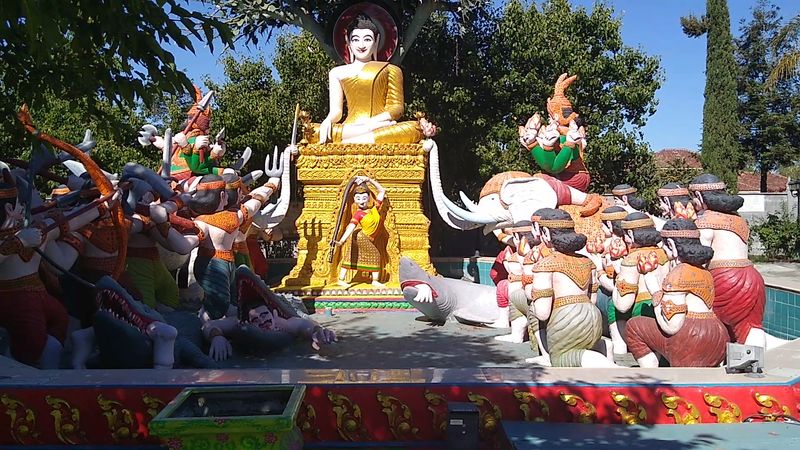
Walk the paths in order and a biography starts to take shape. Many of the statues depict scenes from the life of the Buddha.
The series begins with his birth and moves through his childhood. From there, it follows the journey to enlightenment, showing how and where he became the Buddha.
The story continues all the way to his final day on earth. Taken together, the statues work like an outdoor storybook, told in paint and stone instead of pages.
For guests familiar with Buddhist teachings, the scenes are easy to recognize. For everyone else, the sequence can be a bit of a puzzle.
That is where a little homework pays off. Reading a short summary of the Buddha’s life before the trip can make each scene click into place.
Big Bodhi trees also grow on the grounds. These trees connect to the story as well, since the Buddha is traditionally said to have reached enlightenment under one.
Following the life story adds purpose to the walk. It turns a loop around the property into a journey with a beginning, a middle, and an end.
California’s Largest Buddha
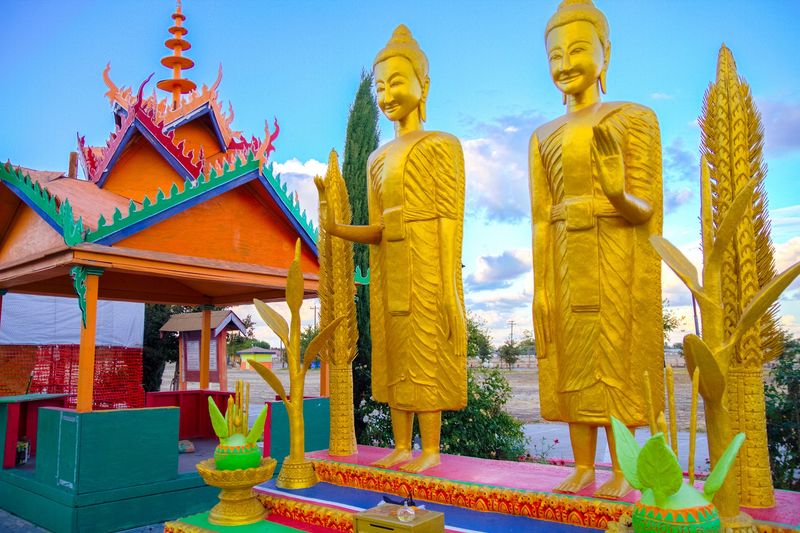
Bragging rights come with this one. The temple is known as the home of the largest Buddha in California.
The giant figure is a highlight for almost everyone who comes through the gates. Seeing it in person gives a real sense of scale that photos struggle to capture.
It is worth planning a few extra minutes here. Many people circle it, take pictures from different angles, and simply stand and look for a while.
The big Buddha is not the only oversized figure either. A large reclining Buddha, often called a sleeping Buddha, also rests on the grounds.
The reclining pose is a traditional image in Buddhist art. It is commonly linked to the final moments of the Buddha’s earthly life, which ties it neatly to the story told by the other statues.
Inside the temple itself, a big Buddha statue anchors the decorated space as well. So the theme of size carries from the outdoor plaza right into the worship hall.
For a single photo that sums up the trip, this is the spot. Just leave room in the frame, because this Buddha does not do small.
Turtles, Trees, and a Friendly Cat
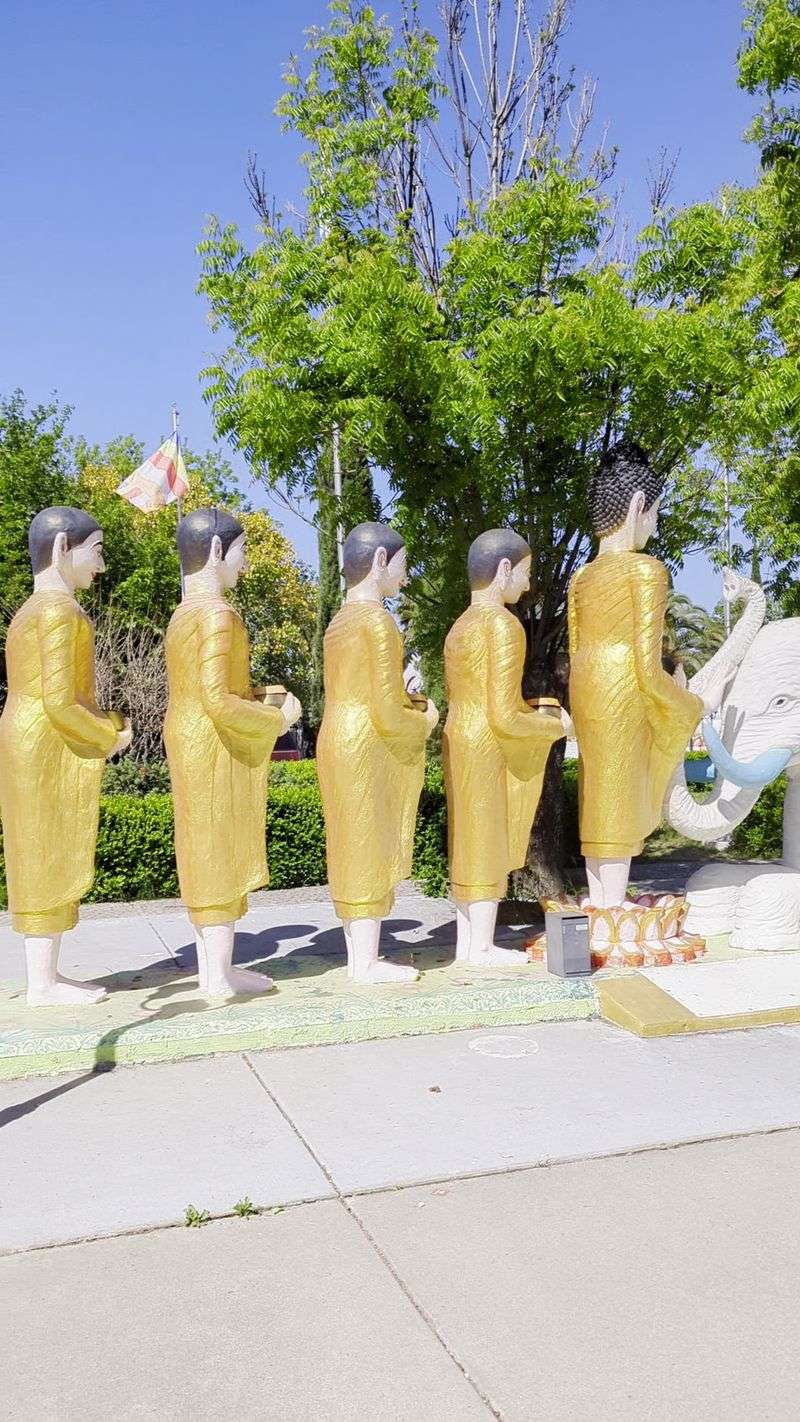
Not every highlight is carved or painted. A few of the most charming details at the temple are alive.
A turtle pond sits on the grounds, offering a small, calm stop between statues. Kids in particular tend to enjoy spotting the shelled residents.
Then there are the Bodhi trees. These large trees add shade and meaning, since they hold a special place in Buddhist tradition.
Some guests have also been escorted around by a cat. A friendly feline has been known to follow people along the paths, acting like an unofficial tour guide with zero interest in answering questions.
No promises on the cat, of course. Animals keep their own schedules.
These quieter touches balance out the grand monuments. After standing beneath a massive Buddha, a pause at the pond is a nice change of pace.
They also remind guests that this is a lived-in place. Monks, families, animals, and trees all share the grounds, which gives the complex a relaxed, everyday feel beyond the big statues.
Peace and Quiet on an Ordinary Day
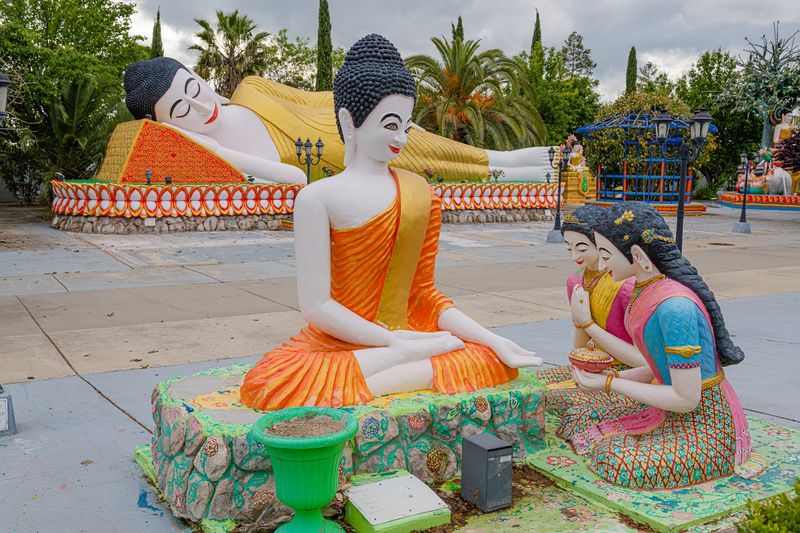
Calm is the word that comes up again and again. On a regular day, the grounds are serene, tranquil, and often nearly empty.
Sunday mornings can be especially quiet. Some guests have found themselves the only people there, with the whole plaza to themselves.
Weekdays tend to be low-key too. Even on holidays like the Fourth of July, only a handful of people have been spotted wandering the paths.
That makes the temple a strong pick for anyone craving a break from busy places. It is a spot to slow down, walk, and breathe for a bit.
Monks are sometimes around, and they are known for being friendly. Other staff and community members have also been described as welcoming and helpful.
On other days, there may be no staff in sight at all. It really depends on the timing.
Families, couples, solo travelers, and culture lovers all seem to find something here. The one requirement is a willingness to keep the peace, since this remains a spiritual place first.
When the Crowds Arrive for Cambodian New Year
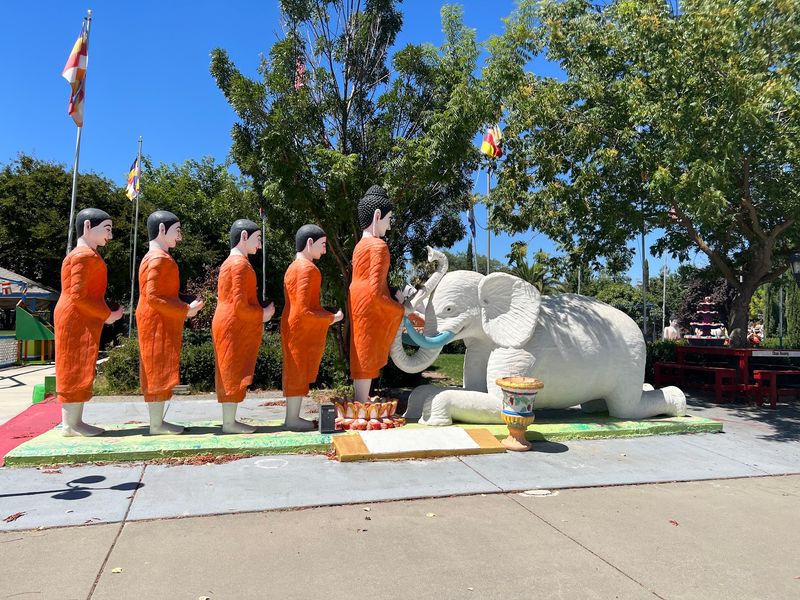
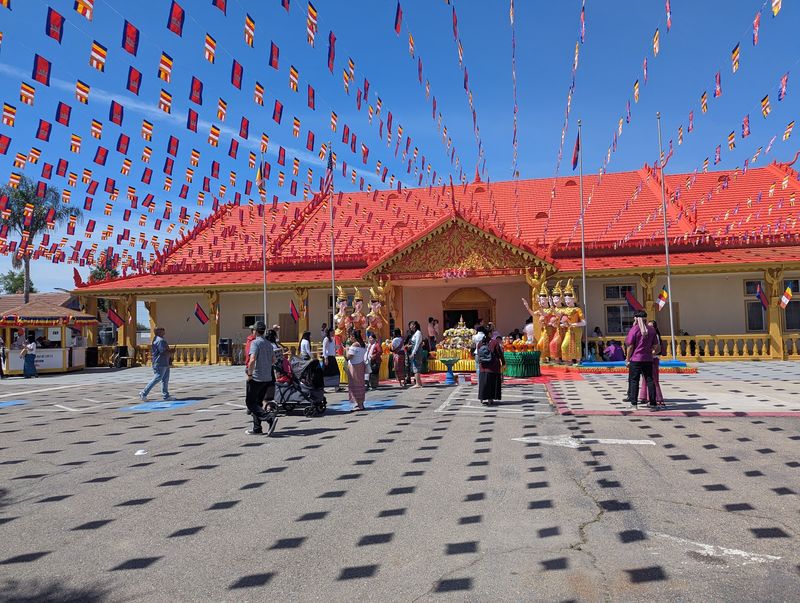
Quiet is the usual mood, but not always. Cambodian New Year transforms the temple into one of the liveliest gatherings in town.
Large crowds come to celebrate, and the event has grown over the years. Long-time attendees say the celebration keeps getting bigger and better.
Vendors set up to sell Cambodian food and other items. Their numbers have grown a lot, and so have the lines, with waits of 30 minutes or more at each booth.
Parking fills up quickly. Arriving around 11 a.m. may already mean a half-full lot, so earlier is smarter.
Other events bring energy too. Some gatherings have included live music and people dancing, along with a small market inside the grounds.
The temple also hosts a traditional day honoring ancestors, when people sell food and items for the occasion. Guests who arrive during these events get a rare look at Khmer culture in action.
Just remember that ceremonies can change the experience. Signs and guidance may be scarce, and some areas can be busy, so patience is part of the package.
Reading the Signs, Literally
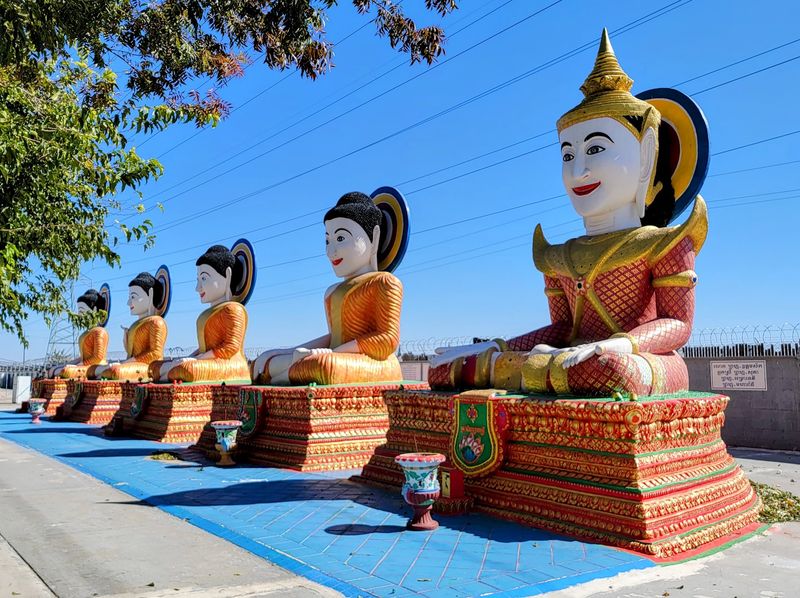
Here is the one common wish among guests: more English. Most of the plaques beside the statues are written in Khmer.
That leaves many people admiring the figures without knowing exactly what they show. Plenty of guests say they would love to learn the meaning behind each one.
A bit of tech can help. The camera translation feature in Google Translate does a pretty good job with the signs.
Keep expectations realistic, though. Many plaques mainly list the donor who sponsored the statue, and some have been bleached by the sun.
There are no formal tour guides. The visit is self-guided, and signage about where to go or what to do is limited.
Talking with a monk or a community member, if one is around, can fill in some blanks. Friendly conversations with people on the grounds have been a highlight for many.
Reading up on the Buddha’s life beforehand is still the easiest fix. With that background, the statues start telling their story even without a translation.
Hours, Parking, and the Price of Admission
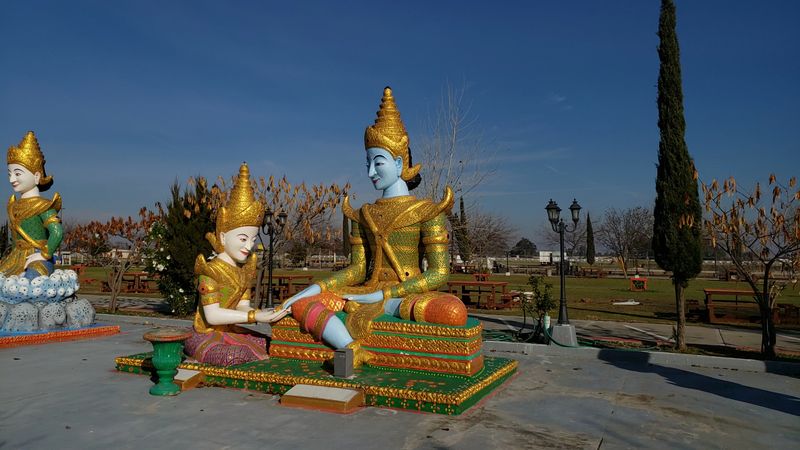
Good news first. Entry is free, and parking is free as well.
The temple is open every day of the week, Monday through Sunday, from 7 a.m. to 8 p.m. That wide window makes it easy to fit into almost any schedule.
A big parking lot sits inside the gate. There is no need to hunt for a street spot.
Public restrooms are available on the grounds. They have been described as large and clean, which is always welcome on a road trip.
Donations are accepted and appreciated. Since the temple relies on community support to maintain and expand the grounds, leaving a little something helps keep it going.
The paths are walkable, and some guests plan return trips with family members who use mobility scooters. The grounds seem to suit a relaxed pace.
Check for construction or event days if timing matters. Work has taken place on the grounds at times, and big celebrations can fill the lot fast.
How Long to Stay and When to Go
Time budgets vary. A quick loop takes about 15 to 20 minutes, while a more relaxed visit can stretch to 30 minutes or even an hour.
Photo lovers should lean toward the longer end. Stopping for pictures adds up quickly with over 100 statues to choose from.
Weather plays a role here. The Central Valley can get hot, and on warm days people tend to stay out of the heat, so mornings are a smart choice in summer.
Sunny days make the colorful paint look its best in photos. Cold days are fine for walking, but the pictures may be a bit duller.
For solitude, weekday mornings and Sunday mornings are a strong bet. For culture and crowds, aim for Cambodian New Year or other community celebrations.
Dress modestly and move quietly near the temple buildings. It is an active worship space, and courtesy is the best way to say thanks for the free welcome.
Pair the visit with other Stockton plans, since it makes a fun, quick stop for anyone passing through town.
Why This Detour Deserves a Spot on the Map
Few free stops pack this much into so little time. In under an hour, guests can see California’s largest Buddha, a sleeping Buddha, and a statue-by-statue telling of the Buddha’s life.
The place also carries real meaning. Founded by Cambodian refugees and kept bright by volunteers with paintbrushes, it stands as proof of what a community can build together.
Is it perfect? Not quite, and that is fine.
More English signage would help, and the entrance can be tricky to find. Still, those small hurdles are easy to handle with a translation app and a sharp eye for the gate.
What guests get in return is calm, color, and a rare window into Khmer culture right in the Central Valley. On festival days, they get a lively celebration too.
Remember to drop a donation if you can. Every bit helps the temple keep adding statues and welcoming newcomers.
Wat Dhammararam proves that some of the best finds are tucked just off the main road. It may take a wrong turn to find, but it is the right kind of detour.