

Affiliate disclosure: As an Amazon Associate I earn from qualifying purchases. Learn more
Tucked along the northeast coast of Florida sits a city that feels more like a fairy tale than a typical beach town. St. Augustine is the oldest city in the United States, packed with Spanish colonial architecture, dramatic fortresses, and centuries of fascinating history.
Most visitors rush past it on their way to Orlando or Miami, completely missing out on one of Florida’s most breathtaking treasures. If you love history, stunning views, and a little mystery, this hidden gem deserves a spot at the top of your travel list.
Castillo de San Marcos: The Ancient Stone Castle

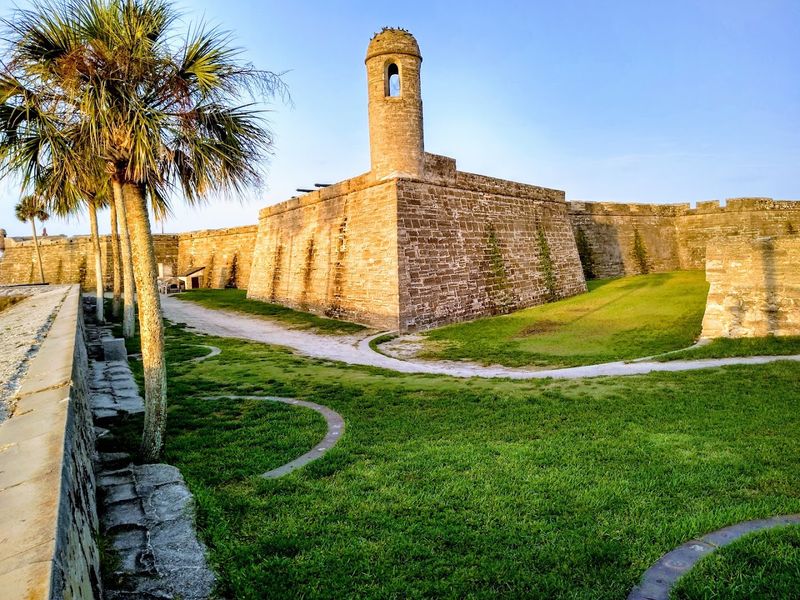
Standing tall for over 350 years, the Castillo de San Marcos is the oldest masonry fort in the entire United States. Built by the Spanish in the 1600s using a unique shell-stone called coquina, this fortress has survived cannonballs, sieges, and hurricanes without crumbling.
That alone makes it legendary.
Walking through its thick walls feels like stepping into another century. Cannons line the parapets, and the views of the St. Augustine Inlet are absolutely stunning.
Rangers in period costumes bring the history to life with demonstrations and storytelling that kids and adults both love.
The fort is managed by the National Park Service, so entry fees are affordable. Plan to spend at least two hours exploring the grounds, the dark interior rooms, and the upper deck.
Visiting at sunset gives you one of the most dramatic views you will ever see in Florida.
St. George Street: A Living, Breathing Time Capsule
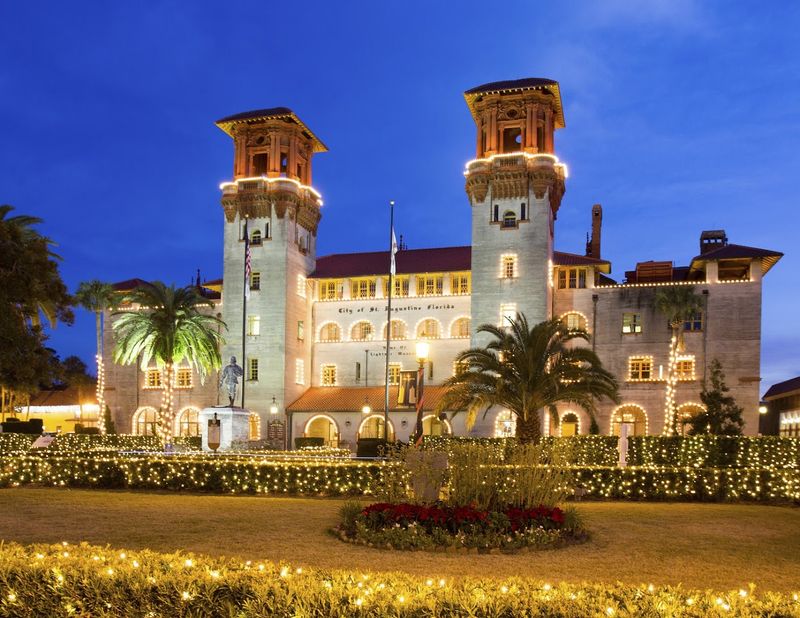
Imagine strolling down a street where buildings date back to the 1700s and every shop tells a story. St. George Street is a pedestrian-only stretch in the heart of St. Augustine’s historic district, and it buzzes with energy from morning until night.
Local artisans, restaurants, and quirky boutiques fill spaces that once housed Spanish colonial families.
Street performers add to the lively atmosphere, and the architecture is genuinely jaw-dropping. Narrow alleyways branch off in unexpected directions, each one hiding something worth discovering.
Even the pavement beneath your feet carries history.
One tip most visitors miss: arrive early in the morning before the crowds show up. The golden light hitting those old facades is a photographer’s dream.
Grab a Cuban coffee from one of the local cafes and soak in the atmosphere before the rest of the world wakes up. You will not regret it.
The Flagler College Campus That Looks Like a Palace
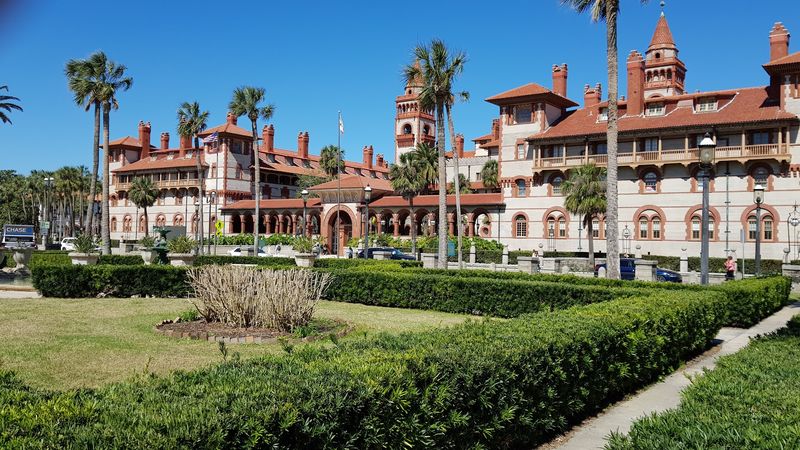
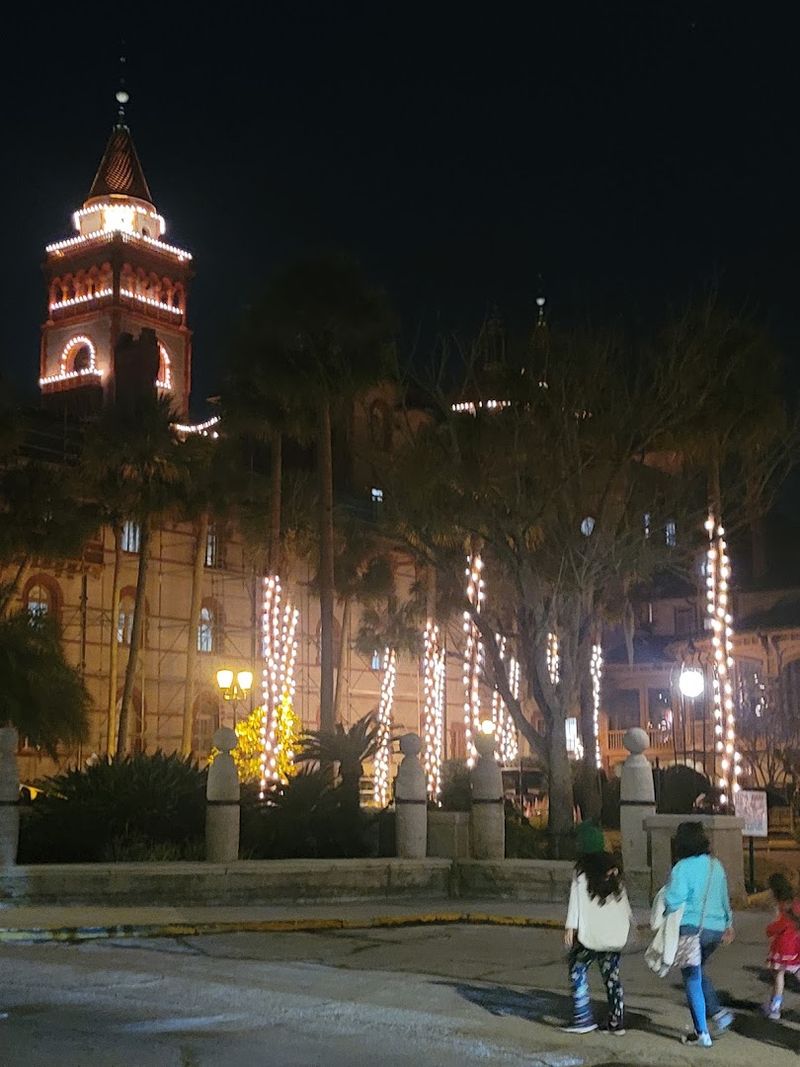
Henry Flagler built what is now Flagler College in 1888 as the Hotel Ponce de Leon, and he spared absolutely no expense. The building is a jaw-dropping example of Spanish Renaissance Revival architecture, complete with twin towers, hand-painted ceilings, and Tiffany stained glass windows.
It honestly looks more like a European palace than a college campus.
Tours are available for visitors who want to peek inside the grand dining hall and admire the original Tiffany glass. Student guides share colorful stories about the building’s transformation from a luxury hotel to an academic institution.
The courtyard alone is worth the visit.
Even if you skip the tour, walking around the exterior is a treat. The building dominates the town center with an elegance that stops people in their tracks.
History buffs will appreciate knowing that guests like Mark Twain once stayed here during the Gilded Age.
Anastasia State Park: Wild Beauty Just Minutes Away
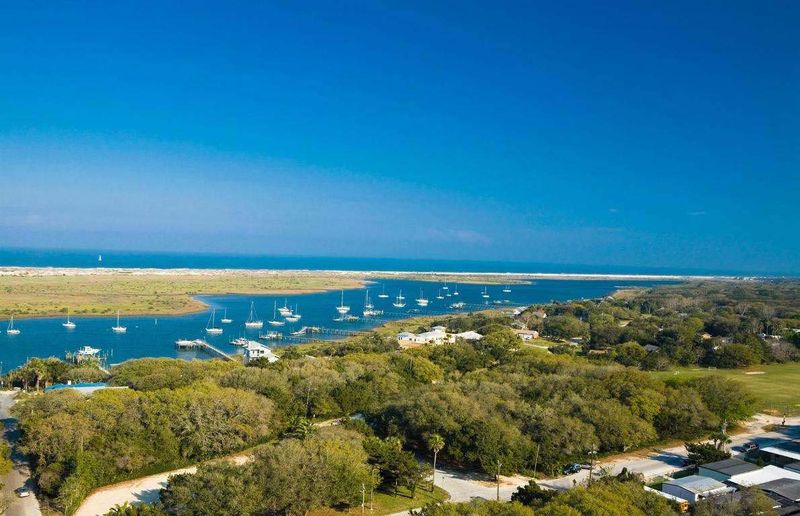
Not far from the historic district, Anastasia State Park feels like a completely different world. Miles of undeveloped Atlantic Ocean beach stretch out in front of you, backed by ancient sand dunes and swaying sea oats.
It is the kind of beach that reminds you why people fall in love with Florida in the first place.
The park is also a protected wildlife sanctuary, home to shorebirds, sea turtles, and a surprising variety of plant life. Kayaking through the salt marshes on the park’s western side gives you a peaceful, up-close look at Florida’s natural ecosystems.
Rental equipment is available on-site.
Camping here is a popular choice for those who want to wake up steps from the ocean. Sites book up fast during spring and summer, so reservations made weeks in advance are strongly recommended.
Weekday visits tend to be quieter and far more relaxing than weekend trips.
The Lightner Museum: Gilded Age Glamour on Display
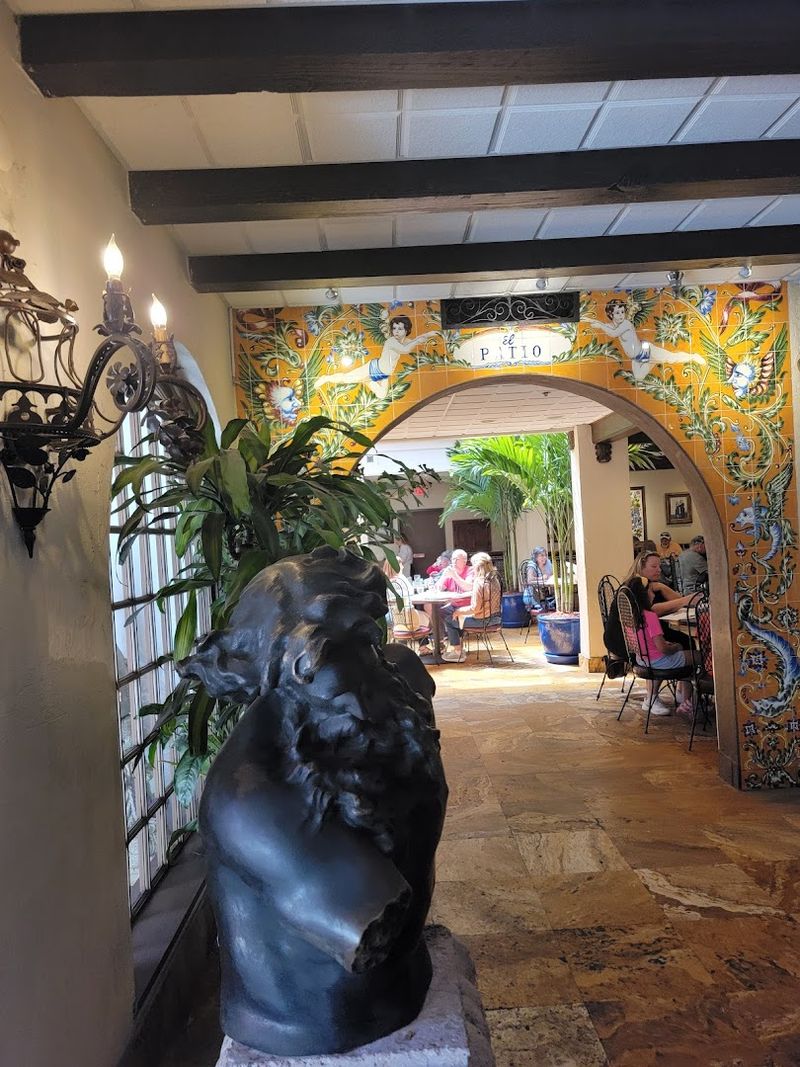
Otto Lightner had a passion for collecting beautiful things, and in 1948 he turned a former luxury hotel into one of Florida’s most unique museums. The Lightner Museum houses an extraordinary collection of Gilded Age antiques, including cut glass, mechanical musical instruments, Victorian-era art, and some genuinely bizarre curiosities.
The building itself is part of the attraction.
The former indoor swimming pool now serves as a cafe, which is one of the coolest places to grab lunch in all of St. Augustine. Arched ceilings, vintage tiles, and warm lighting create an atmosphere that feels both historic and magical.
Couples especially love this spot.
Admission is budget-friendly, and the museum is rarely as crowded as the outdoor attractions nearby. Spending a rainy afternoon wandering through its galleries feels like the perfect Florida escape.
Many visitors say they leave knowing far more about American history than they expected to learn.
St. Augustine Lighthouse: Climb to the Top of History
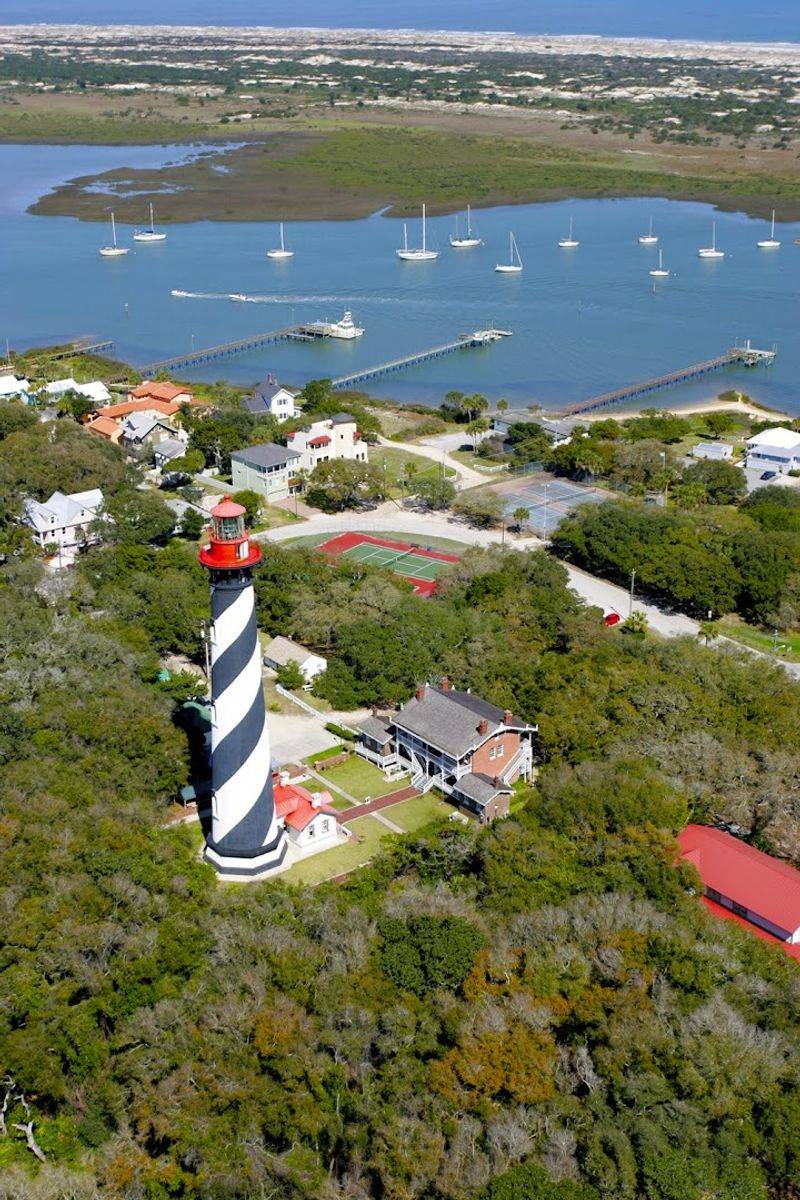
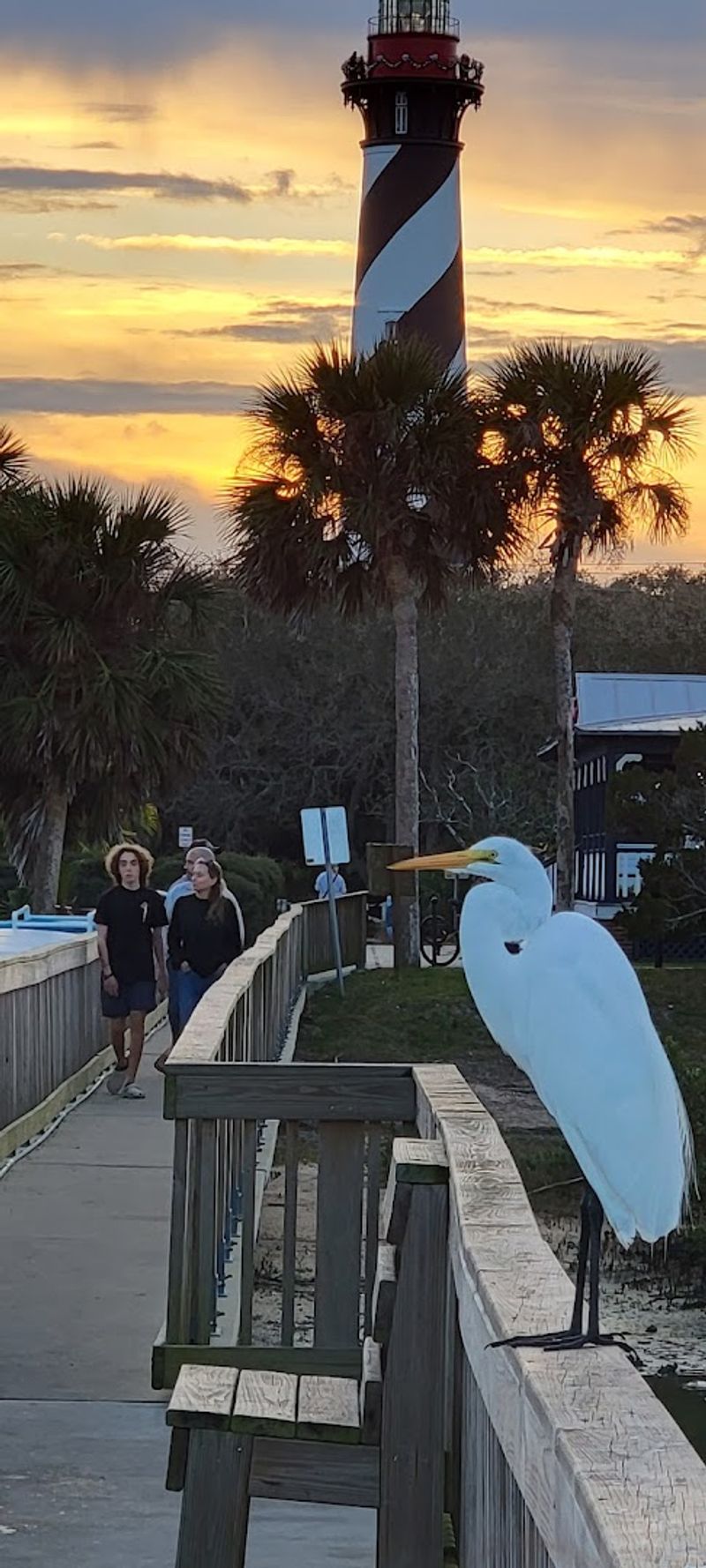
At 165 feet tall, the St. Augustine Lighthouse is the oldest surviving lighthouse in Florida, and climbing its 219 spiral steps rewards you with one of the most spectacular views on the entire East Coast. The iconic black and white spiral pattern makes it instantly recognizable, and the surrounding maritime museum adds fascinating context to the structure’s long history.
Built in 1874, the lighthouse replaced an earlier Spanish watchtower that had been slowly swallowed by the sea. Keepers once lived in the restored keeper’s house on the grounds, which visitors can now tour.
The stories of those lighthouse families are surprisingly moving.
Ghost tours at night have made this lighthouse famous among paranormal enthusiasts. Several unexplained incidents have been reported here over the decades, and the nighttime atmosphere is genuinely thrilling.
Whether or not you believe in ghosts, the lighthouse is a must-visit attraction that delivers on every level.
Fountain of Youth Archaeological Park: Myth Meets Reality
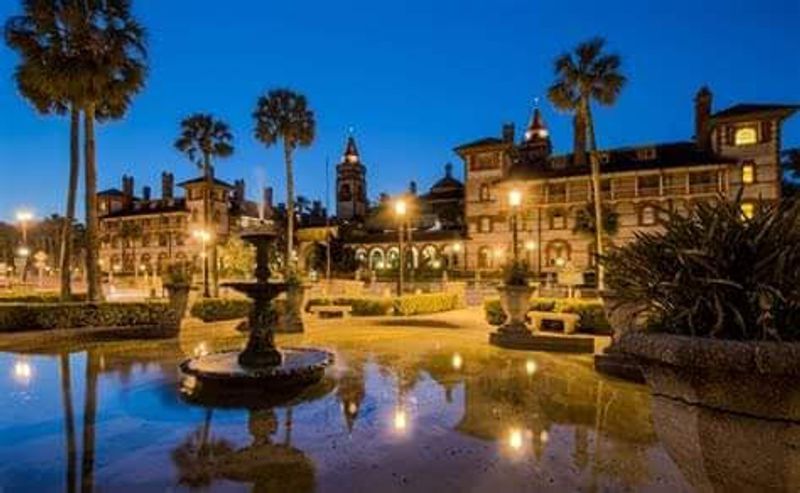
Juan Ponce de Leon reportedly landed near this very spot in 1513, searching for a legendary spring that could restore youth. Whether or not that story is entirely accurate, the Fountain of Youth Archaeological Park sits on genuine history.
Archaeologists have uncovered a Timucuan Native American village and a Spanish colonial settlement right beneath the grounds.
Visitors can drink from the actual spring, which has a distinctly sulfuric taste that most people describe as memorable rather than refreshing. The park also features a planetarium show about early navigation, a free-roaming peacock population, and stunning views of the Matanzas River.
It is a quirky, one-of-a-kind experience.
Kids tend to love the interactive exhibits and the peacocks that wander freely around the property. Adults appreciate the surprisingly deep archaeological content.
Arriving early means you might have the whole place nearly to yourself, which makes the experience feel genuinely special and unhurried.
Colonial Quarter: Step Inside the 18th Century
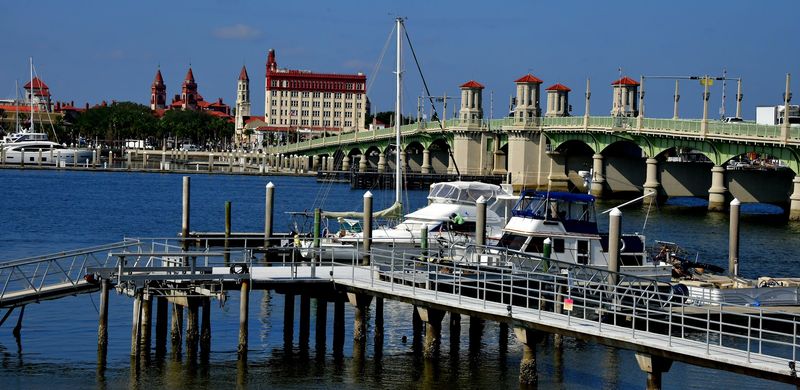
History books are one thing, but watching a blacksmith hammer hot iron while a musket fires overhead is something else entirely. The Colonial Quarter is a living history museum in St. Augustine where trained interpreters bring the 18th century back to life.
Leather-workers, soldiers, and craftspeople demonstrate skills that kept this city running for hundreds of years.
The four-story wooden watchtower in the center of the complex offers sweeping views of the old city and the bayfront. Climbing it is free with admission and gives you a perspective of St. Augustine that most visitors never see.
The detail in the reconstructed buildings is remarkable.
This attraction works especially well for families with school-age kids. The hands-on demonstrations and costumed characters make history feel exciting rather than dry.
Many school groups visit throughout the year, but weekday afternoons are typically calm enough to enjoy everything at a comfortable, relaxed pace.
St. Augustine Beach: Relaxed, Uncrowded, and Underrated
While Miami and Clearwater grab most of Florida’s beach headlines, St. Augustine Beach quietly delivers everything a beach lover could want without the overwhelming crowds. The sand is soft, the water is clean, and the vibe is refreshingly low-key.
A modest pier stretches out over the Atlantic, making it a favorite spot for fishing and sunset watching.
The beach town itself has a charming, old-school Florida personality that feels increasingly rare. Small restaurants, surf shops, and ice cream stands line the main strip without a single chain hotel dominating the skyline.
That alone makes it worth visiting.
Parking is generally easier here than at more famous Florida beaches, and the water temperature stays swimmable for a surprisingly long stretch of the year. Locals treat this beach like a neighborhood backyard, which gives the whole place a welcoming, unpretentious energy that is hard to find anywhere else on the Florida coast.
The Old Jail: Dark History Behind Thick Stone Walls
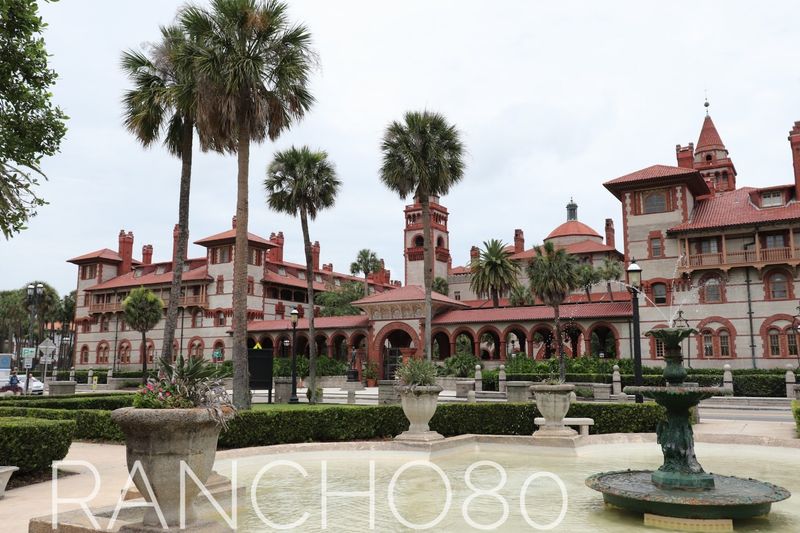
Built in 1891 and designed to look like a fancy hotel so it would not upset wealthy tourists staying nearby, the Old Jail is one of St. Augustine’s most fascinatingly strange landmarks. Sheriff Joseph Perry ran this facility for over two decades, and the stories that come out of it are equal parts grim and darkly humorous.
The building housed prisoners until 1953.
Guided tours take visitors through the original cells, the sheriff’s living quarters, and the gallows area. Costumed guides deliver the history with just the right amount of dramatic flair.
The contrast between the ornate exterior and the harsh interior conditions is genuinely striking.
Ghost tours of the Old Jail run regularly at night and are consistently rated among the best in the city. Even skeptics tend to admit the atmosphere is unsettling in the most entertaining way possible.
History and spookiness rarely combine this effectively anywhere else in Florida.
Crescent Beach: The Quiet Escape Most Tourists Skip
A short drive south of the main tourist area, Crescent Beach is the kind of place that feels like a secret locals are reluctant to share. The beach is tranquil, the crowds are thin, and the natural beauty is completely uninterrupted by commercial development.
Shelling is fantastic here, especially after storms push new treasures onto the shore.
Families with young children particularly appreciate how calm the water tends to be compared to other Atlantic-facing beaches nearby. The gradual slope of the shoreline makes wading safe and enjoyable.
Picnic tables and basic facilities are available, but the real appeal is simply the peace and quiet.
Watching dolphins play just beyond the breaking waves is a common and genuinely magical experience here. Sunrise visits are especially rewarding, painting the sky in shades of orange and pink that reflect off the wet sand.
If you need a break from sightseeing, Crescent Beach is the perfect remedy.
Flagler Memorial Presbyterian Church: A Stunning Labor of Love
Henry Flagler built this breathtaking church in 1889 as a memorial to his daughter, Jenny Louise, who died that same year. The grief behind its creation makes the building feel deeply personal despite its grand, almost overwhelming scale.
Modeled after the Cathedral of St. Mark in Venice, the Venetian Renaissance design is unlike anything else in Florida.
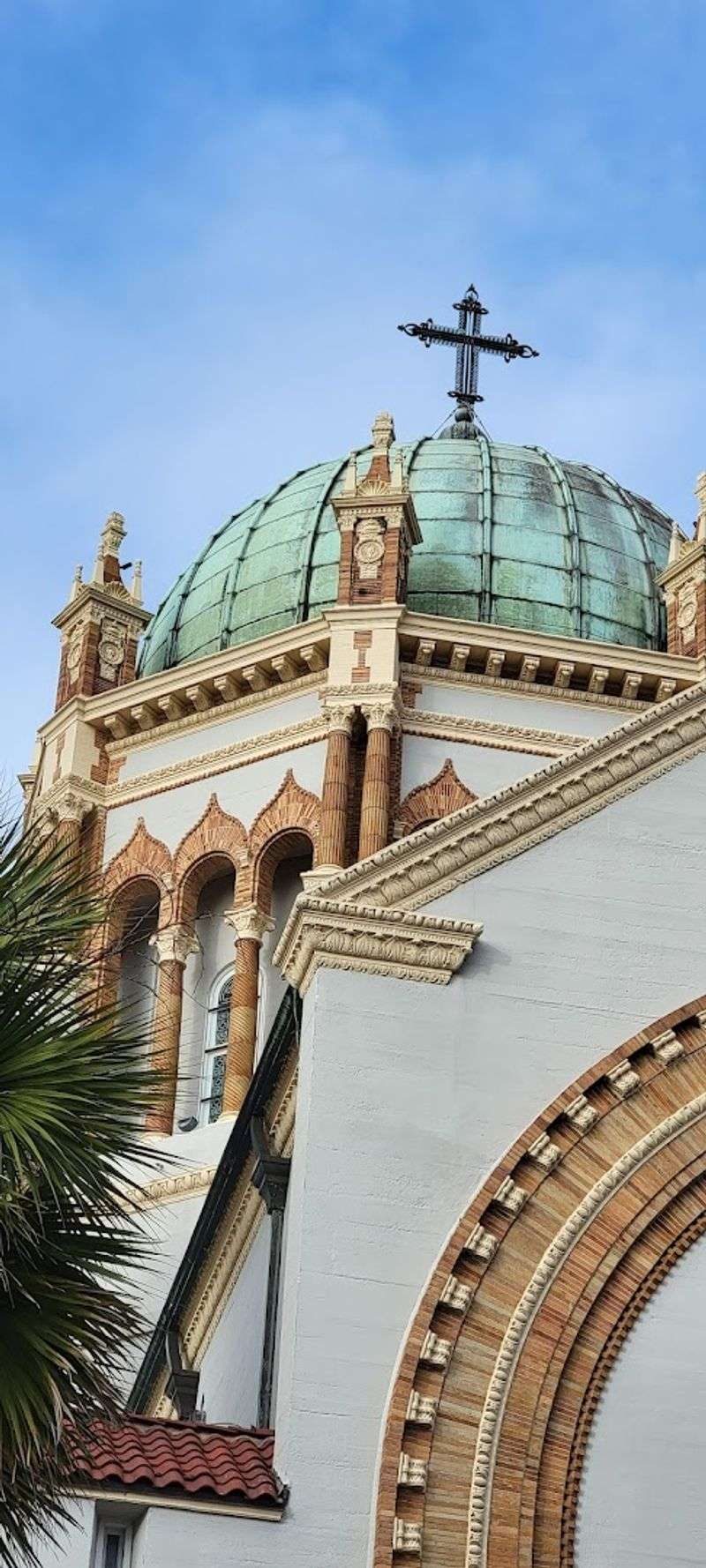
The copper dome turns a gorgeous shade of green over time, giving the church a distinctly European character that surprises first-time visitors. Inside, the woodwork, stained glass, and marble details are exquisite.
Flagler himself is buried in a mausoleum on the property.
Admission is free, though donations are warmly welcomed. The church remains an active congregation, so visiting during non-service hours is recommended for the most relaxed experience.
Architecture enthusiasts often rate this as the single most beautiful building in all of St. Augustine, and it is genuinely difficult to argue with that assessment.
Ghost Tours of St. Augustine: The Most Haunted City in America
St. Augustine proudly claims the title of the most haunted city in America, and its ghost tour industry has built quite a reputation around that bold statement. With over 450 years of layered history including battles, epidemics, and centuries of human drama, the city has accumulated more than a few unexplained stories.
Tour companies have turned those stories into an art form.
Several competing ghost tour operators offer walking tours through the old city streets after dark, each with its own style and focus. Some lean heavily into theatrical storytelling, while others take a more historically grounded approach.
Reading reviews ahead of time helps you pick the experience that matches your personality.
Even visitors who arrive as firm skeptics often leave feeling pleasantly unsettled. The narrow streets, flickering lanterns, and genuinely old buildings create an atmosphere that does most of the work on its own.
Few cities in America do nighttime atmosphere quite as well as St. Augustine.