Begin with the practical decision
A Ghent canal walk with one child should have a comfortable finish before it has a long list of viewpoints. Choose a short suitable public route, let the family notice a few details, and leave enough attention for ordinary needs. The goal is a shared outing everyone can understand, rather than a route that grows whenever another bridge appears.
Choose the actual waterfront section
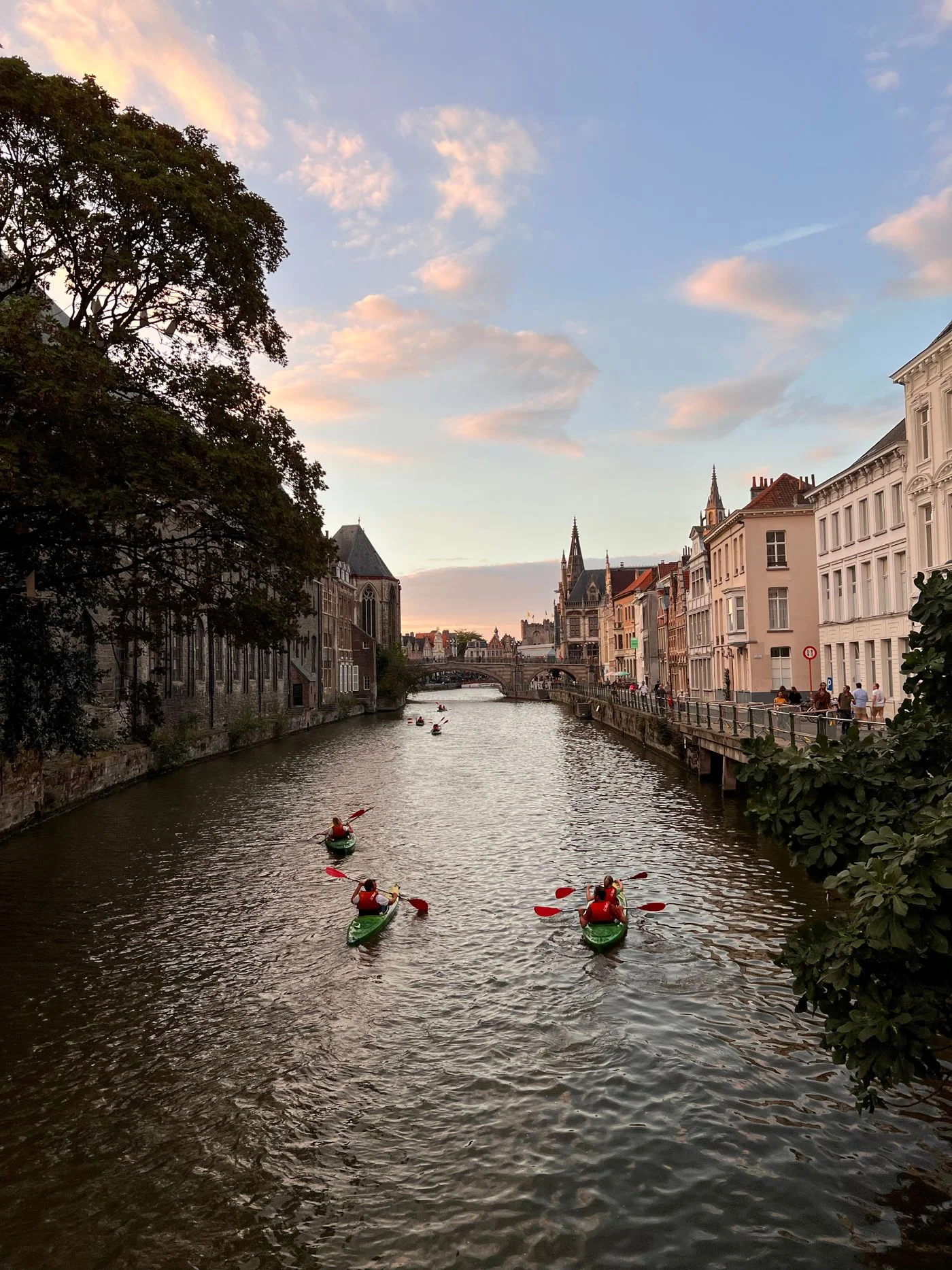
Official visitor information identifies Graslei and Korenlei along the Lys. Locate the intended public route on a current map and check any relevant local information before going. A photograph showing kayakers is an illustration of the setting, not a promise that the family will take a boat or follow that exact line.
Pick an arrival point and a finish connected to a suitable next task. Consider the child's needs and both adults' comfortable walking capacity. Include the journey from the accommodation or transport stop, not just the waterfront section that looks short on a sightseeing map.
Make the family arrangement clear
Agree how the adults will navigate and maintain appropriate supervision near water and through busy areas. Keep handovers explicit when someone checks a map, photographs a building, or handles a bag. Do not let an attractive scene absorb both adults' attention while each assumes the other has the practical task.
Tell the child what the walk involves in simple terms: a particular section, a suitable pause, and the next destination. Keep route decisions with the adults, while allowing the child to choose something to notice from an appropriate position. Interest and responsibility are different parts of the outing.
Keep optional activities separate
If the child notices a boat and wants a ride, treat that as a new decision requiring current operator information, suitability, access, and the full time involved. Do not add it automatically to avoid disappointment. A clear answer about what is possible is more useful than an uncertain promise.
Our child city-map activity offers a small way to involve the child without buying another attraction. Follow the actual public route and keep the activity secondary to appropriate supervision and movement through the setting.
Finish before the route becomes a negotiation
When the agreed section ends, choose the next step openly. If everyone wants another short suitable part, confirm its finish first. If someone needs food, a bathroom, or rest, solve that need rather than extending the walk to reach a more photogenic place.
The family lunch-route guide helps choose a practical meal location. Check the actual venue and dietary needs, and keep a reasonable alternative rather than depending on a particular waterfront table being available.
What if the child wants to stop repeatedly? Distinguish curiosity from discomfort and respond to the actual reason. You can enjoy a detail, shorten the walk, or keep a suitable pause within the plan. A family route is successful when it supports the people walking it, not when every map pin has been reached.
Planning references: Official destination visitor information. Confirm current arrangements with the relevant provider.
Official sources and planning checks
Details can change. Confirm dates, accessibility, booking conditions and current charges directly before making a purchase. Sources checked 2026-10-15.
Keep planning together
Use the family trip checklist to organize documents, packing and reservations. Our family stay guides explain room and booking tradeoffs.