
Affiliate disclosure: As an Amazon Associate I earn from qualifying purchases. Learn more
Carrying heavy gear on a long hike can turn an adventure into a struggle. The right camera lets you capture stunning mountain views, wildlife moments, and trail memories without weighing down your pack. Whether you need rugged weather sealing for stormy peaks or a compact design for ultralight trips, modern cameras offer incredible quality in surprisingly small packages.
1. Fujifilm X-T5 – Best all-round hiking camera

If you want a single camera that nails landscapes, details, and low-light trail shots, the Fujifilm X-T5 is a top choice. RTINGS currently ranks it as the best hiking and backpacking camera they’ve tested, thanks to its weather-sealed body, compact APS-C lenses, and 40.2 MP sensor with in-body stabilization.
The weather-sealed magnesium alloy body survives dust, splashes, and cold, while the 40 MP APS-C sensor gives tons of detail for big prints or cropping. Five-axis IBIS lets you skip the tripod for many shots, and excellent battery life keeps you shooting on long days.
Not the lightest body in its class, especially with larger zooms. The lens system is APS-C only, great for travel but not full-frame.
2. OM System OM-5 – Compact, weather-sealed trail workhorse

The OM System OM-5 shows up repeatedly in hiking guides as a compact, weather-sealed bargain. RTINGS highlight its IP53 weather rating and effective 5-axis IBIS, while Outdoor Life calls it their pick for rough conditions where gear really gets punished.
IP53 weather sealing protects against dust and resists rain or spray. Very light body with equally small MFT lenses creates an ultralight kit. Powerful stabilization and computational modes like Live ND and high-res shot expand creative options, plus a great selection of rugged, compact lenses for travel and hiking.
Smaller sensor versus APS-C or full-frame means more noise at very high ISO. Menus can be a bit complex for beginners.
3. OM System OM-1 Mark II – Rugged choice for extreme conditions

If you hike in serious weather like snow, rain, or sandstorms, the OM-1 Mark II is built for it. WeTrioTravel calls it rugged lightweight for the elements, highlighting its IP53 sealing and class-leading stabilization.
IP53 weather sealing across body and lenses when paired with sealed glass protects your investment. Excellent IBIS makes slow handheld shutter speeds possible, while Micro Four Thirds keeps body and telephoto lenses relatively small. Great for wildlife and landscape in hostile environments.
Price positions it as more of a serious enthusiast or pro body. Again, smaller sensor if you’re obsessed with shallow depth of field effects in portraits.
4. Canon EOS R8 – Lightest full-frame Canon for weight-conscious hikers

WeTrioTravel highlight the Canon EOS R8 as the lightest full-frame Canon R body, around 461 grams including battery and card, while still delivering top-tier image quality.
Full-frame image quality with dynamic range and low-light capability comes in a featherweight body. Colors and skin tones are classic Canon, great if you shoot people and landscapes together. Good autofocus for moving subjects like wildlife or hikers adds versatility.
No in-body stabilization means you’ll want stabilized lenses or faster shutter speeds. Weather sealing is decent but not as hardcore as OM-1 level bodies for extreme conditions.
5. Canon EOS R7 – Crop-sensor reach for wildlife on the trail

The Canon EOS R7 is a standout APS-C mirrorless in WeTrioTravel’s travel list, praised for telephoto reach, 32.5 MP resolution, and in-body stabilization.
APS-C crop gives your telephoto lenses extra reach, which is nice for wildlife photography on the trail. IBIS helps keep long-lens shots sharp without lugging a tripod. Weather-sealed body that’s still reasonably light balances protection and portability.
Slightly larger and heavier than R8 if you’re counting every ounce. Best paired with good RF-S or RF telephotos to really shine, which adds cost to your overall kit investment.
6. Nikon Z6 III – Balanced hybrid for photo + video hikers

WeTrioTravel describe the Nikon Z6 III as a balanced full-frame for hybrid travelers, with a modern partially stacked sensor, fast readout, and much-improved autofocus.
The 24.5 MP full-frame sensor hits a sweet spot for low-light and file size management. Excellent video features work well if you vlog or make hiking films for your audience. Improved autofocus tracking for people and animals ensures you don’t miss the shot, while comfortable ergonomics and weather sealing support long use.
Heavier than APS-C or MFT options when you’re obsessing over base weight. Full-frame zooms can significantly increase pack weight on multiday trips.
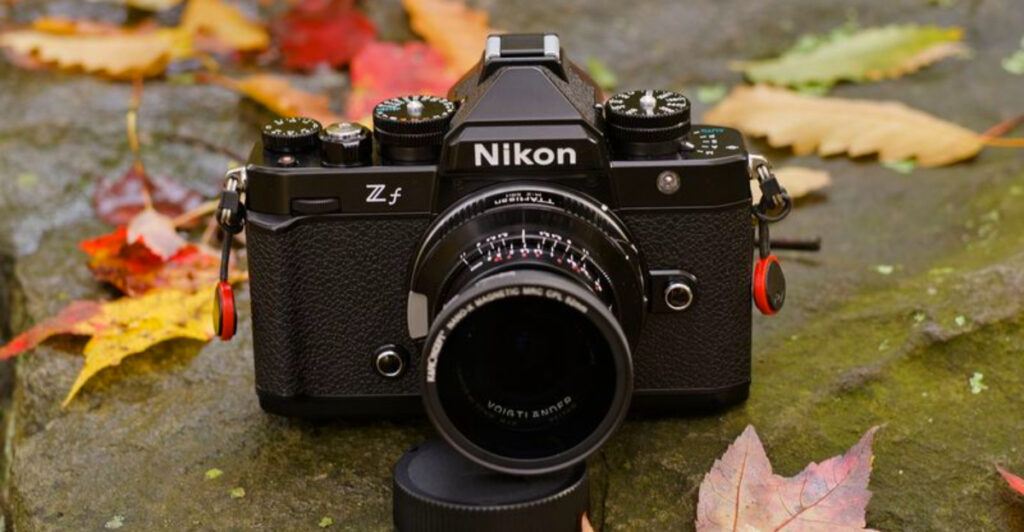
7. Nikon Zf – Retro style, modern stabilization

The Nikon Zf combines retro design with modern tech: full-frame sensor, strong in-body stabilization, and weather sealing. WeTrioTravel call it retro looks with modern stabilization.
In-body stabilization helps in low-light forests and dawn or dusk shots where tripods aren’t practical. Weather-sealed, solid build remains fairly compact for full-frame standards. Classic dials make exposure control very tactile and intuitive for photographers who love hands-on shooting.
Body isn’t ultralight, especially with heavier primes or zooms attached. Retro design is gorgeous but you may want extra protection in rough terrain to preserve the finish.
8. Panasonic Lumix S5 II – For hikers who are also serious content creators

If you shoot a lot of video on the trail, the Panasonic Lumix S5 II is a hybrid beast. WeTrioTravel note that Panasonic finally added phase-detect autofocus, making this full-frame mirrorless a genuine hybrid powerhouse with excellent IBIS and video tools.
Superb video features include Active I.S., strong codecs, and great color science. The 24 MP full-frame sensor delivers excellent low-light performance, while good weather sealing and solid ergonomics support extended shooting sessions.
On the heavier side, not ideal if you obsess over base weight for ultralight backpacking. L-mount lenses can be large, especially telephotos for wildlife work.
9. Fujifilm X100VI – Fixed-lens compact for minimalist hikers

The Fujifilm X100VI is the cult-favorite fixed-lens compact updated for 2024 and 2025: 40 MP APS-C sensor, in-body stabilization, hybrid optical and electronic viewfinder, and gorgeous Fuji color science in a camera that still fits in a small bag.
Fixed 23 mm f/2 lens (35 mm-equivalent) is perfect for landscapes and environmental portraits. Very compact, easy to carry on a chest strap or in a small pouch. IBIS plus fast lens excels for low-light trail shots, and weather sealing becomes fully effective with the usual adapter and filter setup.
No zoom or lens changes, so if you like telephoto wildlife, this isn’t it. Demand is high, so availability and pricing can be tricky in some regions.
10. Sony a6700 – Powerful APS-C in a small package

Digital Camera World list the Sony a6700 among their top travel cameras, describing it as a pocket powerhouse with access to Sony’s extensive E-mount lens ecosystem.
Compact body with excellent autofocus and tracking makes capturing action easy. Great video features work perfectly if you vlog or shoot reels for social media. Huge choice of native and third-party lenses includes very small primes for ultralight setups.
Weather sealing is decent but not as bomb-proof as some rivals in heavy rain. Ergonomics with larger lenses can feel front-heavy, which affects comfort on long shooting days.
11. Olympus OM-D E-M10 Mark IV – Budget-friendly lightweight option

RTINGS point to the OM-D E-M10 Mark IV as a strong budget pick for hiking and backpacking: extremely light, MFT lens ecosystem, and in-body stabilization at a lower price point.
Very lightweight body and lenses make it great for ultralight hikers counting every gram. IBIS helps keep photos sharp at slower shutter speeds without a tripod. Access to the full Micro Four Thirds ecosystem includes compact primes that won’t break your budget or your back.
Not fully weather-sealed, so treat it with more care in rain or snow. Autofocus and features aren’t as advanced as higher-end bodies in challenging conditions.
12. Fujifilm X-T30 II – Small, capable APS-C for hikers on a budget

RTINGS highlight the Fujifilm X-T30 II as a compact mid-range option with strong image quality and access to Fuji’s excellent X-mount lens lineup.
Small, light body that’s easy to keep on a strap all day without neck fatigue. APS-C sensor with excellent color and film simulations gives your photos that classic Fuji look. Great selection of compact primes and zooms keeps your kit versatile and portable.
No weather sealing means you should avoid heavy rain and serious dust exposure. No in-body stabilization, so you’ll rely on lenses or higher shutter speeds to avoid blur.
13. Ricoh Pentax KF – Weather-resistant DSLR for traditionalists

Outdoor Life’s hiking camera test picked the Ricoh Pentax KF as best for beginners, praising its image quality and ergonomics, though it’s the heaviest of the cameras they tested. The body is dust and weather-resistant, though a formal IP rating isn’t listed.
DSLR ergonomics and optical viewfinder appeal to some hikers who still prefer traditional shooting. Weather-resistant body handles rough conditions better than many entry-level options. Good image quality and intuitive controls help beginners learn photography fundamentals.
Significantly heavier than mirrorless options, which matters on long treks. Pentax lens ecosystem is more limited than Canon, Sony, or Fuji in some regions.
14. GoPro Hero 13 Black – Best action camera for most hikers

As of late 2025, multiple guides agree that the GoPro Hero 13 Black is the best GoPro and one of the best action cameras overall. It delivers 5.3K60 video, 27 MP photos, HyperSmooth 6.0 stabilization, and waterproofing down to 10 meters without a housing.
Tiny, rugged, and waterproof to 33 feet straight out of the box makes it adventure-ready. New HB-series lens mods like macro, ultra-wide, ND, and anamorphic give creative flexibility. Easy helmet, chest, or trekking-pole mounting captures unique trail perspectives.
Battery life is much better than old GoPros but still limited versus still cameras. Small sensor works great for video and social content but not for large still prints.
15. DJI Osmo Action 5 Pro – Long-battery rival with deep waterproofing

Outdoor Life and TechRadar’s waterproof-camera guides consistently call the DJI Osmo Action 5 Pro one of the strongest GoPro rivals, especially for underwater use and low-light video. It uses a 1/1.3 inch sensor, offers 4K/120p video, and is waterproof to 20 meters without a housing.
Excellent video quality and stabilization capture smooth POV shots on rough trails. Deeper waterproof rating (20 meters) beats GoPro out of the box for water crossings. Very good battery life and substantial internal storage (around 47 GB built-in) reduce accessory needs.
Accessory and mount ecosystem is smaller than GoPro’s, though it’s growing. Still a video-centric tool rather than a main camera for high-resolution photos.