
Affiliate disclosure: As an Amazon Associate I earn from qualifying purchases. Learn more
Somewhere south of Miami, a man who reportedly weighed about 100 pounds moved blocks of coral that weighed several tons, and he did it without modern machinery. Nobody has fully explained his methods, and that question has drawn curious travelers, History Channel fans, and ancient alien theorists for decades.
The site sits in Homestead, and it packs a love story, a stone calendar, and giant gates into one compact garden. The sections ahead cover the legend, the standout carvings, the guided tours, and the practical details, including what a ticket costs and when to show up.
By the end, you will know whether this strange little landmark deserves a spot on your next South Florida day trip.
A Coral Mystery on South Dixie Highway
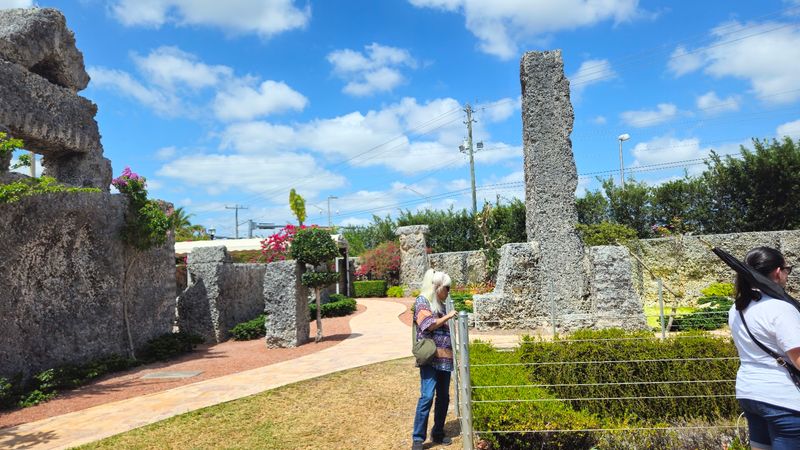
Homestead rarely tops the list of big Florida vacation spots, yet one stop on the edge of town has kept people guessing since the early 1900s. The attraction is Coral Castle, and it sits at 28655 S Dixie Hwy, Homestead, FL 33033, in the United States.
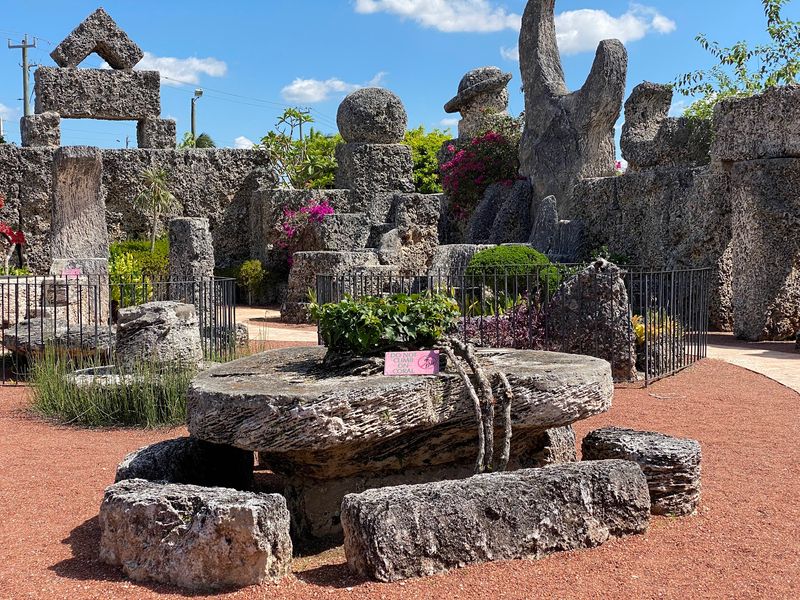
Officially, it is listed as a museum. In practice, it is an outdoor garden filled with sculptures, walls, and furniture carved from coral.
The headline fact is the one that stops people in their tracks. A single man handcarved the whole place from more than 1,000 tons of coral.
No crew, no construction company, and no modern machinery are part of the story. That detail alone turns a quick roadside stop into a full-blown puzzle.
The site is easy to find, and parking is free, which is a welcome bonus in South Florida. Anyone already spending time near Miami can fold it into a day without much effort.
Expectations matter here. The grounds are smaller than many people assume, so the visit works best as one part of a larger plan for the area.
Most groups spend roughly 60 to 90 minutes on site, including a short film and a guided walk. That is just enough time to meet the mystery, hear the theories, and leave with more questions than answers.
A Heartbreak Set in Stone
Plenty of people write love letters. The creator of Coral Castle carved his in coral, one massive block at a time.
At the heart of the site is a love story that guides still tell on every tour. According to the legend, a small, heartbroken man built the entire place for a love he had lost.
That emotional thread is what separates this stop from a typical rock garden. The engineering question gets people through the gate, but the reason behind it is what tends to stick with them afterward.
Guides frame the tour around the creator as much as the creations. The film at the start sets the stage, and the walk through the grounds fills in the personal details of his life and work.
The romance angle gives the carvings a different kind of weight. A bench stops being just a bench once you know who it may have been meant for.
Many people describe the place as quirky and romantic in equal measure. Others see it mainly as proof of what stubborn ambition can accomplish when someone refuses to accept the word can’t.
Either reading works, and the tour leaves room for both. Just be ready for a story that is part history lesson and part personal tribute.
One 100-Pound Builder Versus Tons of Coral
Here is a number worth holding onto: about 100 pounds. That is roughly how much the creator of Coral Castle is said to have weighed.
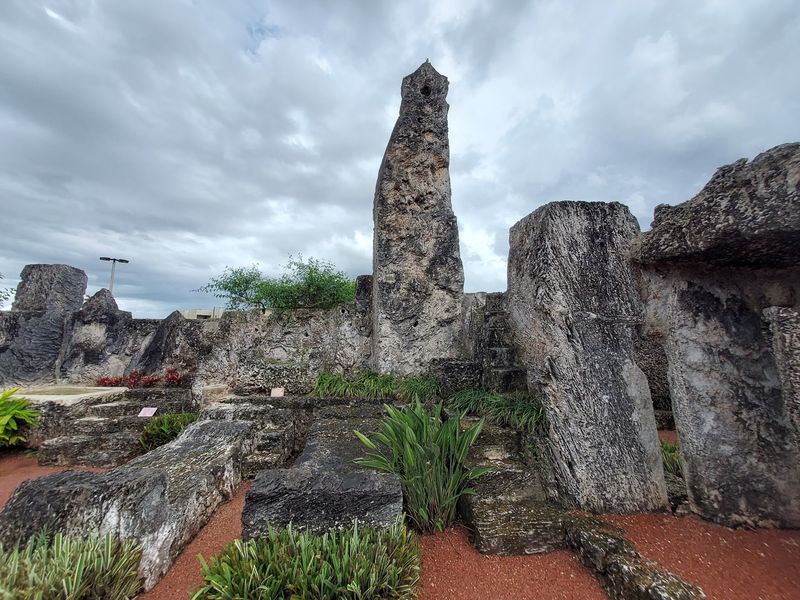
Now set that beside the stones. Some of the blocks on the property weigh several tons, and the gates and walls reach around nine tons.
The math does not seem to add up, and that is the whole appeal. He carved and moved more than 1,000 tons of coral by himself, working in the early 1900s with only hand tools.
No cranes appear in the story the tour shares. No team of helpers shows up either.
Guides walk groups through what is known and what remains a question mark. Where the material came from and how it was shifted into place are two of the puzzles people keep turning over long after they leave.
By modern standards, the structures may not seem enormous at first. Keeping the era in mind changes that impression fast, since the work happened without any of today’s equipment.
The size of the stones can be hard to grasp in person, so a little reading before the trip helps. Once the scale clicks, the achievement becomes much harder to shrug off.
Night Work, Aliens, and Other Theories
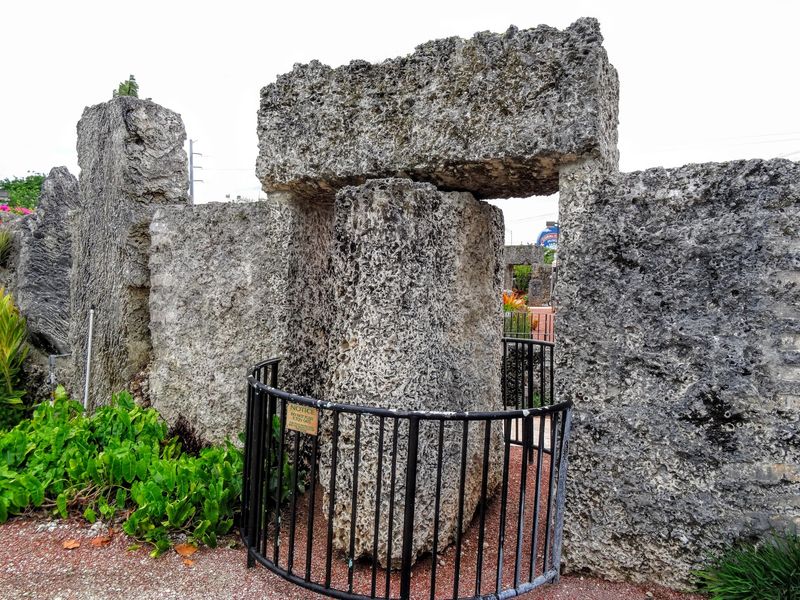
Ask ten people how the coral was moved, and you may get ten different answers. Coral Castle has collected quite a pile of them over the years.
Part of the legend holds that the creator did his work at night, out of sight. That secrecy left plenty of room for speculation, and speculation has filled it gladly.
Ancient alien fans have claimed the site as one of their favorites. The place has appeared on the History Channel, and that exposure brought a new wave of curious travelers who wanted to see the stones for themselves.
Conspiracy theories also come up often during tours. Guides share the gossip surrounding the property, and that part of the walk tends to be one of the most entertaining stretches.
The staff does not push any single explanation. Guests are free to lean toward engineering skill, secret knowledge, or something stranger.
Some people even talk about a powerful healing energy on the grounds. Whether that clicks for you or not, it shows how deeply the site affects certain guests.
The best approach is simple. Enjoy the theories, weigh them, and remember that the official answer to how he did it is still that nobody really knows.
The Gates, Walls, and a Famous Rotating Stone
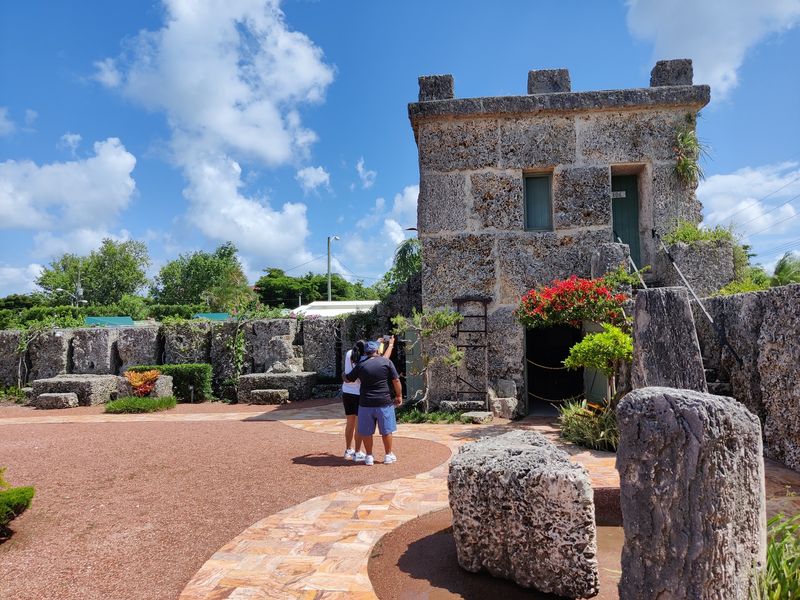
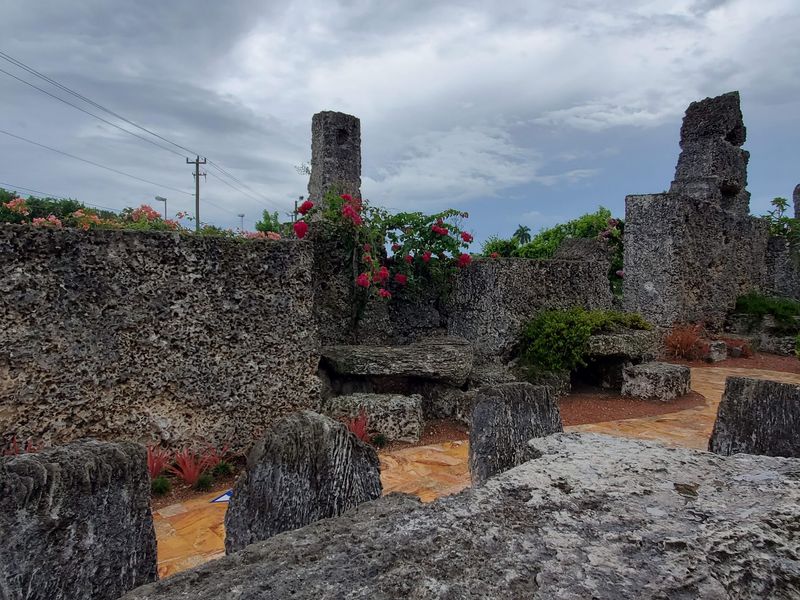
Nine tons. That is the weight often attached to the gates and walls at Coral Castle, and seeing them up close is a very different experience than reading about them.
These massive pieces form the backbone of the castle. They frame the garden and give the whole property its fortress-style layout.
The rotating stone is one of the best-known features on site. It is so famous that many people arrive already asking about it.
A quick heads-up saves disappointment here. Touching the stones is not allowed, and that includes the rotating stone and the coral benches.
That rule frustrates some guests who hoped for a hands-on visit. On the other hand, it helps keep the carvings well maintained for the long haul.
The good news is that you can step off the walkway in certain areas, as long as you keep your hands to yourself. That gives you closer angles for photos and a better sense of scale.
Guides explain how these heavy pieces fit into the overall design and what makes them so hard to explain. Ask questions, since the guides clearly enjoy digging into details.
Check out the gates, then note the size of a person beside them. The gap between the two is the real exhibit.
A Calendar Carved Over Three Years
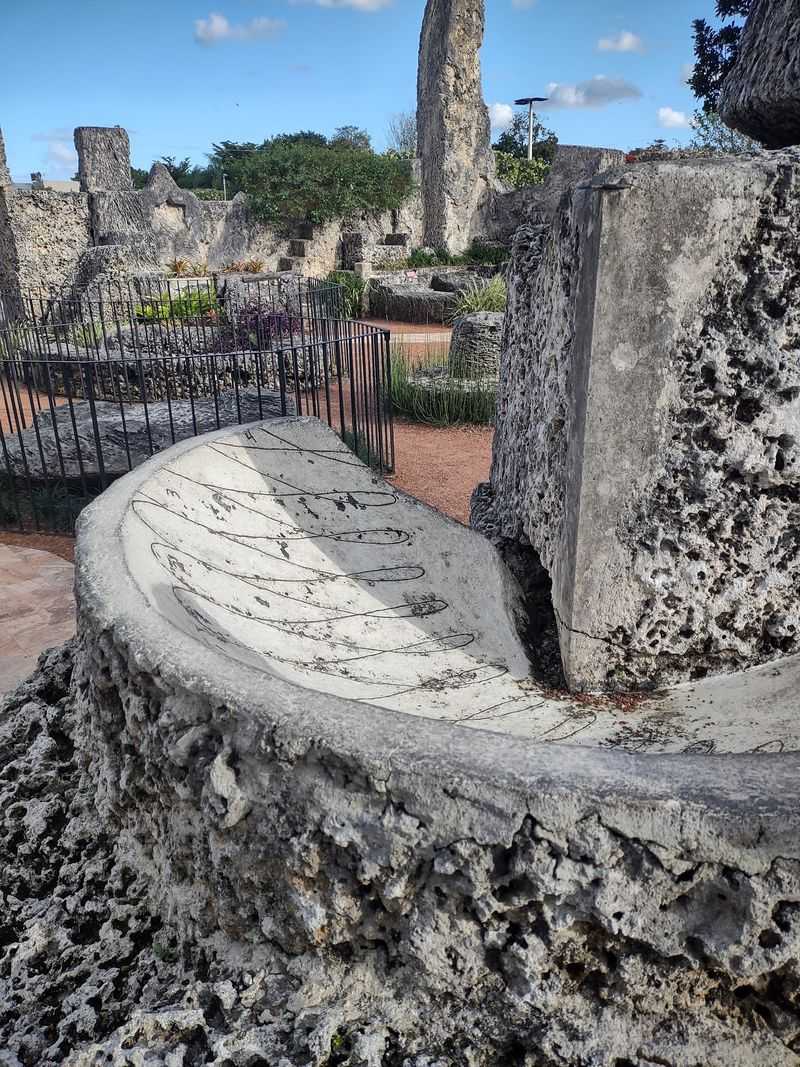
Most people grab a calendar at the store in about thirty seconds. The one at Coral Castle took about three years to make.
The stone clock and calendar is a standout for many guests, and it often ends up as a favorite piece by the end of the tour. It shows a side of the creator that goes beyond raw strength.
Moving heavy coral is impressive on its own. Designing something that tracks time adds a layer of planning and precision to the story.
Guides point it out and explain its role on the property. Hearing the background makes the piece far more interesting than a quick glance would suggest.
The calendar also fits neatly into the larger theme of dedication. Three years is a long commitment for a single carving, especially for someone working alone.
For photos, this is a great place to slow down. The carving has plenty of detail, and it tends to spark conversation among families and groups.
Kids often latch onto this part because it is easy to understand. A calendar is familiar, so the leap to a calendar made of stone feels exciting rather than abstract.
Keep an eye out for it during the walk. Once you know it took years of patient work, every other carving on the grounds starts to seem even more ambitious.
Tours on the Hour and Guides Who Spill the Gossip
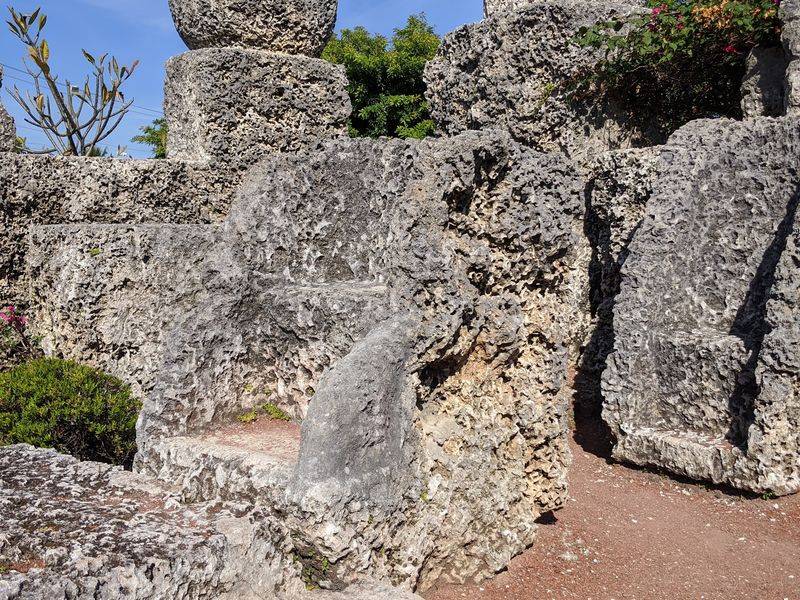
Tour guides come up more than almost anything else when people talk about Coral Castle, and there is a good reason for that.
Visits start with a short introduction video. The film gives useful background on the creator and the site before the live tour begins.
After that, a guide leads the group across the grounds. Tours run on the hour, so it helps to plan your arrival around that schedule.
The guides earn a lot of praise for being entertaining, friendly, and knowledgeable. Some add personal commentary, and at least one grew up visiting the castle as a child.
Humor is part of the package. Guides mix facts with the gossip about the property, which keeps the tour moving and keeps kids interested.
The walk itself is fairly quick. You can join another tour and go around more than once, which many people find worth doing.
Arrive late, and you may simply catch up with a group in progress or split your visit across two partial tours. The setup is flexible.
One rule shapes the whole visit. Time on the grounds depends on a guide being present, so plan to snap photos during the tour.
Come with questions ready. The guides seem happiest when the group gets curious.
Gardens, Wildlife, and Photo-Friendly Corners
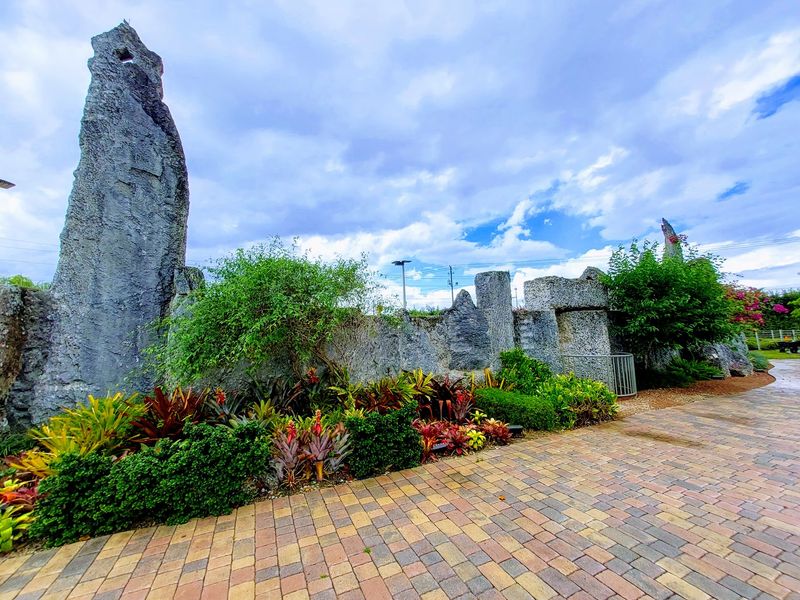
The coral gets the headlines, but the landscaping quietly steals a few scenes of its own.
Coral Castle sits inside a well-kept garden with flowers and wildlife around the carvings. The grounds are maintained with obvious care.
A small bit of trivia helps set expectations. The garden was not part of the original creation, so the plantings are a later addition to the site.
Even so, the greenery makes the stones easier to photograph. It frames the carvings nicely without pulling focus from them.
Photo opportunities are a big draw here. Many guests leave with dozens of pictures, from wide shots of the walls to close views of the benches and calendar.
Some areas off the walkway are open for foot traffic, which opens up better angles. Just remember the no-touching rule applies everywhere.
Timing matters for pictures too. Midday sun in South Florida can be intense, and the staff offers umbrellas to help keep people shaded during the walk.
The whole garden is compact, so you will not need hours to cover it. That makes it easy to focus on a few favorite pieces and get the shots you want.
Bring a charged phone or camera. You may be surprised how often you reach for it.
Who Will Love It, and Who Might Pass
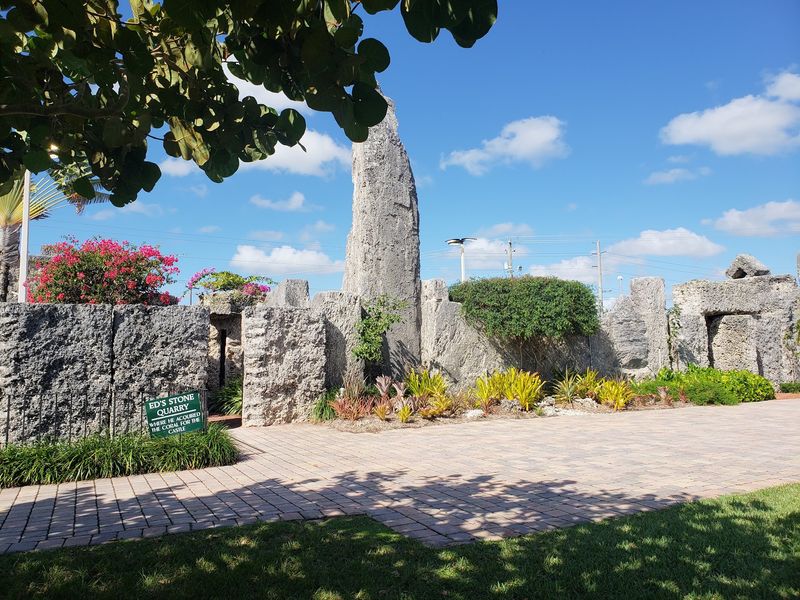
Not every attraction suits every traveler, and this one has a very clear personality.
Fans of unsolved mysteries tend to have a great time here. Anyone who enjoys history, quirky roadside landmarks, or engineering puzzles will find plenty to ponder.
Families often do well too. Kids enjoy the story, and the tour gives parents a natural way to keep the conversation going after the visit.
Pet owners get good news as well, since the site is pet friendly. That is a helpful perk for road trippers traveling with a four-legged companion.
On the flip side, some people feel the visit is short for the cost. A few describe the walk-through as quick and wish they could explore freely or touch the stones.
That split reaction points to a simple rule. The value depends heavily on how much you care about the story behind the stones.
People who read up beforehand usually get more out of it. Knowing the history turns each carving into part of a bigger narrative.
A smart way to approach it is as a stop, not a full-day destination. Pair it with other plans in the Homestead or Miami area, and it becomes a memorable detour rather than the whole trip.
Hours, Tickets, and the Early-Bird Advantage
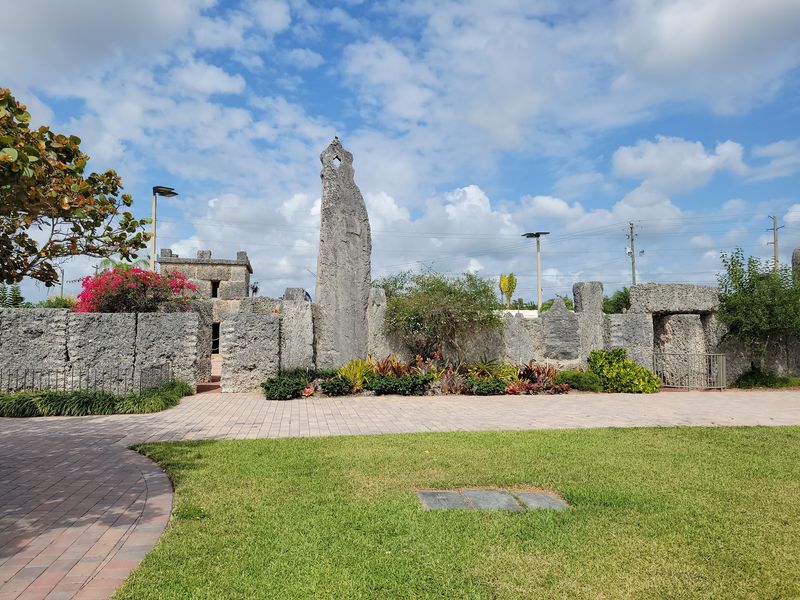
Good news for flexible planners: Coral Castle keeps the same schedule every day of the week.
The site is open from 9 AM to 8 PM, Monday through Sunday. That long window makes it easy to squeeze in before or after other stops in South Florida.
Admission has run about $50 for two adults. A family of four paid around $94, so budget accordingly and check the official website for current prices before you go.
Arriving right at opening time pays off. Groups who show up at 9 AM have walked in with no line and no wait.
Since tours start on the hour, a little planning helps avoid standing around. Aim to arrive a few minutes before a tour so you can catch the introduction video first.
Plan on 60 to 90 minutes in total. Some groups move faster, while others take a second tour to catch details they missed.
The South Florida sun is a real factor. Bring your own umbrella or use the ones the staff provides, and take a break in the gift shop if you need a breather.
Reading a bit of history before the trip is worth the effort too. It helps the stones make sense quickly, especially since the walk itself moves at a steady pace.
Parking, the Gift Shop, and a Soft Verdict
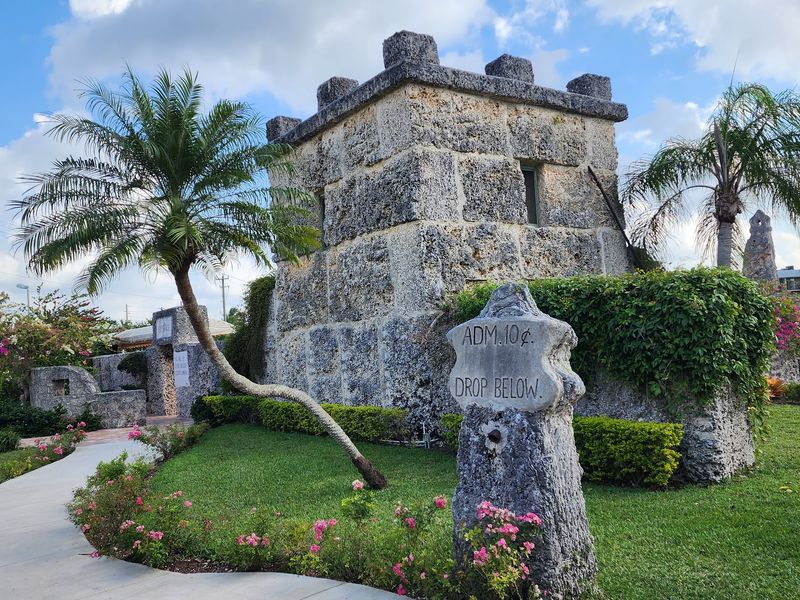
The final stretch of any visit leads through the gift shop, and here is a money-saving secret: you do not need an admission ticket to go inside.
That makes the shop a handy free stop for anyone passing through Homestead on a tight budget. Many guests pick up a souvenir or two on the way out.
Parking is free, and the lot handles cars easily. A 30-foot RV has fit when the lot was not busy, but bigger rigs or vehicles towing trailers will likely not fit.
So is Coral Castle worth the trip? For most people who love a good mystery, the answer leans toward yes.
The site is small, the tour is fairly brisk, and the rules are strict about touching. Those are real trade-offs, and it helps to know them in advance.
What you get in return is rare. A single man, more than 1,000 tons of coral, a love story, and a question that still has no clear answer.
Some people have waited decades to see it in person, and many leave feeling it was worth checking off the bucket list. Others suggest treating it as a stop rather than a special trip.
Both views can be true at once. Come curious, come early, and let the coral keep its secret for another day.