
Affiliate disclosure: As an Amazon Associate I earn from qualifying purchases. Learn more
Tucson summers push the valley into the 90s and beyond, yet a short drive west leads to a mountaintop where evenings can drop into the 50s. Up there, astronomers map the universe, Apollo crews once trained, and ordinary Arizonans can look through serious telescopes at galaxies millions of light years away.
It ranks among the most storied astronomy sites in the country, and it sits right in our own backyard, about an hour from Tucson. Keep reading for the history, the tours worth booking, and the practical tips that help a night under these skies go smoothly.
An Observatory Perched Above the Sonoran Desert
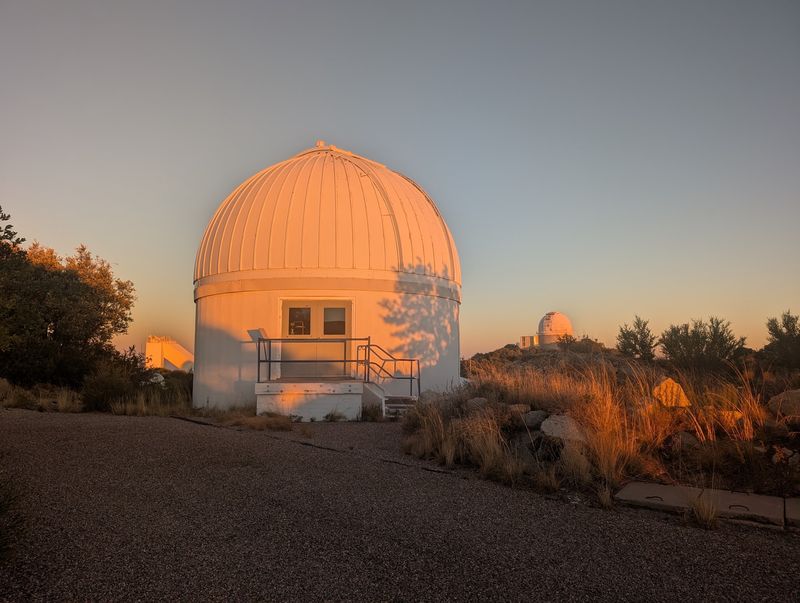
Most Arizona road trips end at a scenic overlook. This one ends at a working research observatory with a welcome desk.
Kitt Peak National Observatory Visitor Center sits at Kitt Peak National Observatory, Tucson, AZ 85634, in southern Arizona. The mountain rises to about 7,000 feet in the Sonoran Desert, roughly an hour from Tucson, and it stands fairly isolated from the city glow below.
The visitor center acts as the front door to the whole summit. Guided tours start here, exhibits live here, and the gift shop stocks posters, shirts, hats, bumper stickers, and magnets for anyone who wants a souvenir with some science behind it.
Doors open every day of the week from 9 a.m. to 4 p.m. Evening and overnight programs run on their own schedules, with tickets sold through the official website, visitkittpeak.org.
The summit is dotted with telescopes of many sizes, and the observatory also works with a network of scopes around the world. Researchers rely on instruments here, which means guests share the mountain with active science.
That detail shapes almost everything about a trip up the peak, from how tours are planned to when cars can leave at night. Before the practical stuff, though, the mountain’s backstory deserves a proper introduction.
Dark Matter, Apollo Crews, and a 3D Universe
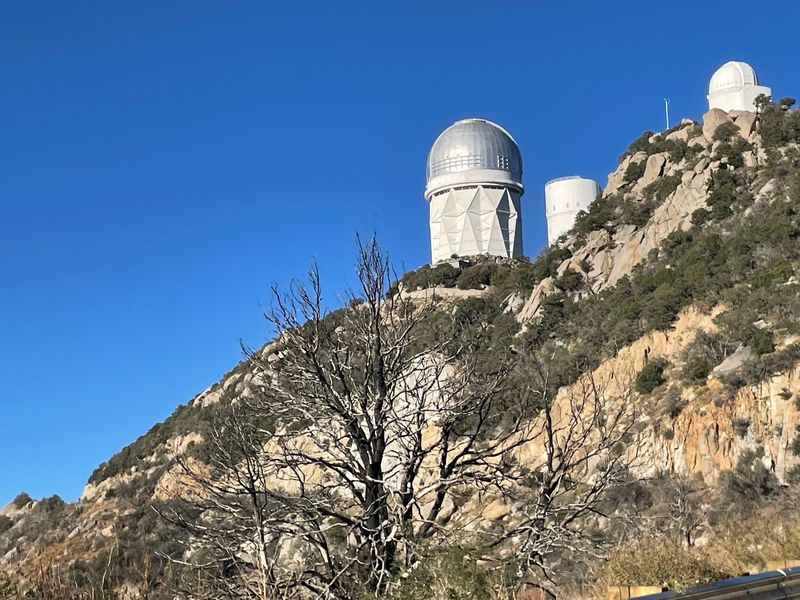
Few Arizona landmarks can claim a role in rewriting physics textbooks. This mountain can.
Astronomer Vera C. Rubin is credited with work here that helped confirm the existence of dark matter, the unseen material that appears to hold galaxies together.
Her observations remain one of the proudest chapters in the peak’s history.
The space race left its mark as well. Apollo astronauts trained on the summit, adding a lunar footnote to a place already focused on distant stars.
Modern science keeps the story moving. The Dark Energy Spectroscopic Instrument, known as DESI, is used by astronomers worldwide to build a 3D map of the universe.
Guides weave these milestones into their tours, and many docents carry deep institutional knowledge about how the observatory grew over the decades. Evening programs typically open with a short history of the facility.
That history includes the arrangement with the Tohono O’odham Nation, and guides explain that relationship as part of the site’s story. It adds important context to the domes lining the ridge.
For a mountain an hour from Tucson, that is a remarkable resume. The next question is what it takes to reach it.
The Winding Road to 7,000 Feet
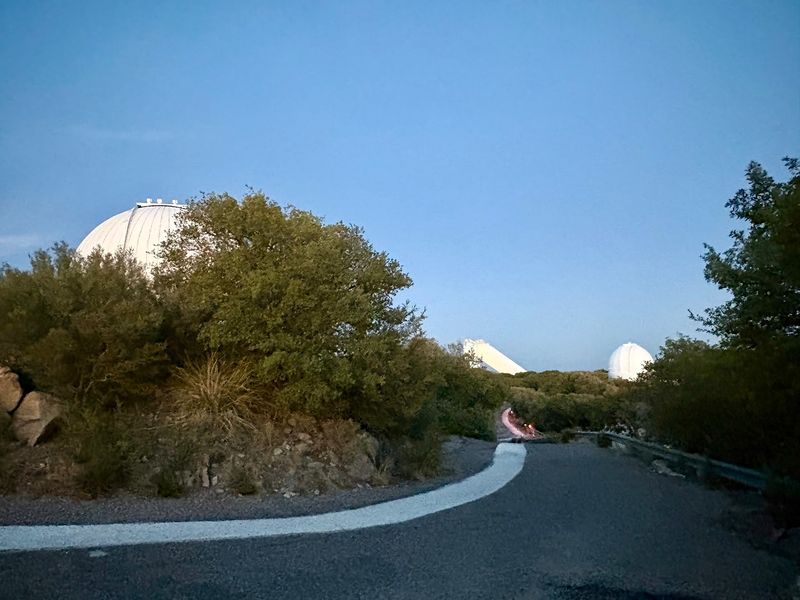
Ticket disclaimers about the mountain drive can sound intimidating. In practice, the route is a decent paved road that is well maintained and not especially scary.
The climb winds up through the Sonoran Desert, with sweeping desert views as the elevation increases. For perspective, the summit sits lower than Mount Lemmon, so anyone who has handled that famous Tucson drive will feel right at home.
Cattle are the wild card. Cows can wander near the road, so a slower pace on the way in is a smart move.
Fuel is another planning point. Filling the tank in the Tucson area before heading out is widely recommended, since the mountain is remote.
Weather can shift the plan too. Sunny days are the norm, but storms, fog, and strong wind do roll in, and one foggy winter night saw staff lead cars down the mountain in a 30-car caravan for safety.
Checking the Kitt Peak forecast before buying tickets helps avoid a cloudy letdown. Once the car is parked, the daytime side of the mountain is ready for exploring.
Daytime Tours Among the Domes
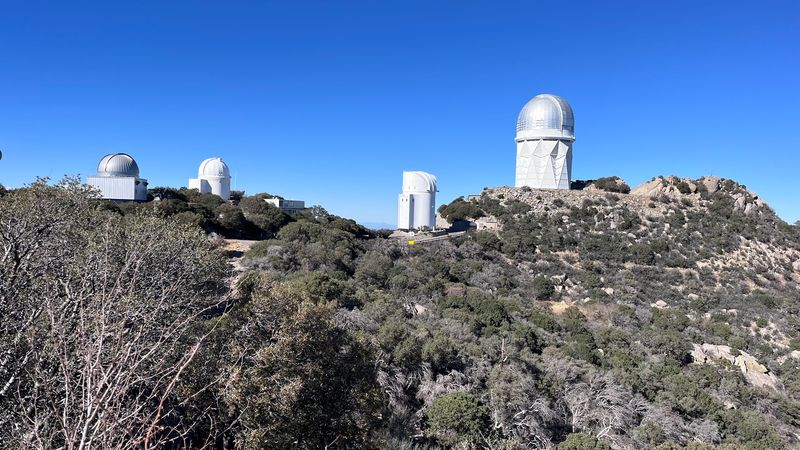
Stars are not the only reason to visit in daylight. During the day, the telescopes themselves take center stage.
Guided daytime tours bring groups to the big instruments on the summit, with expert docents explaining what each one does and how it fits into the observatory’s history. A three-telescope daytime tour is a popular choice for families and science fans.
A five-hour, three-tour package bundles several stops together and is often described as a very good deal. Built-in breaks between tours leave time to browse the visitor center exhibits and head over to the Windows on the Universe Center.
An early arrival pays off. Doors open at 9 a.m., and showing up at opening makes it easier to fit in multiple tours without rushing.
Lunch is simple to handle. A boxed lunch can be pre-purchased for about $15, though packing a meal from home is a budget-friendly alternative.
Docents here tend to know the mountain inside and out, with years of stories about the telescopes they guide people through. Questions are welcome, and the more curious the group, the richer the tour becomes.
Daytime visits also give a sense of scale that is hard to grasp after dark. Speaking of scale, one building on the summit dwarfs almost everything else.
Windows on the Universe Inside a Solar Giant
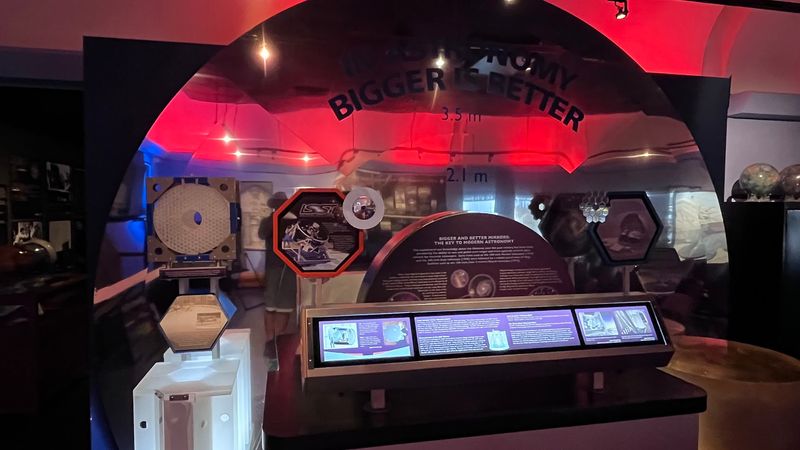
Here is a fun twist: one of the most recognizable structures on the peak is a solar telescope that no longer studies the Sun.
The McMath-Pierce Solar Telescope is now decommissioned, but it has found a second life. Inside sits the Windows on the Universe Center, an exhibit space tied to the astronomy happening across the mountain.
It fits naturally into a day of tours. The gap between scheduled stops is a good window, pun fully intended, to wander through it.
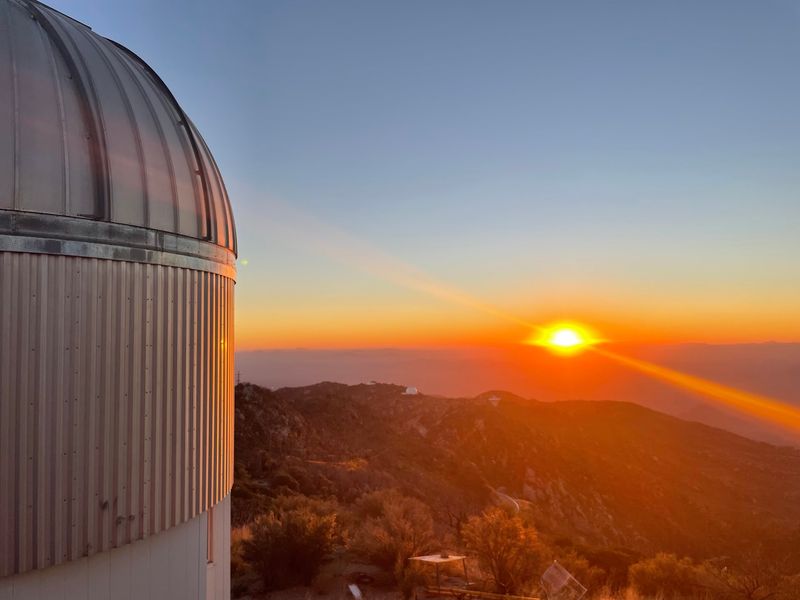
The structure plays a role after hours as well. Some evening hiking tours pause at the decommissioned solar observatory to watch the sunset, a special treat that guides sometimes arrange.
That evening walk sticks mostly to paved roads, with a short gravel segment beneath the solar observatory. It is manageable for most people comfortable walking at elevation.
The building offers a tangible link to an earlier era of solar research on the peak. That alone makes it worth a stop, even on a short visit.
Of course, the real magic on this mountain starts once the Sun slips below the horizon.
The Nightly Observing Program, Hour by Hour
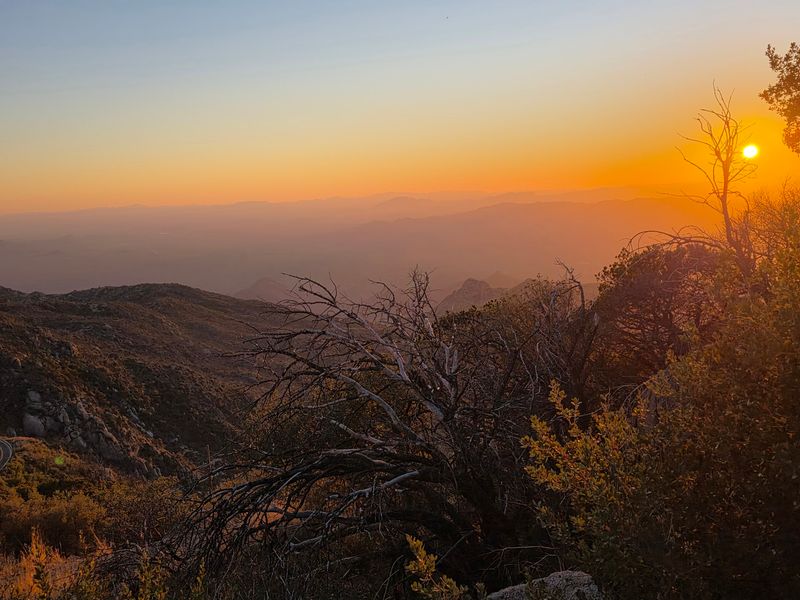
Sunset is the opening act, not the finale. The Nightly Observing Program, often shortened to NOP, is the signature evening experience at the visitor center.
The evening usually starts with a simple boxed meal while a short astronomy video plays. Guides then share the history of the facility before leading a short walk uphill to watch the sunset near the telescope domes.
After dark settles in, a talk covers the various telescopes on the property. The group then returns to the visitor center and splits into smaller teams.
From there, the rotation begins. Binoculars come first, with a guide using a powerful laser pointer to trace constellations across the sky.
Next comes the telescope attached to the visitor center, where targets can include Jupiter, a nebula, and distant star clusters. The patio hosts smaller portable telescopes for views of the Moon, more stars, and galaxies.
Clear nights have delivered M13, the Great Globular Cluster in Hercules, along with a planetary nebula, a binary star system, and crisp lunar craters. The International Space Station has even crossed overhead, no equipment required.
The program is advertised at about 4.5 hours, though some nights wrap up closer to three and a half. Departure happens as one group, timed around the main research telescope so headlights do not interfere with the science.
That group exit is a small reminder that these stars are also someone’s workplace.
Dark Sky Discovery and Overnight Stays
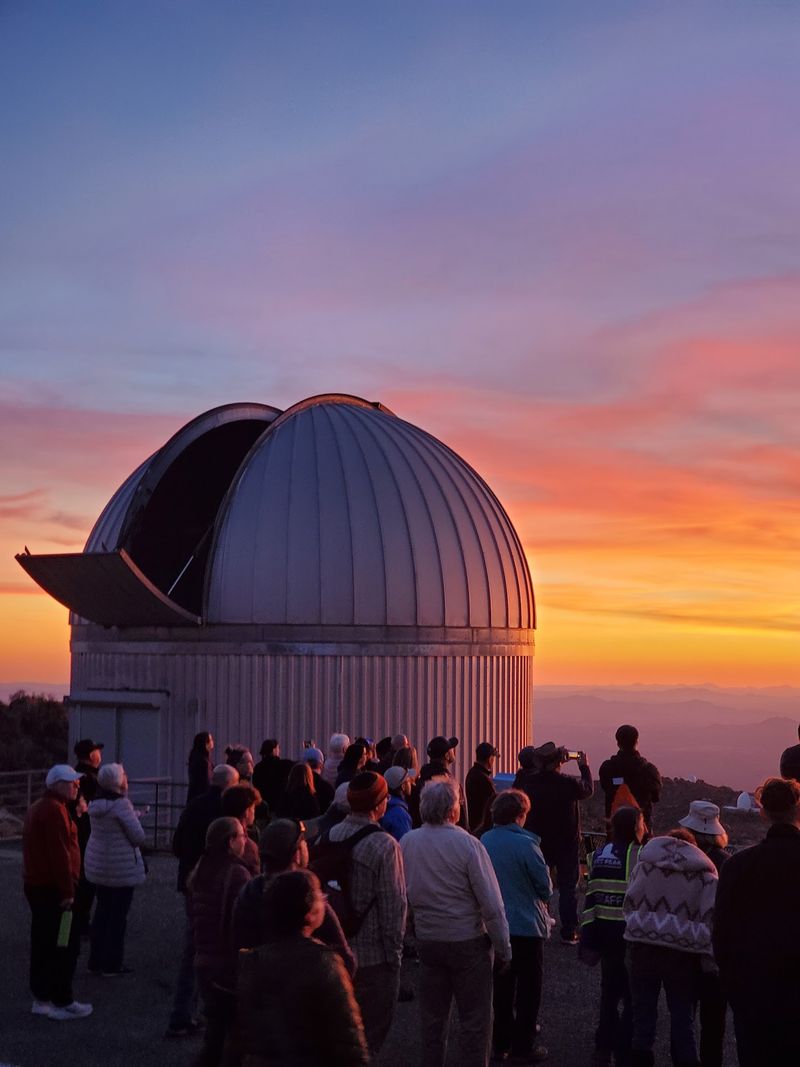
One night is rarely enough for the truly star-struck. The mountain offers a few ways to go deeper.
The Dark Sky Discovery tour is another evening option built around observing, with guides pointing telescopes at a wide range of objects and explaining each one in approachable terms. Even the wildest questions tend to get a thoughtful answer.
The overnight program is the true bucket-list pick. Small groups, sometimes just four guests plus a guide, spend the night with an astronomer, so the plan can be tailored to the people in the room.
During one overnight session, the observatory roof pulled back to open the dome to the sky, and that became the group’s perch for the night. Observing moved from the naked eye to binoculars to a telescope eyepiece, reaching galaxies more than 12 million light years away.
Lodging is basic and a bit rustic, with dorm-style rooms and heaters that do their job. Most of the night is spent observing anyway.
Evening and morning meals are included, and part of the regular evening program is often folded in as well.
A newcomer to astronomy can still come away with plenty, though some background knowledge makes the night richer. Either way, the dress code for all of these programs matters more than most people expect.
Layers, Moon Phases, and Other Smart Moves
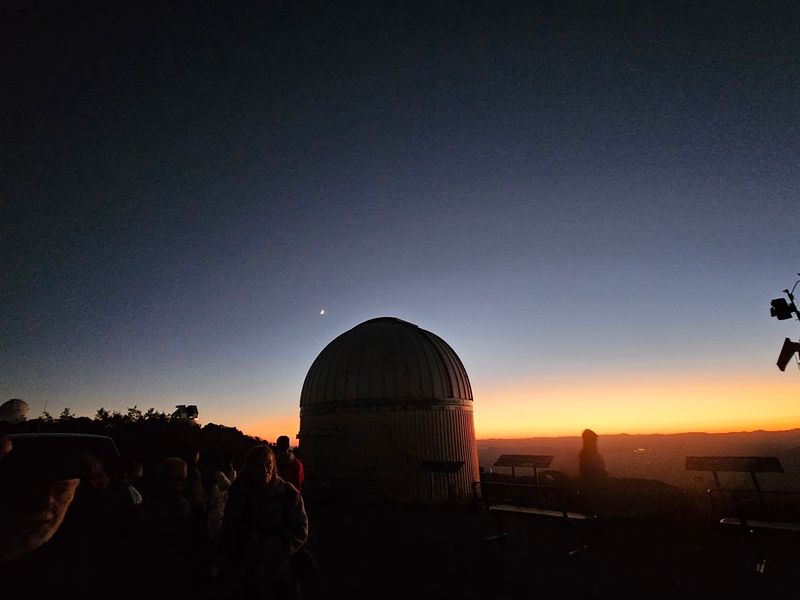
Arizona heat has a funny way of disappearing at 7,000 feet. When Tucson sits in the 90s, the summit can drop into the mid-50s with wind after dark.
Warm layers are essential, even in May and through the summer. Hats, gloves, long pants, and a hoodie or down jacket are all common recommendations once the sun goes down.
The Moon matters too. A bright Moon can wash out fainter stars, so booking near a new moon gives the best shot at the full dark-sky effect.
That said, a moonlit night is far from a loss. The Moon itself becomes a stellar target through the patio telescopes, and plenty of objects remain in view at any stage of the lunar cycle.
Advance tickets are strongly recommended, especially for evening programs. Checking the forecast before buying is wise, since clouds and storms can cancel telescope time even when the rest of the program continues.
On cloudy nights, staff keep the group engaged with astronomy facts and history, but telescope viewing may not happen. A flexible date, when possible, helps.
The visitor center keeps hours of 9 a.m. to 4 p.m. daily, and program schedules are listed on the official website.
A little preparation turns a chilly surprise into a comfortable night, which leaves one final question about who will love this place most.
A Backyard Observatory Worth the Drive
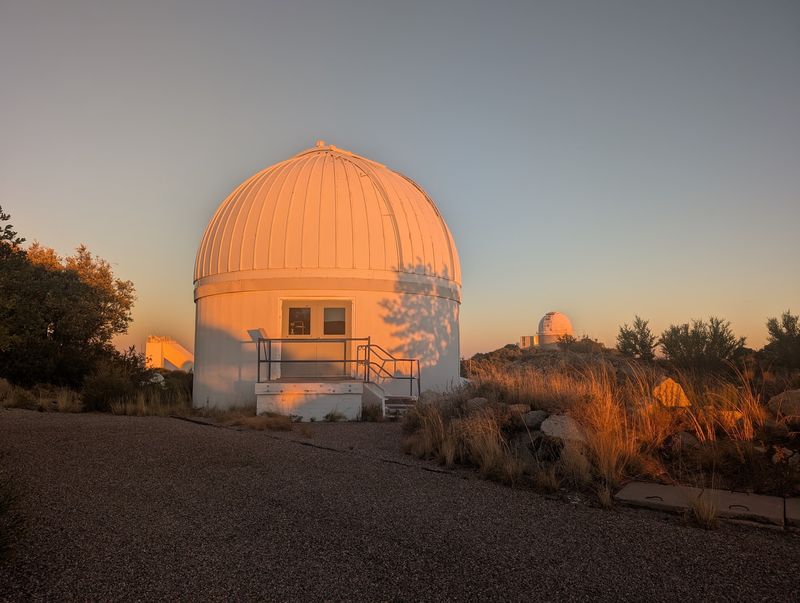
Plenty of states have planetariums. Arizona has a mountaintop where astronomers map the cosmos, about an hour from Tucson.
The guides are a big part of the appeal. Docents and young astrophysicists lead the programs with energy and humor, and they have a knack for turning complex ideas into explanations that are easy to follow.
Summer is an underrated season to go. Crowds tend to be smaller, which means more time at the eyepiece, and the mountain doubles as a welcome break from the heat of the Tucson basin.
Families should know the evening lecture portions can run long for younger kids. An 11-year-old with a real passion for space will likely do fine, but children who lose focus quickly may enjoy a daytime tour more.
No advanced knowledge is required to enjoy the night. Casual stargazers and dedicated astronomy fans both tend to leave with something new to talk about.
Between the Rubin legacy, the Apollo connection, the retired solar giant, and the nightly telescope sessions, this summit packs a lot of science into one trip. It makes a strong case as one of the most memorable evenings an Arizona local can plan without leaving southern Arizona.
Pack the layers, fill the tank, and check the Moon calendar. The universe keeps a very reliable schedule up here.