
Affiliate disclosure: As an Amazon Associate I earn from qualifying purchases. Learn more
Arizona hides some of the darkest skies in the country, and August is when they really show off. On clear summer nights, the Milky Way stretches straight overhead like a river of light, and you barely need a telescope to see it.
The state is home to a big cluster of certified International Dark Sky Parks, from high pine forests to deep desert canyons. If you have ever wanted to see thousands of stars without leaving your own backyard state, these seven spots are the places longtime Arizonans keep going back to.
1. Grand Canyon National Park, Grand Canyon Village, Arizona
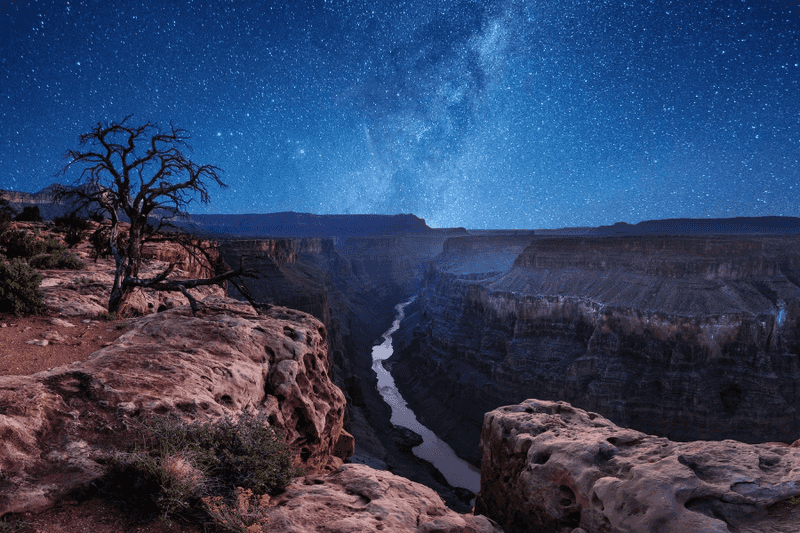
Most people picture the Grand Canyon at sunrise, but the show after dark is arguably the bigger draw for stargazers. The park earned its International Dark Sky Park certification in 2019, and the elevation on both rims keeps the air thin and clear.
The park hosts an annual Star Party each summer, usually in June, where astronomers set up telescopes on both the North and South Rims and let visitors look through them for free. Even outside that event, pull-offs along the rim road turn into natural viewing decks once the crowds thin out.
August works well because the Milky Way core sits high in the southern sky after dark. Desert View and the area near Grand Canyon Village are easy places to park and look up.
Bring a red flashlight to protect your night vision, and dress warmer than you think, since rim temperatures drop fast after sunset. It is one of the few spots where a world-famous view exists in the daytime and a second one appears overhead at night.
2. Flagstaff and the World’s First Dark Sky City, Flagstaff, Arizona
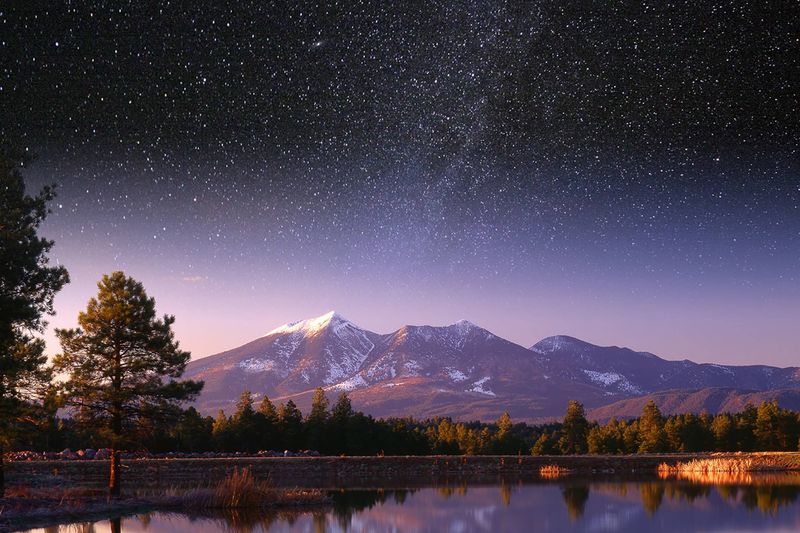
Here is a fact that surprises even lifelong residents: Flagstaff was named the world’s first International Dark Sky City back in 2001. The city has protected its night skies with lighting ordinances since the 1950s, largely to support Lowell Observatory, where Pluto was discovered in 1930.
What that means for you is a full city where the streetlights are designed to point down instead of washing out the stars. Lowell Observatory sits right in town and offers evening programs with historic and modern telescopes open to the public.
Drive a short way outside the city center, toward Buffalo Park or up toward the San Francisco Peaks, and the Milky Way comes into full view on clear August nights. At around 7,000 feet, Flagstaff also gives you a cool escape from the desert heat below.
You can pair a night of stargazing with a walkable downtown, which makes it an easy overnight trip rather than a remote camping mission.
3. Kartchner Caverns State Park, Benson, Arizona
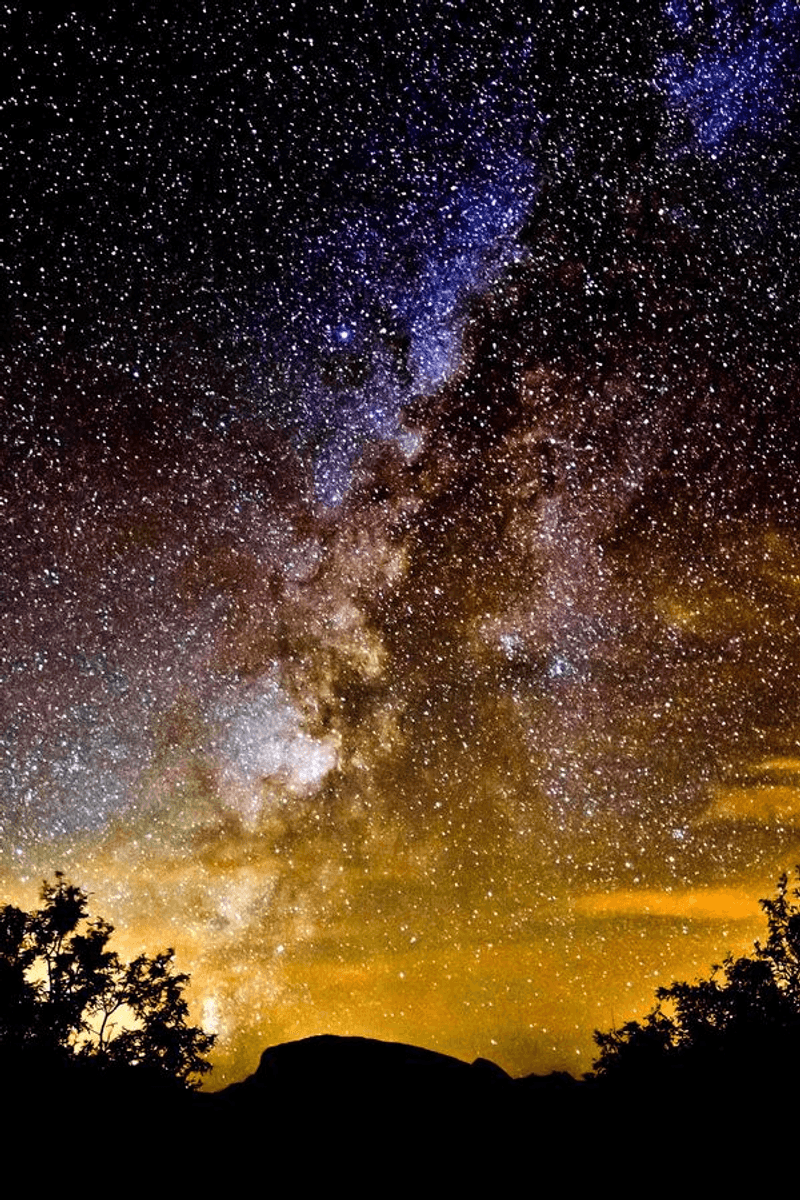
Famous for its living limestone cave, Kartchner Caverns also holds a certification you might not expect: it became an International Dark Sky Park, giving visitors a rare two-for-one of underground formations by day and open skies by night.
The park sits near Benson in southern Arizona, tucked against the Whetstone Mountains and far from big-city light domes. Rangers occasionally host astronomy programs, and the campground gives overnight guests a front-row seat to the sky once cave tours wrap up.
Summer nights here can reveal the Milky Way stretching over the surrounding grassland and mountains. Because the park protects its cave environment carefully, outdoor lighting is kept low, which happens to help the stargazing too.
Cave tours require reservations and tend to book up, so plan the underground portion ahead of time. Then stick around after dark and let the second attraction come out on its own.
4. Oracle State Park, Oracle, Arizona
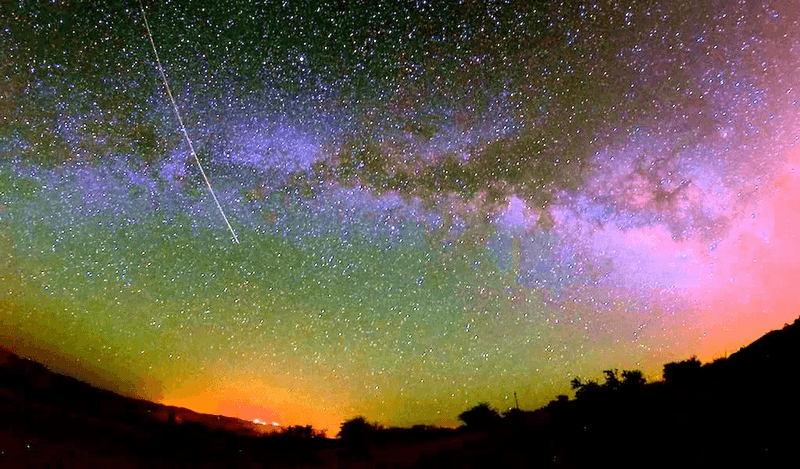
Just a short drive north of Tucson, Oracle State Park sits in the foothills of the Santa Catalina Mountains and carries a reputation as one of the metro area’s most accessible dark-sky escapes. It earned International Dark Sky Park status in 2014.
The park runs a regular schedule of star parties, often teaming up with local astronomy clubs who haul out telescopes for public viewing. The 4,000-acre wildlife refuge means the terrain stays open and undeveloped, so the horizon lines are clean.
On an August evening, the combination of oak-dotted grassland and low light pollution makes the Milky Way easy to trace overhead. The historic Kannally Ranch House on the property adds a bit of daytime history if you arrive early.
Check the park calendar before you go, since the organized viewing nights come with volunteers who point out planets and constellations for you. It is a friendly entry point if you have never done a formal stargazing event.
5. Petrified Forest National Park, Holbrook, Arizona
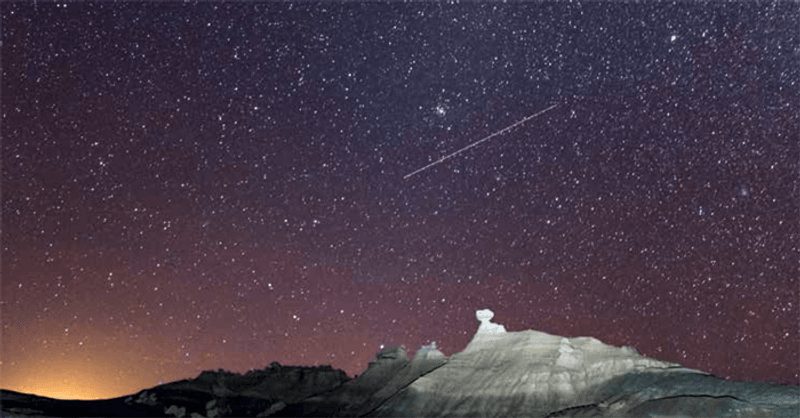
Colorful ancient logs and painted badlands make Petrified Forest a daytime favorite, yet the park also earned International Dark Sky Park certification for what happens once those colors fade to black. Sitting in remote northeastern Arizona near Holbrook, it is ringed by very little development.
The park’s location along old Route 66 gives it a road-trip identity that pairs nicely with a night under the stars. Because the terrain is so open, the sky feels enormous, with the Milky Way rising over the Painted Desert.
One thing to know: the park has set daytime gate hours, so overnight access is limited and usually tied to permitted backpacking or special astronomy programs. Check current hours and any scheduled night events before planning a visit around the stars.
Even so, the wide-open scenery and dark surroundings make it one of the more dramatic settings on this list when the timing works out. Few places blend deep history and deep sky quite like it.
6. Tonto National Monument, Roosevelt, Arizona
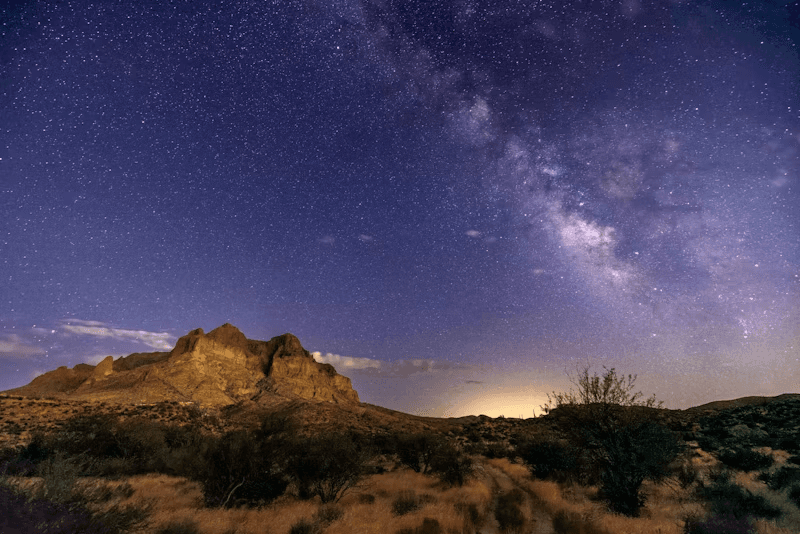
Cliff dwellings built centuries ago by the Salado people are the main draw at Tonto National Monument, but this small site near Roosevelt Lake also carries International Dark Sky Park recognition. It sits in the Sonoran Desert northeast of Phoenix, far enough from the city glow to make a real difference.
The monument occasionally offers evening astronomy programs where visitors can view the sky above the ancient dwellings, which is a combination you will not find in many places. During the day, a trail leads up to the well-preserved cliff rooms tucked into the hillside.
August skies here reveal the Milky Way over saguaro-covered slopes and the nearby lake. The setting pairs Arizona’s human history with its natural sky in a single stop.
Standard visiting hours apply, so any after-dark access typically comes through scheduled ranger events. Confirm the calendar ahead of time and you may catch stargazing framed by 700-year-old architecture.
7. Chiricahua National Monument, Willcox, Arizona
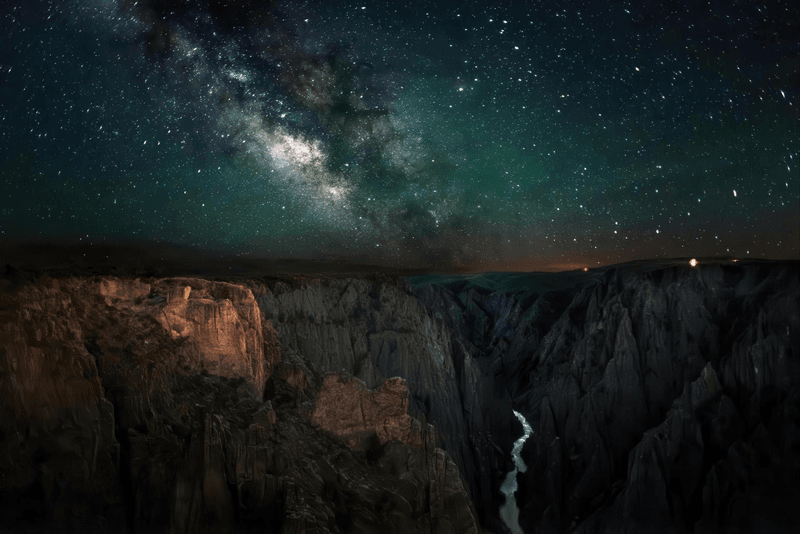
Way down in southeastern Arizona, past the town of Willcox, a forest of towering rock spires called hoodoos makes Chiricahua National Monument look like nowhere else in the state. The remote location also earned it International Dark Sky Park status, and remote is the key word here.
Being tucked in the far corner of Arizona means light pollution is minimal, so the night sky comes through with striking clarity. The Bonita Canyon campground lets visitors stay overnight and watch the stars emerge above the balanced rock formations.
Daytime hikers come for trails winding among the stone columns, and many linger into the evening for the sky show. On a clear August night, the Milky Way arches over a landscape that already feels a little otherworldly.
The drive is long from most Arizona cities, which is exactly why the darkness holds up so well. Pack for a night in the high desert and let one of the state’s most underrated corners surprise you.