
Affiliate disclosure: As an Amazon Associate I earn from qualifying purchases. Learn more
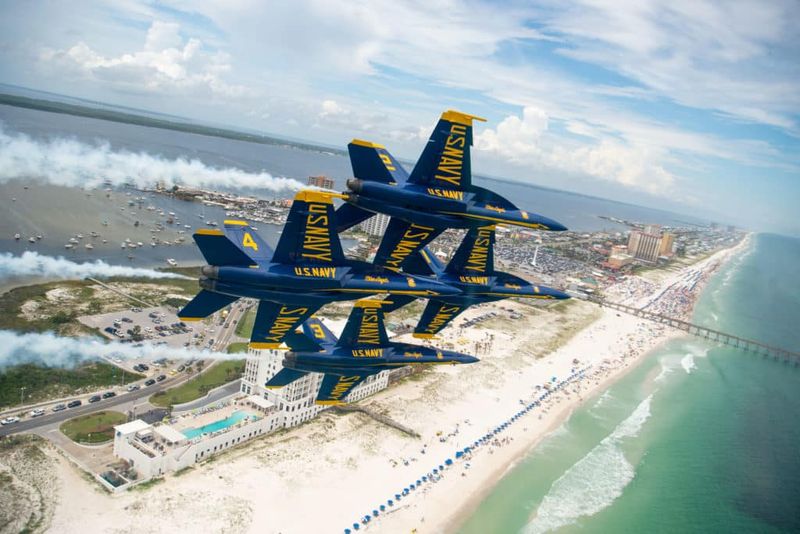
One weekend in July 2026, the skies over Pensacola Beach belonged to the U.S. Navy Blue Angels, and tens of thousands of people showed up to watch from the sand.
The 2026 Pensacola Beach Air Show ran July 15 through 18, wrapping up with the official public performance on Saturday, July 18, over Casino Beach on Santa Rosa Island. Admission to the beach show was free, though a full day out there still came with real costs and real logistics worth knowing.
Because the event has already taken place, this article looks back at what made it work and what visitors needed to plan around.
What happened at the July 2026 Pensacola Beach Air Show
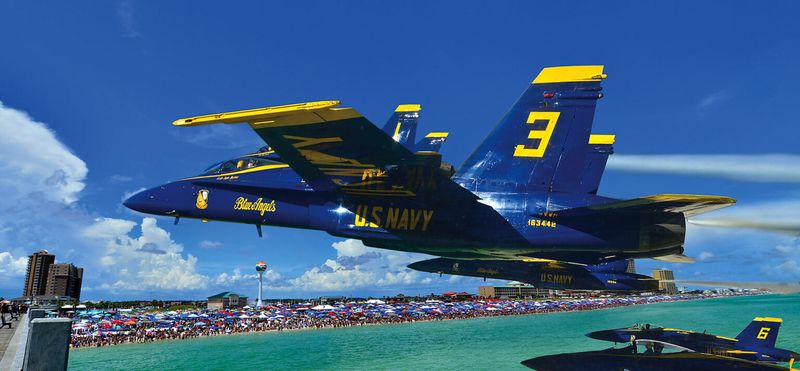
For four days in mid-July 2026, Casino Beach on Santa Rosa Island served as the front-row seat for one of the Gulf Coast’s biggest annual spectacles. The official 2026 Pensacola Beach Air Show event listing confirmed the schedule ran July 15 through 18, with the headline U.S.
Navy Blue Angels performing on both Friday, July 17, and Saturday, July 18. The official public show landed on Saturday, drawing the largest crowd of the weekend to the stretch of beach near the Gulfside Pavilion and Pensacola Beach Fishing Pier.
Admission to the beach air show was free. Spectators did not need tickets, wristbands or reservations to stand on Casino Beach and watch the Blue Angels fly.
That no-ticket policy made the event genuinely accessible, though free admission was not the same as a free day out, a distinction the rest of this article unpacks carefully.
The Blue Angels flew a roughly 45-minute performance window each afternoon, approximately 2 to 2:45 p.m. on Friday and Saturday. Other military and civilian demonstration teams filled the program starting around 10:30 a.m. on both those days, so the full show ran most of the afternoon.
The Santa Rosa Island Authority’s 2026 Blue Angels schedule laid out each day’s events, from Wednesday’s early-morning Breakfast with the Blues through Saturday’s main event.
Describing the show as “jaw-dropping” or claiming it “filled the sky” reflects the enthusiasm of people who attended, but those are personal impressions rather than measurable facts. What is verifiable is the event’s scope: a multi-day Navy demonstration over a public beach, headlined by a team with one of the most recognizable flight programs in the world, and open to anyone who could get there.
The article you are reading describes a completed July 2026 event, not a current or upcoming attraction.
Why Pensacola is central to the Blue Angels story
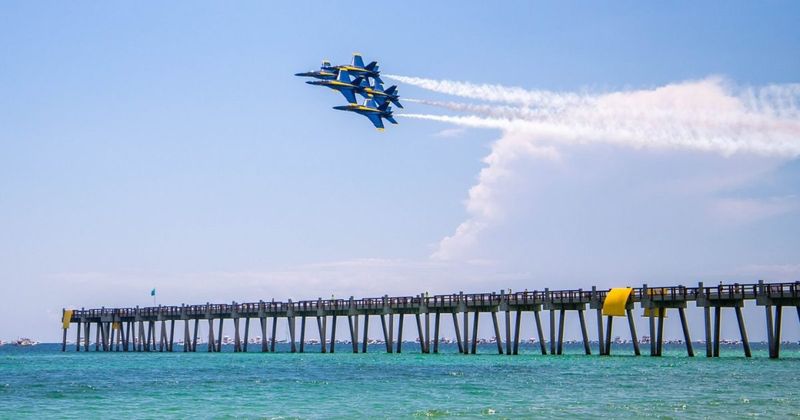
Pensacola’s connection to the Blue Angels goes back further than most visitors realize. The team was established in 1946, making them one of the oldest active aerobatic flight demonstration squadrons in the world.
The Blue Angels’ official history shows the team has been based at Naval Air Station Pensacola since 1955, a span of more than seven decades that has woven the squadron into the identity of the city itself. The 2026 season marked the team’s 80th anniversary, which gave the Pensacola Beach show added significance beyond a typical summer performance.
NAS Pensacola sits at the western edge of the Florida Panhandle, and the base has served as the primary home for Navy aviation training for over a century. The team’s significant events timeline reflects how thoroughly their story is tied to Pensacola, from early postwar demonstrations through decades of evolving aircraft and formations.
That institutional roots make local attendance feel less like tourism and more like a homecoming for the team itself.
One distinction matters for anyone planning a trip around the Blue Angels specifically. The July Pensacola Beach Air Show and the Blue Angels Homecoming Air Show are two separate events.
The Blue Angels Homecoming Air Show takes place at NAS Pensacola each November and uses the base’s runway and flight line as its viewing area. The July beach show centers on Casino Beach, with the Gulf of Mexico as its backdrop.
Neither event substitutes for the other, and official visitor guidance made clear that the beach show could not be watched properly from Fort Pickens or NAS Pensacola. Each event offers a genuinely different experience, shaped by its venue, its audience layout and its place in the Navy’s annual calendar.
How the practice, rehearsal and public-show days differed
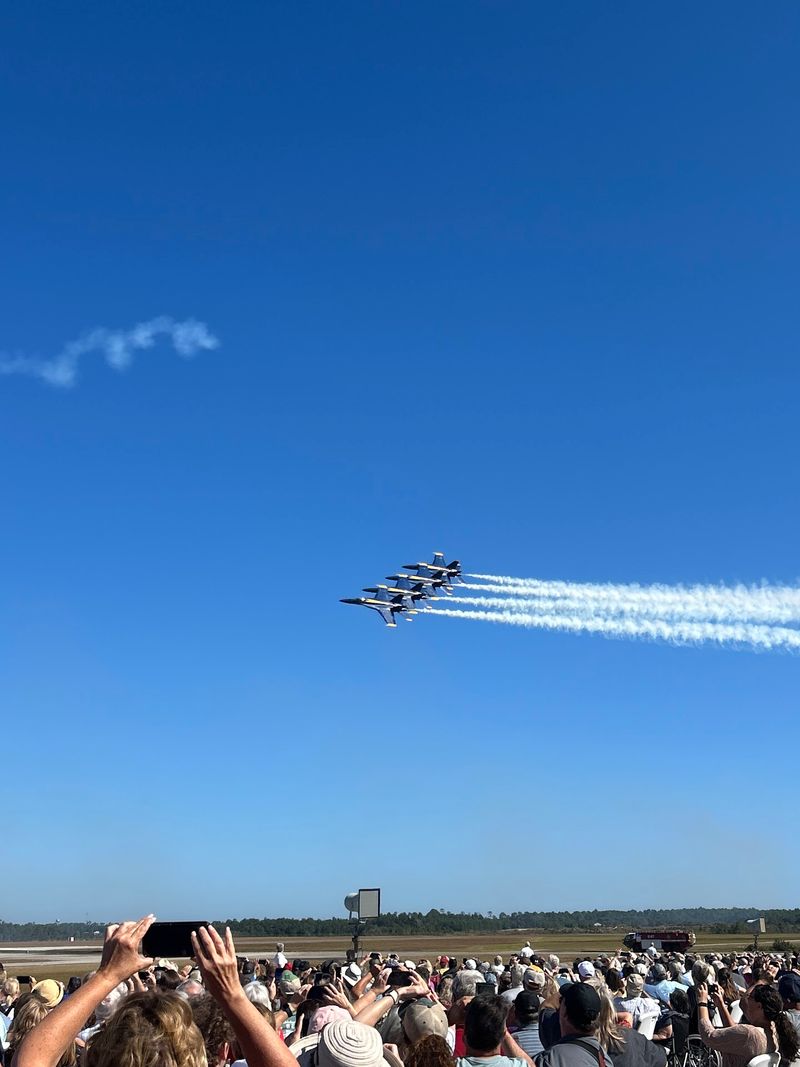
Not every day of the July 15 to 18 schedule delivered the same experience, and collapsing them into a single “air show week” misses some important differences. Wednesday, July 15, opened with the Breakfast with the Blues at approximately 7:30 a.m., an early-morning event that drew a smaller crowd of enthusiasts and locals.
Thursday, July 16, brought a Blue Angels practice show at 2 p.m., which gave aviation fans a chance to see the team work through their routine in a lower-key setting without the full civilian air-show program surrounding it.
The SRIA’s 2026 event breakdown shows that Friday, July 17, served as the full dress rehearsal, with the broader demonstration lineup beginning around 10:30 a.m. and the Blue Angels taking the sky for their 2 to 2:45 p.m. window. Saturday, July 18, followed nearly the same structure, opening with other military and civilian performers before the Blue Angels closed out the afternoon.
The key difference between Friday and Saturday was designation: Saturday carried the “official public show” label, which is why most visitors treated it as the main event.
For anyone choosing between Friday and Saturday, the practical experience was similar. Both days featured the full performance lineup, the same Blue Angels flight window and the same Casino Beach venue.
Visit Pensacola’s event page identified Saturday as the official show, which naturally concentrated the largest crowds there. Friday’s dress rehearsal offered a nearly identical performance with potentially lighter attendance, though traffic and parking were still significant concerns on that day.
Wednesday’s Breakfast with the Blues deserves a specific note. A low-altitude Blue Angels pass during that event attracted wide attention after the Navy acknowledged the aircraft flew lower than standard profiles and opened a safety review.
Later reporting indicated no reprimands were issued, but the pass was not evidence that spectators should expect or seek unusually low flyovers at future performances. It was an isolated occurrence during a small pre-show event, not a feature of the regular program.
What free admission did—and did not—cover
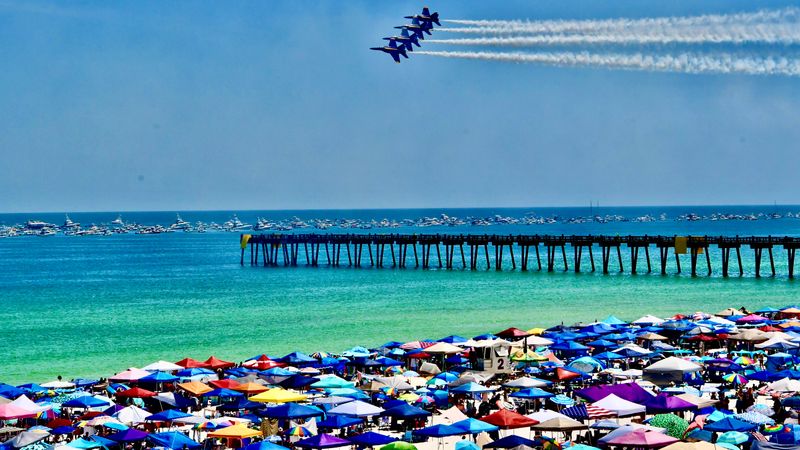
Walking onto Casino Beach to watch the Blue Angels cost nothing. No ticket booth, no wristband line, no admission fee at the gate.
Visit Pensacola’s official air-show guidance confirmed that the beach air show was free to attend, which made it one of the more accessible large-scale military air demonstrations available to Gulf Coast visitors.
Free admission, though, covered exactly one thing: entry to the public beach viewing area. Everything else came with its own price tag.
Parking at or near Casino Beach carried fees, and spaces in the most convenient lots filled early enough that many visitors had to use designated alternative sites at Park East and Park West. Transportation beyond the free trolley and bus service that ran during the show period was not covered.
Meals, snacks and drinks from beachside vendors and nearby restaurants were ordinary out-of-pocket expenses, as were any accommodations for visitors staying overnight in Pensacola Beach or the surrounding area.
Premium viewing areas, if offered by vendors or hospitality operations near the beach, also fell outside the free-admission umbrella. The official event pages did not establish that any vendor-operated viewing packages were free.
Visitors who budgeted only for a zero-cost day may have found that parking, food and a round of cold drinks added up quickly, particularly on a hot July afternoon with tens of thousands of other people doing the same thing.
Framing the outing as “free” without that context sets up a gap between expectation and reality. A more accurate description is that the air show itself was free to watch, and a visitor who arrived via the free transit service, packed their own food and water, and secured parking early could keep additional costs low.
That required planning, not luck. The affordability of the day depended heavily on the choices made before anyone reached the beach.
Casino Beach was the show center, but arrival required planning
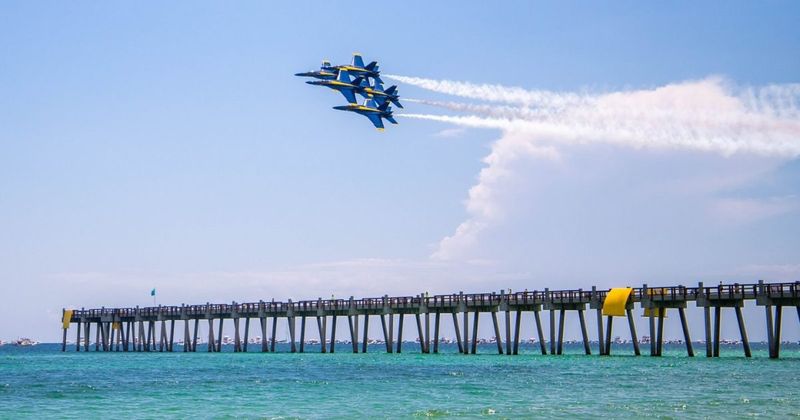
Casino Beach sits near the Gulfside Pavilion and the Pensacola Beach Fishing Pier on Santa Rosa Island, and during the air show it functioned as the undisputed center of the action. The water, the open sky and the proximity to the Blue Angels’ flight path made it the best spot for watching the performance, which is exactly why it filled up fast.
The SRIA’s official air-show planning blog warned that Casino Beach parking could fill very early, well before the demonstration lineup even began, and that late arrivals crossing the bridge into Pensacola Beach could face hours of gridlock.
The Santa Rosa Island Authority designated Park East and Park West as overflow parking alternatives. Both sites were connected to Casino Beach by a free trolley and bus service that ran throughout the show period.
SRIA trolley information outlined the routes and timing, giving visitors a workable option if they could not secure a spot at the main beach lot. Using the transit system also meant skipping the worst of the bridge traffic, since drivers heading directly to Casino Beach faced the same congestion as everyone else.
Post-show departure was where many visitors hit their biggest delay. Visit Pensacola’s event FAQ cautioned that people who missed the first departing buses or trolleys after the show could face waits of 90 minutes or more.
With tens of thousands of spectators leaving Casino Beach at roughly the same time, the transit queues and road exits both backed up quickly. Visitors who stayed to enjoy the beach after the show and then tried to leave at the same time as the main crowd found the wait significantly longer.
The practical lesson from the 2026 event was straightforward: arrive early or use designated transit, identify your parking alternative before you need it, and build buffer time into your departure plan. The bridge into Pensacola Beach has limited lanes, and no amount of preparation eliminates the bottleneck when tens of thousands of people are heading home at once.
Anyone expecting a quick in-and-out on show day needed a different plan.
Heat, beach rules and airspace limits mattered as much as the show
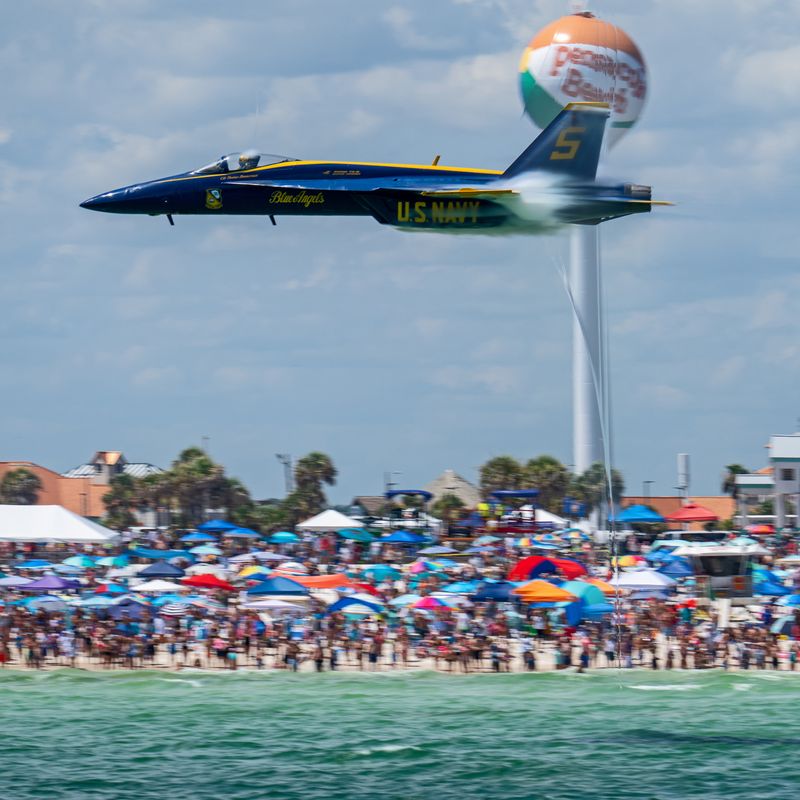
A mid-July afternoon on Pensacola Beach puts visitors in direct Gulf Coast sun for hours, and the air show drew crowds that made shading yourself and staying hydrated an active effort rather than an afterthought. Visit Pensacola’s event guidance advised bringing water, sunscreen, hats, sunglasses, towels and shade equipment.
Glass containers were prohibited on the beach, so coolers and bottles needed to be plastic or metal.
National Weather Service heat safety guidance recommends staying hydrated throughout outdoor exposure, wearing lightweight and light-colored clothing, seeking shade frequently and taking regular breaks from direct sun. Anyone experiencing dizziness, weakness, confusion or nausea during the event needed to move out of the heat immediately and seek medical attention.
Additional NWS heat guidance reinforces that heat illness can develop quickly in humid coastal conditions, particularly when crowds limit access to shade and airflow.
Beach safety operated on its own set of rules, separate from the air show itself. The SRIA’s beach safety page advises swimming only near lifeguarded areas, checking the beach flag system before entering the water and never swimming alone.
Red flags indicate high hazard conditions, meaning strong currents or surf that make swimming dangerous. Double red flags close the water entirely, and no exceptions apply during those conditions.
Checking the flags before wading in was not optional advice; it was the difference between a safe swim and a serious incident.
SRIA’s planning guidance also addressed airspace restrictions. Drones and kites were prohibited during the 2026 show.
The SRIA’s Blue Angels event page warned that flying a drone in restricted airspace could halt the performance and potentially result in arrest or felony charges. The prohibition covered personal recreational drones as well as kites and other objects that could enter the flight path.
The unusual low-altitude pass during Wednesday’s Breakfast with the Blues was reviewed by the Navy precisely because the aircraft flew lower than standard profiles; it was not a feature visitors should expect or try to capture with airborne equipment. Keeping objects on the ground was both a legal requirement and a safety matter for everyone at the show.
The July 2026 event rewarded realistic expectations
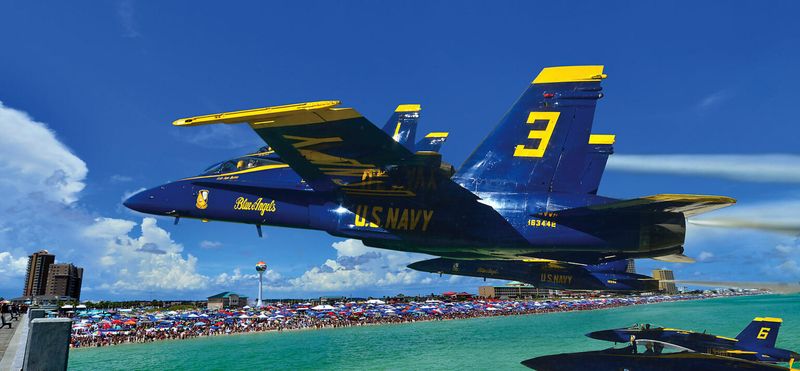
The 2026 Pensacola Beach Air Show delivered something genuinely rare: a major U.S. Navy flight demonstration over a public beach with no admission charge.
Visit Pensacola’s event listing and the official event FAQ together confirmed the free-admission structure, the Casino Beach venue, the July 15 to 18 schedule and the range of costs visitors still needed to budget for beyond the gate.
The visitors who got the most out of it understood the difference between the practice show, the dress rehearsal and the official Saturday performance. They targeted Casino Beach, arrived early or used the designated transit from Park East or Park West, packed water and sun protection, and checked the beach flag system before going near the water.
SRIA’s planning guidance gave the clearest road map for avoiding the event’s biggest friction points: late arrivals, parking shortages, post-show transit waits and heat exposure.
Weather could have changed the day at any point. Officials retained the ability to delay or suspend performances for lightning, storms or other unsafe conditions, and no forecast guaranteed an uninterrupted show.
The event has already concluded, and future schedules, venues and admission policies may differ. What the 2026 show demonstrated most clearly is that free admission opens the door, but preparation is what makes the day worth the drive.