
Affiliate disclosure: As an Amazon Associate I earn from qualifying purchases. Learn more
Weather can turn on a dime when you’re exploring new places, and nobody wants a surprise storm to ruin their adventure. Packing smart means bringing gear that handles rain, sun, wind, and everything in between without weighing you down. These 15 essentials will keep you comfortable and prepared no matter what Mother Nature throws your way.
1. Waterproof-breathable rain shell (with sealed seams)

Nothing ruins a trip faster than being cold and soaked. A proper rain shell blocks water from outside while letting your body heat and sweat escape through a special membrane, so you stay dry inside and out.
Sealed seams are crucial because even the best fabric leaks if needle holes aren’t taped over. Pit zips under your arms let you dump heat when you’re hiking uphill or rushing to catch a train.
Choose a lightweight shell that stuffs into its own pocket. You’ll actually carry it every day instead of leaving it at the hotel when clouds roll in unexpectedly.
2. Packable insulated jacket (down or synthetic, conditions decide)

Mountain mornings can be freezing even when afternoons are warm. An insulated jacket that squishes down small means you always have warmth without sacrificing precious luggage space.
Down feathers trap more heat per ounce and compress incredibly small, making them perfect for dry, cold destinations. Synthetic insulation costs less and keeps you warm even when damp, which matters in rainy places like Scotland or the Pacific Northwest.
Check the weather forecast for your destination. If rain is likely, synthetic wins. For desert nights or alpine treks with clear skies, down is unbeatable for its warmth-to-weight ratio.
3. Merino wool base layer (top + socks)

Merino wool feels like magic on your skin because it works with your body instead of against it. Unlike cotton that stays wet and clammy, merino pulls moisture away and dries quickly while keeping you comfortable in both heat and cold.
The natural fibers fight bacteria that cause stink, so you can wear the same shirt multiple days without smelling like a gym locker. This is huge when you’re backpacking and can’t do laundry every night.
Start with one long-sleeve top and two pairs of socks. They’ll become your favorite pieces because they adapt to temperature swings from chilly dawn to sweaty midday hikes.
4. Quick-dry pants (with a DWR finish)

Jeans take forever to dry and feel miserable when wet. Travel pants made from synthetic fabrics dry in hours, not days, and a DWR coating makes light rain bead up and roll right off.
You can rinse them in a hotel sink at night and they’ll be ready by morning. The water-repellent finish eventually wears off, but you can reapply spray-on DWR treatment to bring it back to life.
Look for pants with zippered pockets to secure your phone and wallet. Bonus points if they have articulated knees and a stretchy waistband for comfort during long travel days or unexpected hikes.
5. Waterproof footwear + gaiters (for slop, splash, or snow)

Wet feet are miserable feet. Waterproof boots or shoes with a membrane keep puddles and streams from soaking your socks, while gaiters wrap around your ankles to stop rain, snow, and mud from sneaking in through the top.
Even the best waterproof boots have an opening at the ankle where water runs down your legs during heavy rain. Gaiters solve this problem by creating a seal that keeps the nasty stuff out.
Pack lightweight gaiters that fold flat. They weigh almost nothing but transform your footwear when you’re trudging through slush or crossing a marshy field that looked dry on the map.
6. Wind-resistant compact umbrella (vented canopy)

Umbrellas seem old-fashioned until you’re caught in a city downpour with nowhere to hide. A good travel umbrella fits in your daypack and actually stays intact when the wind picks up, unlike those cheap ones that flip inside-out.
Vented canopies have a double layer that lets wind pass through instead of turning your umbrella into a parachute. This design keeps it from inverting during gusts while still keeping you dry.
Choose one with a sturdy frame but light enough that you’ll actually carry it. Urban exploring in places like London or Seattle becomes much more pleasant when surprise showers don’t send you scrambling for cover.
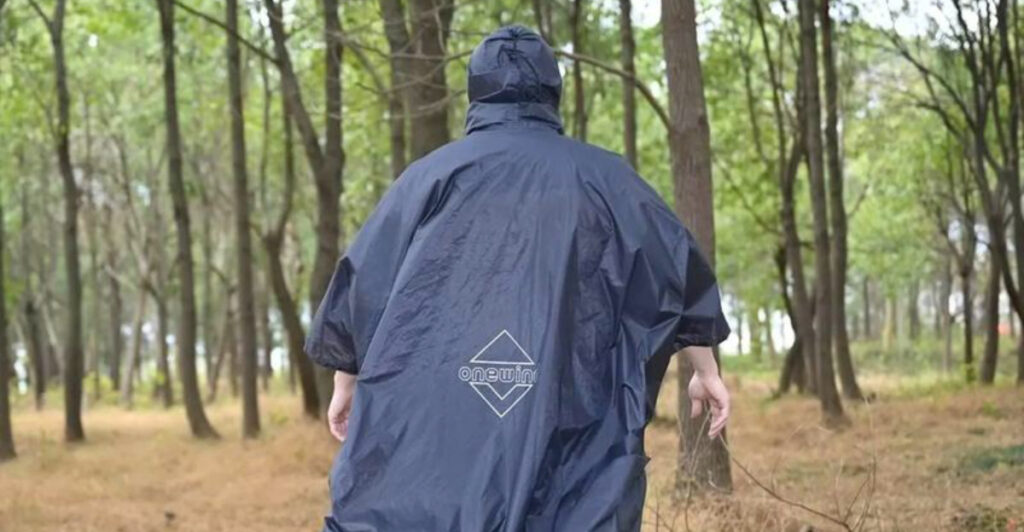
7. Packable rain poncho (covers you and your backpack)

Rain jackets protect you but leave your backpack exposed. A poncho drapes over everything, creating a waterproof tent that shields both you and your gear when storms arrive mid-hike.
Modern ponchos fold down to the size of a soda can and weigh just a few ounces. Some have snaps on the sides so they don’t flap around like a sail, and grommets in the corners let you pitch them as an emergency tarp.
They’re not fashionable, but fashion doesn’t matter when you’re trying to keep your laptop and camera dry. Toss one in your pack’s top pocket and forget about it until you need it.
8. Dry bags or pack liner

Your backpack probably isn’t as waterproof as you think. Even water-resistant packs leak at the zippers during sustained rain, and one soaking can ruin electronics, documents, and clean clothes.
Small dry bags organize your stuff by category while keeping everything bone-dry. Put electronics in one, clean clothes in another, and dirty laundry in a third. A pack liner is a large waterproof sack that goes inside your backpack to protect everything at once.
This setup costs less than replacing a drenched laptop and gives you peace of mind during monsoons or river crossings. Think of it as cheap insurance for your gear.
9. Waterproof phone pouch + basic IP awareness

Phone makers advertise water resistance, but there’s a catch: IP67 or IP68 ratings mean your phone survives brief dunks in perfect lab conditions. Real-world protection degrades over time as seals wear out, and most warranties don’t cover water damage anyway.
A waterproof pouch adds a reliable barrier for beach days, boat rides, or heavy downpours. Good ones let you use the touchscreen right through the clear plastic and have a lanyard so you don’t drop your phone overboard.
Your phone is your camera, map, translator, and lifeline. Spending ten dollars on a pouch beats spending hundreds on a replacement when your water resistance fails at the worst moment.
10. Portable water treatment (filter bottle, chemical, or UV)

Tap water safety varies wildly around the world, and trail sources can harbor nasty germs. The CDC recommends boiling water or using certified treatment methods to avoid spending your trip in the bathroom.
Filter bottles let you fill up anywhere and drink immediately by removing bacteria and protozoa. Chemical tablets like chlorine dioxide kill everything including viruses but require a wait time. UV pens zap germs with light in under a minute but need clear water to work properly.
Pick your method based on your destination. Filters work great for hiking, while chemical or UV might be better for questionable city taps in developing countries.
11. Power bank (airline-compliant) + cable kit

Dead phones mean missed connections, lost directions, and no way to call for help. A power bank keeps your devices alive during long travel days when outlets are scarce.
Airlines require spare batteries and power banks in carry-on luggage only, never checked bags. Anything under 100 watt-hours is generally fine without special permission, which covers most consumer power banks. Check the label or do the math: multiply voltage by amp-hours to get watt-hours.
Bring the right cables for your devices and consider a multi-port charger. Nothing’s more frustrating than having power available but the wrong connector to use it when your battery hits zero percent.
12. Headlamp (with red-light mode)

Your phone’s flashlight drains the battery and occupies your hand. A headlamp straps to your forehead and points wherever you look, leaving both hands free to set up camp, fix gear, or navigate tricky terrain.
Red-light mode is a game-changer for nighttime map reading or finding stuff in your tent without blinding yourself or others. Red light preserves your natural night vision, so you can switch it off and still see your surroundings instead of staring into darkness.
Modern LED headlamps are tiny, bright, and run for hours on standard batteries. They’re essential for early-morning starts, late arrivals, or power outages in unfamiliar places.
13. Emergency thermal blanket (aka space blanket)

These crinkly metallic sheets look like something from a sci-fi movie, but they can literally save your life. Emergency blankets reflect up to 90% of your body heat back to you, helping prevent hypothermia if you get stuck in unexpected cold.
They fold down smaller than a deck of cards and weigh about as much as a candy bar. Toss one in the bottom of every daypack and forget it’s there until you need it.
Beyond emergencies, they work as ground covers, windbreaks, or even makeshift shelters. For a couple of dollars and a few ounces, you get serious insurance against sudden weather changes in the backcountry or remote areas.
14. UPF sun hat (and sunscreen)

Sunburn doesn’t just hurt, it increases skin cancer risk and can ruin several days of your trip. A hat rated UPF 50 blocks about 98% of UV rays all day long without reapplication, unlike sunscreen that sweats off and needs constant renewal.
Look for a wide brim that shades your face, ears, and neck. Some hats have chin straps to keep them on during windy hikes or boat rides. Packable styles crush flat in your luggage without losing their shape.
Pair your hat with broad-spectrum sunscreen for exposed skin. Weather that alternates between sun and clouds is especially tricky because you forget to reapply when it’s overcast, but UV rays still penetrate.
15. EPA-registered insect repellent (DEET or picaridin)

Mosquitoes and ticks aren’t just annoying, they spread serious diseases like malaria, dengue, Zika, and Lyme disease. The CDC and EPA recommend repellents with proven active ingredients such as DEET, picaridin, IR3535, or oil of lemon eucalyptus.
DEET has decades of research backing its effectiveness. Picaridin works just as well with less smell and a better feel on skin. Higher concentrations last longer, not stronger, so 20-30% DEET or picaridin gives you several hours of protection.
For extra defense, treat your clothes and gear with permethrin spray. It bonds to fabric and kills bugs on contact for weeks, even through multiple washes, creating a protective barrier around your body.